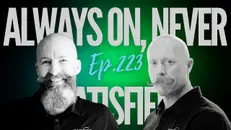
Ep 223 - "Always On, Never Satisfied"


Key Takeaways
- Modern business culture pushes owners to feel 'always on' and 'always awesome,' which often leads to suppressing emotions and burning out trades entrepreneurs.
- Using Arthur Brooks' framework, true happiness requires balancing the three macronutrients: enjoyment, satisfaction, and meaning.
- Satisfaction does not come from simply achieving the prize or hitting a revenue milestone; it comes from the struggle and effort required to get there.
- Many trades business owners successfully scale their operations, install a general manager, and then realize they have no idea what to do with themselves at home.
- In a business world increasingly driven by AI and automation, genuine human relationships remain the ultimate superpower for blue-collar leaders.
I walked into this recording annoyed about studio cables, and somehow it turned into one of the most honest conversations Brandon and I have had on this show.
We talk about the pressure in modern business culture to be always on and always awesome, and why the gurus only ever talk about their struggles in the past tense. Brandon brought in Arthur Brooks' framework of the three macronutrients of happiness: enjoyment, satisfaction, and meaning. We use it to take a hard look at grind culture, the myth that more revenue leads to more happiness, and what we've seen after years of working with owners in the trades. Some of them hit every financial goal and still don't know what to do with themselves when they get home. Whether you run a restoration company, a roofing crew, or any trades business, if you've ever wondered why the win doesn't feel the way you thought it would, this one is for you.
Restoration, roofing, HVAC, plumbing, landscaping. If you build it, fix it, or maintain it, this show is for you.
Hope you enjoy the show -Chris
Why You Should Listen:
- [0:30] The pressure to be always on and always awesome, and why suppressing your emotions costs more than you think
- [8:36] Arthur Brooks' three macronutrients of happiness, and why chasing pleasure isn't the same as enjoyment
- [12:57] Satisfaction: why the reward comes from the struggle, not the prize
- [24:19] Financial success and happiness: what we've seen across years of client work
- [28:41] The owner who builds the business, installs the GM, and has no idea what to do with themselves at home
- [33:35] Why relationship is the superpower in a world of AI and automation
- [35:22] Meaning: what happens when you sell the company your identity is built on
About the Show
Head, Heart, & Boots is for the men and women who build things for a living. Restoration, roofing, HVAC, plumbing, landscaping, and every blue collar trade in between. Hosts Brandon Reece and Chris Nordyke built and scaled real companies in the restoration industry, and they have carried those hard-won lessons into every blue collar trade they work with today. Every week they dig into the head (strategy), the heart (culture and people), and the boots (execution) of running a business worth owning.
This show is the front door to Floodlight Consulting Group, where Brandon, Chris, and the team help trades businesses find the money already sitting inside them and build companies worth far more than the day they started. Same people, same mission, whether you are listening or working with us directly.
Ready to see what that looks like in your business? Start Here!
Owning a business in the trades can be the loneliest job there is. Head, Heart, & Boots exists to change that, because the best leaders don't go it alone, and neither should you.
Frequently Asked Questions
What are the three macronutrients of happiness according to Arthur Brooks?
The three macronutrients of happiness are enjoyment, satisfaction, and meaning, which hosts Brandon Reece and Chris Nordyke use to analyze grind culture in the trades.
Why do many trades business owners struggle after achieving financial success?
Many owners tie their entire identity to building their company, so when they finally hit their financial goals or step back, they feel lost and unfulfilled.
How does grind culture affect blue-collar business owners?
Grind culture creates immense pressure to constantly perform and hide struggles, which ultimately costs owners their peace of mind and personal relationships.