Ep 173 - "Breaking Bad Financial Habits With Backbone CFO"
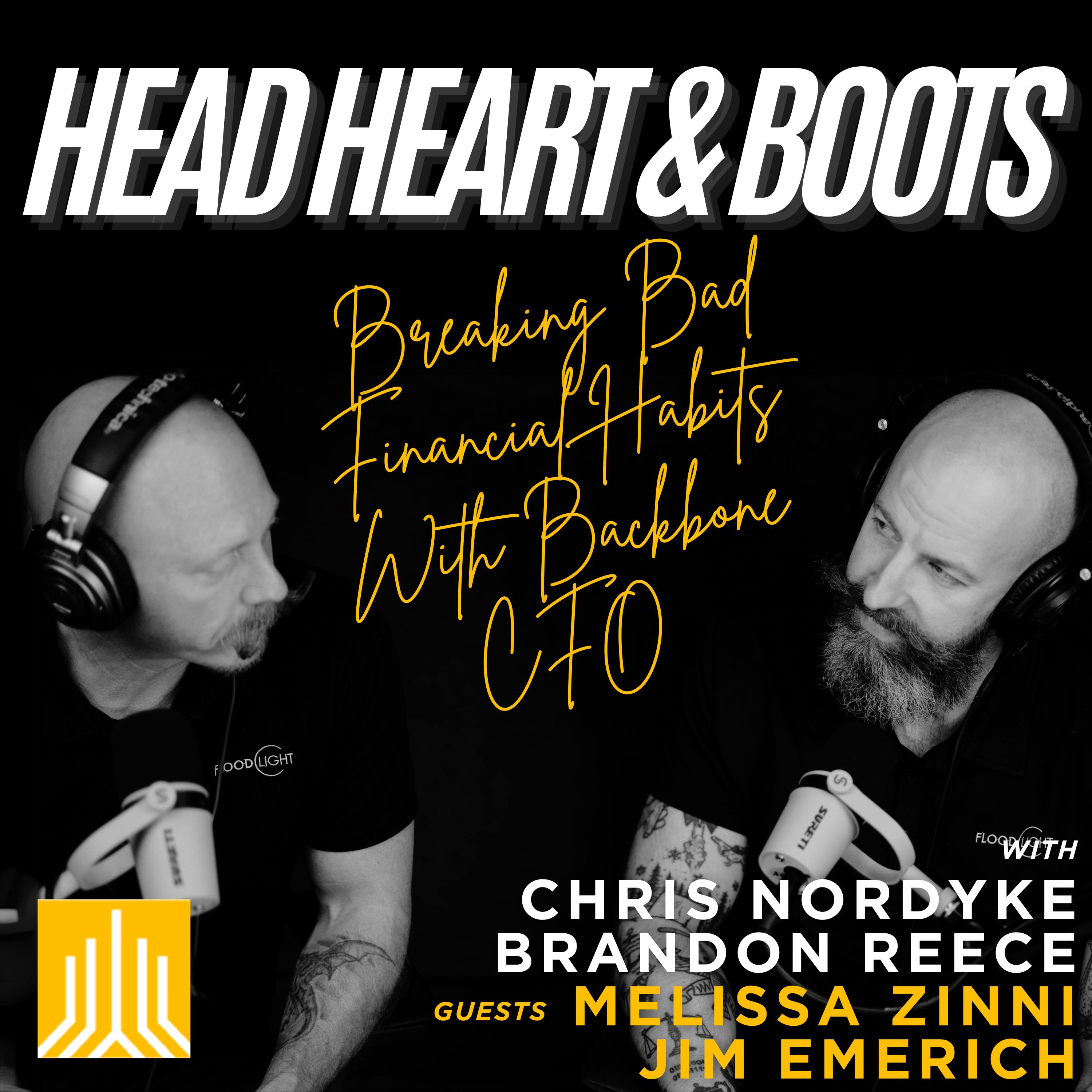


Brandon here. Look — I get it. Financial episodes don’t usually light people’s hair on fire. But this one? This one’s different. Chris and I sat down with Jim Emerich and Melissa Zinni from Backbone CFO — and I walked away with real answers to questions I’ve been wrestling with in my own business.
This convo was way more than spreadsheets and P&Ls. We got into the real mindset traps that keep us stuck — and the strategic moves that can unlock margin and cash flow.
Why you should listen:
-
(34:42) Why business owners freeze — and how to break through indecision.
-
(41:42) Controller vs. CFO — know the difference, save your business.
-
(13:40) Expanding locations? Avoid the cash flow sucker punch.
-
(47:43) What 20% profit actually looks like — and how to get there.
-
(57:52) How one company saved $50K by ditching a bloated setup.
-
(51:15) Self-insurance and group captives — the financial hacks nobody’s using.
This one’s loaded with takeaways. If you're trying to scale smart and stop leaving money on the table, don't skip it.
Thank you sponsors!
Liftify is for restorers who are looking to accelerate their online reviews. Consistent and fresh Google Reviews are critical to growing your online presence and establishing trust with your brand. Don’t leave it to chance; partner with Liftify and let them capture the feedback your team has earned.
https://www.liftify.com/floodlight
AnswerForce transforms the restoration industry by providing round-the-clock answering solutions. Their skilled team ensures no call goes unanswered, capturing and qualifying leads, scheduling appointments, and enhancing customer satisfaction. Benefit from industry expertise, scalability, and customized scripting while saving costs compared to in-house solutions. With AnswerForce, your business growth potential becomes limitless.
https://www.answerforce.com/floodlight
C&R Magazine is the industry’s oldest and longest-running media outlet. The team brings restorers all the current news, developments, education and resources that impact our business and the teams we lead. From print media to podcasts, C&R ensures the industry news you need is accessible from anywhere.
Actionable Insights. The Actionable Xactimate Profile by Actionable Insights offers live guidance for more accurate and complete estimates in Xactimate, preventing costly errors and improving your team's workflow. It's an essential upgrade for enhanced estimating accuracy and efficiency.
https://getinsights.org/floodlight
Did you know...
Only 30% of businesses listed for sale actually find a buyer? Even more striking, just 10% of those sell for the price their owners anticipated or higher, meaning only 3% of all business owners achieve their desired sale price. By focusing on understanding and enhancing your enterprise value, you can significantly boost your chances of joining that successful 3%.
Business Health & Value Assessment
Start AssessmentKnow Your Enterprise Value. See Your Potential Gaps.
Complete this assessment in less than 15 minutes and receive a free assessment for your business that includes:
- A Lite Valuation Of Your Business
- Your Value Multiplier Per Your Industry
- Health Assessment Per Our PYB Methodology
- Business Value & Growth Roadmap Tailored For You
- Value Acceleration Strategies
0:00 What's up, man? Good morning. How are you doing? Oh, good afternoon. Good afternoon. Good morning. Good evening. Depending on what part of the world you're in. I'm doing okay, dude. I'm a little foggy brain. I was kind of, I'm kind of fighting a, I think it's a cold, but I took the heck out of some emergency. Please don't kiss me like you normally do. So no kissing, no hand holding during our session. Yeah. Yeah. Thank you. Yeah. Yeah. Yeah, and to all the rest of you, welcome, hello, happy Thursday, or whenever you were listening to this. If you're new to the show, so welcome to the Head, Heart, and Boots podcast. That's right. If you're new to the show and you're like, what is this about? A buddy told me I had to listen to it, texted me a link.
0:40 And by the way, tell us who that is. Yeah. So Head Heart in Boots is the founder's podcast for Floodlight Consulting Group. And more recently, another family, part of our family of companies, Floodlight Sales Partners. That's right. So Floodlight Consulting Group, we're a restoration industry consulting company. So restoration and construction, that's our world. All of our consultants are past owners, which makes us somewhat unique in the consulting and coaching space. And then Floodlight Sales Partners is fractional sales leadership. So if you've been struggling to hire just the right leader for your sales team to really help you grow a strong commercial sales engine in your business, it's tough.
1:22 It's hard to find the right person. They've got to be equal parts mentor, manager, coach, developer, and they need to have had a successful career selling personally. And that's a tough combo to find. But we've found them. And we have those people on our team. And for a reasonable monthly fee, you can have a turnkey solution. to begin or continue expanding out your commercial sales team. So those are kind of the two things we do. We help people grow and scale their companies. And we've got two solutions to help them do that. Just go to floodlightgrp.com, yada, yada. And you can find us out there. Today, we've got a... We have a surprisingly good show.
2:02 I told them in the recording, I was really looking forward to this. The truth is, I was tentatively excited to have a great conversation about financial things and nerding out. Yeah. Because sometimes with financial people... They maybe don't have the best on-screen presence. A little tough sometimes. And this was actually very awesome. And so buckle in. Finances is something all of us as entrepreneurs have to have a handle on. And the more we understand it, the better partners we have around us, inevitably more money we're going to make. That's right. So tell us, who do we have on the show? Yeah, so we're going to hang out with Jim Emmerich and Melissa Zinni. They're both from Backbone CFO.
2:42 They're a fractional CFO partner of ours. We have two that we work very closely with, and we appreciate and respect both of them to death. What's interesting about the conversation is that we really just tried to get into some of the headspace Mm-hmm. that we wrestle with as business owners and decision makers where we pause when we should be taking action. We ignore certain red flags or certain things about our operation and they can cause us more pain and angst than we need to allow them to. And you and I were talking in prep for this show like, hey, I think all of us right now are experiencing some pain. level of anxiety or stress around cash flow and revenue. And I think that we tend to try to solve these problems sometimes with old actions that didn't create the right outcome.
3:26 And I think what we tried to do today in the conversation was identify some of those things that keep us stuck and hopefully highlight some ways that we can change our behavior or modify our thought process so that we can get some different outcomes. I think it boils down to that. And at the end, it's really funny because Chris, you sling a question that ended up being super fun. And I actually walked away with an answer of a burning question we've had more recently that I will be partnering with Wayne to put into practice. So real fun conversation, good show. These two people know exactly what they're talking about. They're certainly apex predators. We even get into it. Can you tell we're trying to convince you to listen to this financial show? Trust us. It's good. No, I mean, we even get into some cost-saving, you know, opportunities within insurance.
4:10 And anyway, we think you'll really like these guys. And if you decide to reach out to Backbone afterwards, be sure to tell them you heard about it on the Head Heart and Boots. They'll send us a fruit basket or something. That's right. Because we love fruit baskets. All right. Enjoy the show. Let's go. Wow. How many of you have listened to the Head Heart and Boots podcast? I can't tell you that reaction, how much that means to us. Welcome back to the Head, Heart & Boots podcast. I'm Chris. And I'm Brennan. Join us as we wrestle with what it takes to transform ourselves and the businesses we lead. This new camera angle makes my arms look smaller than yours. I'm noticing that and I really appreciate it. I thought you did that on purpose. No, I don't. I didn't. And I am not happy with it.
4:52 Jim, Melissa, thanks so much for hanging out with us, you guys. Thanks for having us. What's happening? This is going to be awesome. Yeah, right. Well, I don't know. I think when people look at the title and go, oh, financial conversations, let's light our hair on fire. But there's a reality right now, right? Where holy cow. I think that many of us in our businesses are having opportunities to face some stressors financially, I think is probably a nice way to say it. We've heard many things right now in the industry in terms of claim volume and Yada, yada. Long story short, our team is really keyed in right now. As consultants, what can we be doing to best partner with our clients and really think about maturing our financial management, our financial competency to be proactive in solving some of the problems that we're all currently facing?
5:42 Hence why we wanted to get you to powerhouses on the show and really hear firsthand from folks that are diving in and rolling up their sleeves with people different ways that we can be thinking about and poising ourselves in terms of financial competency to be better business. Right. Yeah. Yeah. I think the timing is really good for this. You know, RIA just launched their cost of doing business survey. That's right. Yeah. Again this year, which is just, it's timely. And I think they've been doing this, this is what year three, maybe? I think, yep. Year three. So I think with that, with the way the RIA is kind of stepping up, trying to do their data collection and provide people insight into the industry of like what benchmarks are and best practices, it's tuning more and more restorers into like, what are these metrics?
6:23 Yeah. And what should my business look like? And what are the numbers I should be chasing? And so I think it's just creating more awareness around financial competency. But I think one thing that maybe helped frame the conversation a bit is, it's been a little bit shocking for Brandon and I at times since we started Floodlight, to encounter companies in some cases that are doing 10, 15, 20 plus million dollars in revenue that have very little financial controls in place. And they're really just winning based on grit and determination and good values and stuff like that. But there's lots and lots of stored energy inside their business because they just haven't drilled in on establishing great financial controls and learning how to project and forecast and look out in front and of the business financially.
7:09 And so I've been excited about this topic because I think there's very little conversation happening around high level financial thinking in our industry right now. So it's great to have you guys on the show. Yeah, for sure. We're excited, man. I think a lot of things that you just touched on right there in that bit of a summary, they kind of touched the heart of exactly why we started Backbone CFO. And the good news is if you're listening today and you're an entrepreneur, you're a business owner leader, you're not alone in that. I think a lot of times, Chris, you just mentioned like grit, values, vision gets you pretty far. And honestly, it should. Those things are fundamental to being an entrepreneur and a business owner. And I would tell anyone listening to this, you two included myself as an entrepreneur, Melissa, like those things have to lead because you can have all the financial controls in the world.
7:52 But if you don't have vision, values, like some of those core components to gaining traction in your business, like. all the financial metrics and controls in the world won't save you. But I think you're speaking specifically to people that have gotten to a certain place and scale now is becoming very dependent on building things that you haven't established yet. Like what got you here kind of won't get you there conversation. And I think that's kind of what we're talking about introducing at this point is you've gotten to a certain place. There are certain external factors now that are maybe causing you to think twice about what's going to be the next thing. Then financial control could be some of the things that you need. Maybe you're missing right now that's causing you to leave some stuff on the table. That's good. Melissa, I think I want to start with you.
8:32 But from your guys' perspective, what are you seeing as you're working with clients really of all kinds of size and industry, but you guys do specifically work with some partners in our industry? What are you seeing as some of the biggest gaps that people come into a relationship with their financials in regard to how they're thinking about the P&L, how they're thinking about cash flow? Just what are you guys seeing as those big top three hits? I think that what I see with restoration clients specifically and construction clients, the owners and operators are so in tune to the jobs. They know how many they have. They know where it is. But their P&L is not really reflective of what they have, I'll say, on the street or in value, right?
9:18 So they're not recognizing all the income that they should be. And they're potentially not properly allocating all of the expenses that they should. So I'm going to talk about job costing and a whip report of work in progress. Right. Really knowing that allows folks to get a good handle on their profitability. When you do that and you take the time to learn that schedule, and we love to help companies do that, you now are going to get insight on your progress. You're going to get insight on future cash flow. And let's be honest, you're going to see real quick what jobs are maybe not winning for you. And you're going to have a job that doesn't win. It's going to happen.
9:59 So we're doing that with a lot of our folks now. We're helping them see those things and it's eye opening and it's allowing us to now have conversations about the operation. OK, now let's spend a little bit of time at estimating. Let's spend a little bit of time here learning. And so just getting our hands around the finances in the stage of a project is huge right about now. That's huge. Got it. Okay. Okay. Jim, do you, any additional layer to that or anything else that you're seeing as the big stopgap? Yeah. I mean, Melissa hit it dead on. I mean, I think getting, again, you get to a certain scale and size and you have to start looking at things through a different lens. And those lenses are on one hand going to take you more granular to Melissa's point, job costing, work in progress, percentage complete.
10:44 How's my job? Estimate versus actuals. Like that's all the nuts and the bolts. And then at the other hand, you have got to have the ability to pull back. And I think the business owners that we see that do well in scaling are trying to scale their business have to learn how to stop and then also say, well, what does the next year look like? What does the next 18 months look like? How does the decision I'm about to make on hiring or investing in my capital into equipment or what have you, how does that allocation decision impact 12 months from now? And what has to be true for me to meet my overall business goals between now and then as a result of that decision? And we would call that like a financial projection, which is a bit more of a high level tool.
11:25 So I think both Melissa's dead, right? Like that job costing that work in progress, that kind of, I would say day to day decision making as it relates to your business. Yeah. And then the ability to pull back, the ability to see things at the most highest strategic level to say, am I getting where I want to go in my business? Am I getting out of my business what I really want from it? That's, I think, a huge point. It's funny because when we transitioned from restorers to consultants, everything about how we deliver a service and then get paid for that service just looks very different. And one of the things that was, it kind of blew me away. It was a little embarrassing, honestly, is how often I was running and leading restoration companies from this more in the moment perspective.
12:06 And so much so that when we started looking at, let's say, a client rolling off of our book, right, for whatever reason that might be, they come to the end of their... whatever. You just think of it in that moment, just like we do sometimes in restoration, that one job, that one month's worth of income. And the reality of it is, is when we start thinking about it on the year, if I lose a client in January, I've lost a year's worth of revenue from that client, not a single month's worth of MRR. And so it forced us to get more aggressive about what happens with a decision I make today in regard to how it was going to affect me economically later. And for whatever reason, when I was in the trenches and restoration, it wasn't as easy for me to pull back and really worry about that.
12:46 It was so much about what's right in front of me. And so I can just really resonate with what you guys are saying, the value of both, right? Mm-hmm. I'm curious, one of the big overarching trends in our industry right now over the last really five, six, seven, eight, 10 years has been consolidation, right? Where you've got more and more restorers are being acquired by larger entities. And so people are adding additional locations or people are doing greenfield expansion, opening up satellite offices. So there are more and more restoration companies growing that way than ever before. What are some of the challenges as people, I mean, Brandon and I are fully aware, we've talked about it many times, some of the operational challenges of expanding to additional locations.
13:28 But what do you see financially that people tend to begin struggling with that maybe they didn't anticipate or plan for from a financial standpoint as they start to have all these remote other sites that people are doing business at? Wilson, you want to go first? Sure. I think so. This goes back to something Jim said early on, which is what you did then will not build what you're going to do next. You said it differently, but we need to build a foundation and you need to build a scalable process. And so what folks have. When that acquisition or a new venture is not always the most successful, it's because it feels like, oh, I'm just going to buy them and it's going to work. You need to work on integrating them and actually having repeatable, scalable process that does not need the business owner to do it.
14:16 Right. So when you're growing, it's no different than the mindset of what you need to build if you're going to sell. So if you're going to sell the number one thing that anybody who is going to buy you wants is to make sure that that business is going to run without the owner. Right. We love you, Brandon. You're great. But right. I want to make sure this whole thing runs without you. So if you're going to grow, you need to have something that is repeatable, that can grow without a single person. It's the process that can grow. And so really helping anyone, right, restoration or any business identify all those pillars that are going to stand up another location is really important.
14:57 making sure and sometimes just taking it slow is really the only way you can do it, right? Running too fast doesn't always pay off. And so we have seen that be the most successful way that folks have been able to do that. So even though you might have the cash, make sure you have the process. I love that. Yeah. Anything else you would add, Jim? Yeah, I think I'm curious too, just like what are the financial practices maybe that ought to change or that they should augment their process with when they start doing business in other markets or having additional operation centers? Well, just that you should air quote whatever Melissa just said there at the end. That was really good. But what I'll say too from Chris, when I answer your question, I just want to add to the last question, which is like just on the expansion of organic growth versus inorganic growth.
15:40 I kind of think is what you were saying there. I'm like very bullish on that strategy as a path to growth. One of the hangups I see in that process that happens all the time is what somebody is willing to pay for that expansion. And I think one of the things that has to be considered as an entrepreneur, if you're listening to this, is, you know, I have said opportunity in front of me. And you always have the alternative of seeking that exact same growth on your own. Right. So I think comparing those two costs and there's a delayed cost of revenue and profit on one hand. Right. If you do it organically versus if you go to acquire an established location or established enterprise somewhere else, what are you willing to pay for that? And what is the opportunity cost of not doing it?
16:22 And these are things that I think going back to long-term planning, being able to pull out and make some assumptions and lay that out mathematically so that when you're going into it, Melissa made a great point there. You know, you could have the cash and capital that you think you need, but I think one thing we see as entrepreneurs we work with, and I see this own issue in myself, is a lot of times we get ahead of our skis. And we want to make decisions based in spur of the moment, maybe a little bit emotional, maybe a little bit optimistic. And I think you need optimism as a business owner. It's almost a requirement. That being said, I think pausing, getting yourself surrounded with the right people, probably your leadership team for sure, and looking at all the variables, understanding what the enterprise value of that potential acquisition actually, actually is, is very important because I think you have to weigh that against what would be the alternative cost and time to build that thing on my own.
17:11 Especially we're under the assumption now that you've already have a center point of establishment, right? You know how to do this business. You know how to do this operation. That's under the assumption already. So if that's the case, you can make a pretty good decision based on what it would cost to replicate your know-how, your operations, your sales, your, you know, those kinds of things. And I think that should be taken. What was your other question? Sorry, Chris. That's smart. I was just thinking in terms of financial practices, because some people listening to this are getting ready to open another location, you know, and XYZ, whether that's a greenfield, they're going to build it from the ground up or they're going to acquire it. And it seems like in our view, it's important to there's some behavior shifts in terms of maybe how we're here as an example. When people start expanding into other locations, there's an opportunity to centralize services under maybe the other ship, the home office to handle the accounting, the AR, recruiting at a central location and provide those services to the satellites.
18:07 But then accounting for that cost, it can become a bit of a soup, how the cost is flowing across those things. Just curious if you have any suggestions from a financial standpoint that people should have in mind or be talking to their financial person on their team about. I would say number one is, do you know your costs at the first location? Do you really know what your costs are to begin with? Yeah. Do you know your overhead costs? Do you know your SG&A? Do you know your cost of doing business on a daily, weekly, monthly basis? And do you know your gross profit margin? Do you know what success looks like at location one before you go to location two, three, four, five? And I think, you know, we have some folks we work with in your industry right now. And I think that assumption is not always true, irregardless of size, irregardless of cash in the bank, irregardless of profitability or years in business.
18:50 So I would say number one is, do you know your cost of doing business at location one before you expand and take on another complexity and dynamic environment of now needing to know cost of doing business at location two? So that's step one. And in terms of some of your points, without a doubt from an acquisition strategy perspective, the consolidation can yield economies of scale in, I'll call it indirect cost areas or overhead, SG&A, things like that, which should be considered as an advantage in a strategic way of scaling. So 100%, that can be the case. And Melissa, I'll let you speak to some of the specifics, but one thing going into my mind, and I was just, so prior to starting Backbone CFO, I worked for a company that had four acquisitions in almost six years, starting from one location.
19:38 And one challenge that constantly would bite us in the ass repeatedly was cashflow, right? Because the mothership, so to speak, was always funding being the bank of the other locations until those locations got up and running. So in other words, most businesses aren't set up to be a financing institute. So just remember that. And because of that, that doesn't mean you can't capitalize new ventures and those kinds of things. But have a financing plan in place because that cash can get tied up. You know, I always say cash has this incredible ability to grow wings and fly away and it never comes back. And just account for that. Assume that from the beginning. Have a financing plan in place to capitalize your new ventures. But I'll let Melissa speak for some of the specifics.
20:19 Yeah, specifically as we've seen folks grow out into new locations, I would challenge every entrepreneur, every owner who's going to do it, be vulnerable and be willing to know that the plan that you put out might not be what's going to work for that location. And just because you have five people in the office in location A and you're prepared to finance and fund for five people in location B, it's, It may not be. And it's OK to fail, but fail fast. So be willing to be vulnerable to say, I'm going to set benchmarks for myself on a financial way that says I'm going to allow myself this much time to get a return on my capital.
21:00 or before I pull some other levers, right? Because we have seen a couple of business owners who have jumped in with both feet, which is what you want to do. You want to start there. You don't want to put a toe in. You got to go all in, but you got to be ready to start to pull back if the indicators are there. Don't look at everything with the rosy glasses. So we have seen some folks. And so setting up good financial metrics to say, I need this many deals. I want to have this much in revenue, this much in backlog and just throwing out a couple KPIs we all talk about. But what does success look like and know it before you agree to jump in? Yeah. Can I add one more thing to that? Just speaking, like thinking of real life industry specific examples, who's accountable for those things that Melissa just mentioned at location number two, three, four, and five?
21:45 Is it going to be the same people that are not only financing from location one and the headquarters of the mothership, but they're also doing all the things? They're responsible for all the things at location one. Who's going to be responsible and accountable for those outputs at these new locations? And, you know, I think we can easily talk about financial bandwidth, but we all know there's an operational capacity limit limitation to teams and to leaders. And when we go into new locations, is it clearly identified? Who's responsible for what? And is there clear accountability to make sure that the drivers that are going to push successful were things like, Melissa just mentioned some really good ones, sales backlog, sales pipeline, then there's fulfillment execution, collections.
22:26 Are all these things established? And some of that can be held back at the centralized location, like collections is a good example. But some of it will need boots on ground to move things forward like sales pipeline and backlog. And who's responsible for that? Is that clearly defined? And is the accountability in place for that to be a success before it starts? That's a huge point. And I just want to kind of like double click on that for everybody. Like make sure you pay attention to that. Because I think one of the things that both of you mentioned at the beginning of that line of questioning was just the opportunity cost. And I think that's where we get high-centered is we don't really know how to consider the opportunity cost. And I think what we lose sight of is the longer it takes us to establish a consistent level of execution at that location, even if before we touched it, they were fine.
23:14 Because inevitably, when we try to pull them into our culture, our system, new leaders, new relationships, like humans are finicky, and we make things 10 times harder than they need to be most likely, right? Like, I don't think we're accurately paying attention to those costs, and they can be difficult to even pencil. And so therefore, we tend to ignore it. So I just wanted to highlight that because I think what you guys have said is awesome. And I think that last point is big is if you do not have a leader that you can trust and depend on, to have some sense of accountability and ownership over that location's performance, the opportunity cost could be really, really high. And it's hard to articulate, you know? Huge. Another thing, I just, like, kind of like two places I want to go based on what you guys said.
23:56 I want to get this question kind of milling around in your head. So... Melissa, you had mentioned people not taking action, right? Like a delayed action taking and what that means. And I want to come back to that with why. Why do we struggle to take action even when our partners and our data is telling us that we need to do something differently than we're currently doing? So just hold on to that because I want to get into that. But I just wanted to share a quick example in regard to this game that we can get caught up in, especially in the feeding frenzy that we see in the industry about top line. Our friend Rocky over at OneTom is just a huge proponent of... He doesn't really even care about top line at the end of the day. It's all about profit margin, right? Because that's the stuff we keep.
24:37 And I think one of the things I can wrestle with personally is I work with a bunch of restorers and a lot of them are just absolutely killers. And they're growing these big, robust businesses. And I look at them pulling $30, $40, $50 million a year in top line. And here I am with our numbers, with our little company. And it's easy for me to get swept up in the ego trip of, we need to buy, we need to go get this player, we need to accumulate these assets and pull it under our leadership and have this in top line revenue. And we literally just went through a scenario where we were considering things like this. And when we really stopped to look at the cash flow... when you're in debt up to whatever number, right? Because you had to leverage yourself to make this purchase. By the time you get done settling that debt and paying not only the principal, but the interest payments on that, it's amazing how little cash you actually are able to keep at the end of that transaction.
25:28 And so my encouragement to people is like, look, just because your neighbor's doing $30 million, that's cool. Find out what they're doing for profit. You might be able to do that with a $10 million business. Yeah. Don't get swept up in top line and the conviction that somehow a bigger, more complicated company is a better company. Because sometimes, man, those small guys at 5 million and they're able to produce at 30% net operating income, like they're doing all right. And they're like mine. You know what I mean? Yeah. Yeah. Yeah. And AnswerForce. We tend not to give the attention to our call intake that I think we really ought to have as restorers. And of course, one of the biggest challenges we have with our call intake, whether it's an in-house receptionist or a service like AnswerForce, is what do you do when your receptionist goes out to lunch?
26:10 Well, AnswerForce makes that very easy to solve for, right? They're 24-7. You have a receptionist or a call intake person that's out for maternity leave, out on vacation, etc., etc. AnswerForce has a solution to all of those things. And I think, too, it also solves for us having a very consistent, repeatable call intake process. We all know how important that is. 100%. And the cool thing is actually we just hung out with these guys and they let us know, let us in on some big feature updates that have recently been pushed through the system. So first, verified contacts, right? So verified contacts, basically it allows the system to understand that this is a repeat caller. And then it allows them to auto capture and fill those details as part of the intake process.
26:52 So smoother, more professional intake. Much easier to kind of give that client that impression. It's awesome for commercial. Hey, this isn't the first time you've called, right? Yeah, and we'll listen to the rest of these sets because I think they're super applicable to our commercial opportunities. So specialized scripting, okay? This is great because this is everything from holiday shifts, after-hour shifts. I mean, you name it. There's different reasons, right? Or different layers of the cake, if you will, just based on what's going on in terms of call volume, what's going on time of day. And so with specialized scripting, the script then will match that. And so it's shifting live, if you will, along with that kind of richer context of what's actually happening in the business. Then this other thing, I thought this was super cool, is dedicated phone numbers.
27:34 So going back to that repeat client or that key client or customer, we now can associate a specific phone number to them. And so what happens is they get received very uniquely, right? So I can imagine creating a custom script for that client. We now can recognize a repeat caller and autofill and speed up their intake and then on top of there's a specialized number that's dedicated to them. So you really get to marry up that professional service offering, right? That we're promising, if you will, during the prospect. And right from the jump, if you've got a commercial client with specific needs or specific expectations, build that into the script at call intake. Yeah, it's super powerful, super powerful.
28:15 Another one is just access to information wherever you are. So I don't know how many of you are already currently using AnswerForce. You should take it seriously in terms of getting a demo and checking them out. But if and when you shift over to them as a partner, the cool thing is now is that you've got access to all this data, all this information on the go from anywhere on your mobile device. And so you can literally check inbound, outbound calls. You can listen to recordings. actively coach the team kind of like midstream, right? And so again, just a ton of efficiency, a ton of automation and just higher levels of customization coming out of AnswerForce. And it is so stinking affordable. This isn't just for big multimillion dollar companies.
28:55 This is for you that's still working out of your home shop, your garage. And it's also for you that are running a $25 million operation with four locations. It's just, it's pretty extraordinary. They work with some of the biggest companies in our industry and many of the smallest ones as well. So, okay. Actionable. So guys, we have talked about our friendship and relationship to these guys for a long time. Many of you know in the recent probably year and over the last several months, just this hyper focus on the efficiency and quality of our estimates. At the end of the day, our cash flow is heavily impacted by our team's skill and competency around writing a really comprehensive sheet and really making sure that the scope is accurate.
29:37 One of the powerful things that Actionable has is their actual Exactimate profile. This profile is a live AI tool that's monitoring you as you write the estimate and as you're implementing specific line items. you be sure that you've really taken into full account all the individual elements and line items associated with this element of the scope that you're trying to accomplish. And I'm not going to highlight any specific teams, but we have heard robust numbers from teams using this. We're hearing anything from 5%, 6%, even 8% top line growth specifically from the quality of their estimates increasing. I remember when they rolled this out to you that one of the use cases or part of the value that they were trying to hit on is the ability for us to bring up a new estimator quickly up to the standard and competency and the results ultimately of the more experienced estimators on the team, right?
30:34 So this is an incredible onboarding and training tool to get somebody up to where they're very, very competent and producing quality estimates just that much faster. Way faster. And just one last thing I kind of want to hyper-index on is they have just an absolute boatload of white papers and F9 supporting notes. And so this is something that you could participate in being a member with Actionable Insights. But guys, we all know that getting our estimates approved in that negotiation phase is hard right now. It just feels like every carrier is significantly understaffed. They're fighting for error. We're fighting for error. And anything we can do to reduce that friction is better. And so the better we are at providing... really good support for what we're calling out in our scope and why we're calling for it, the better.
31:19 And so these white papers, these F9 support notes are super powerful. Man, it's been a little while, but we've been kind of refueling the relationship with CNR quite a bit lately. And that's been good, man. I think both teams got so dang busy. We had a tough time kind of locking in and getting some face time together. But the team over at CNR has been great for our industry, you guys. You know, we've often referred to Michelle as a friend of the industry. She really is keyed in on giving us what we need in terms of tools, communication, intel on the industry. And so we just continue to encourage you guys, participate, make sure that you're receiving your quarterly copies and that you're getting all the online content that just comes in boatloads from their team.
32:01 So CNR Magazine, guys, pay attention, make sure that you're participating and getting your intel from that team as well. Liftify, bro. Yeah. Liftify, you know, it's interesting. Yesterday, I was just seeing one of our clients was getting awarded their 750 Google Review trophy. And they were already talking about hitting 1,000. 1,000. That's right. Which somebody has done. Yes. One of our clients has done it. It's remarkable. And I think the most remarkable thing that people are discovering, and we're seeing this every single day with our clients, is that when you start upping the volume of Google reviews you're getting consistently week after week, the recency, when you're getting the recency dialed in and just meaning every week you're adding Google reviews to your profile, dramatic jumps in organic reviews.
32:48 phone calls and lead gen. And of course, who doesn't want that? Every single one of us, including Floodlight, we want that. And that's why we've indexed on, we use Liftify to build up our Google reviews. So it's a simple turnkey service. They've really created a process for capturing the most quality Google reviews from the jobs that you're already getting. So if you want to get more work... grow your revenue just off of the existing work you're already getting. Liftify is a big part of how to do that. And it's simple. It's very, very cost effective. From our experience with Liftify and what we've seen with our clients, significantly better value and better results than many of the other platforms that some of you might already be trying.
33:29 So if you're not happy with the number of Google reviews you're getting, you need to reach out to Liftify. And I think as a point of reference, it's worth us saying. Liftify expects 20% to 25% conversion. So think about that within your own numbers. If you're doing 1,000 jobs a year, you should be adding 200 to 250 Google reviews to your profile every single year. If you're performing under that, You owe it to yourself to reach out to liftify.com forward slash floodlight. You know, one last thing to add to that as part of their kind of more recent integration of AI or advancing that integration of AI. One of the big focuses for their team is gathering more live project data and analytics for you guys. And so really what this is focused on is equipping all of us to create better customer experiences.
34:14 So not only are they keyed in and driving Google reviews for us, but now they've actually turned the corner and began developing toolkits for us that use Liftify to actually be getting information that can help us modify our service delivery to create better client experiences. Super powerful. Midstream. We're talking mid-job. Yeah. Wow. Super powerful. All right. Liftify.com. All right, guys. Thanks for hanging out with us. Let's get back to the show. Okay, that question, guys, it's burning on me for sure. Like, what is it that you guys hear people telling you when you are like, hey, the mirror is real clear here. We need to do something different and they're not taking action.
34:54 What causes that? For me, what I've heard is usually when people aren't taking action, it is because there has been a negative outcome. Most times, if you have people take action because things are positive and the action is going to have them grow, Most people jump, right? But human nature is I don't want to fail. I don't want to shrink a little bit, regroup and then blossom. And it's our job. And what I do in many calls is... Okay, I hear you. This is the writing on the wall. You are not getting out of this, what you're putting in. But, but, but, okay. So can we agree that we'll revisit this in 30 days or 45 days? By the way, after 45, no, you got to pick a number between zero and 45.
35:38 We're not visiting this in 45 months, right? So we, I definitely push a little, guys, let's talk about it. Come on. Why do you not want to do this? And most of the time folks are, it's just, they don't want to fail. And the answer is it's okay. I don't want to either. I'm a competitive person just as much as probably everybody listening, but But let's now take all those resources and go get a win because that's what we're going to do. We're not going to sit back and say that one didn't work. Oh, well, it's that one didn't work. Now let's go get another one because that's the motivator I have found with our clients and entrepreneurs is let's go get another one. And we can and let's approach it differently because not everything's going to be a win.
36:19 So that is usually what I have seen with people not wanting to really make that hard decision is because it's a failure, a fear of failure. But if you can step outside yourself for a minute, use the counsel that's being given to you and find another way to deploy those resources for the positive, you will win. Yeah, it's huge. Yeah. Jim, you got anything to add to that from your seat? Man, so you asked that question, I immediately filter it through like a leadership answer. I hate to do that because I'm sure you want a finance answer. But man, like, well, I heard this quote years ago and it's just stuck with me as a leader. This is going to sound counterintuitive to a CFO. I know it is. But just trust me, I've seen the best leaders do this. And that is great leaders do not make great decisions.
37:01 Great leaders make their decisions great. And I think the essence of that quote is conviction to say, I've made this decision to be an entrepreneur, to be a business owner, to be profitable. To your point, I'm going to do what it takes to make that decision work. In spite of fear, in spite of failure, in spite of the hard times, in spite of the tough decisions, that's what has to be done. And insert whatever you want into difficulty, fear, all the things that we can economy, right? The things you can control, the things you can control. I think to Melissa's point, I think, you know, it's really just about making decisions and committing to action. And again, those are that sounds fluffy and it could sound fluffy. But I think it really is a leadership thing to be as a business owner and entrepreneur, to just be committed to making your decisions work, finding counsel that can help you get there.
37:50 And I think committing to actions really, it's being vigilant in that sense to make sure that you are committed to action. Yeah, I think that's great. I can relate to that. I like that phrase. Yeah, it's funny because Chris and I and the gang internally here at FL, we use the statement a lot like, let's play to win, not to be right. And that's like our own gut check of sometimes we just want to be right and you start protecting the wrong thing and you're no longer focused on it. outcome, right? Oh my gosh. And so we just try to keep each other in check by the whole, okay, we plan to win here. We plan to be right. And it tends to keep us out of too much trouble, but we're just as susceptible to this challenge as anybody else. My ego flares up.
38:31 I hate making a decision that feels like, you know, here it is for me. Like I promote a concept, a vision, an idea of where we're going and how we're going to get there. And it does not feel good as a leader to turn around and say, I was wrong and that didn't work. And because of that, I've got to make some decisions that aren't your fault. Like this is all on me, but it doesn't change the fact that I am forced to make these decisions because I still have to fight for the whole team. And tomorrow, not just today. And so, but it's hard. Like that hurts my ego, hurts my pride. It makes me feel like I lied to people and let them down. And those are all reasons for me that makes it difficult sometimes for me just to take the action that I know is staring me in the face. And it feels like every time is just as hard as the first one.
39:12 I don't know if anybody else can relate to that. I mean, what you're saying there like brings two words to my mind and that is being humble and vulnerable. So like the antithesis of leadership is really pride because being a great leader doesn't mean that you're right all the time. It doesn't mean that you're the most successful, but it does require that you're vulnerable. And when you're wrong, you admit it. Right. And you're humble. to make this more like kind of bring it back even to like some of the finance stuff in terms of scaling. And, you know, we talked about a lot of the inputs required to make a decision like forecasting and projections, know your costs, job profitability, gross profit, all those things, right? If you don't understand those things as a business owner, or you need more clarity around it, In many cases, the requirement is to get help.
39:54 That requires vulnerability. It requires a bit of humility. You may even have to invest into that thing or that person, right? That is humbling yourself with dollars and cents, right? I mean, it is. And Melissa and I joke about this all the time. There's like the tuition of entrepreneurship. It's the most expensive tuition out there, man. Like it makes Harvard look cheap. And I've written those checks too many times, right? But I think in many ways for us to be great business leaders and regardless of industry, but to surround yourself with the people that have the perspective, the leadership and provide you the accountability you need to get through that, it requires humility. Yeah, that's huge. Oh boy. Okay. So I got another line of questions.
40:34 I got something after that. You do. Okay. All right. This is what happens. Sometimes we get all geeked out on something. We fight for mic time. All right. So... I want to wrestle a little bit with this kind of controller versus CFO role. Okay. And maybe just because those are very specific terms that the kind of broader generic business world uses. Sometimes we use, we've got everything in our industry from office managers to like lead coordinators. And somehow we kind of are trying to find this way of accomplishing or establishing oversight over our financials. So like kind of a two part question. So one, help us identify kind of the core differences between those two roles. And then maybe company size. Like at what point do companies start considering those functions or roles within the organization?
41:20 And then kind of the last thing, and I think you can weave this in. is I can't tell you how often we will hear remarks around people's lack of wanting to hire non-revenue generating roles. And somehow when it comes to AR and finances, this tends to be the place that we skimp first. And I'd just love to hear your perspective on how that, what you think about that. That's a loaded question. There was like eight questions there. That's where I was going to go, Jim, you can go first on that one. Well, let's break this up. I think the first question I heard was difference between a controller and a CFO. Yeah. Yep. Yep. Melissa, I think you should tackle this like and be very like this is what each one is.
42:00 A CFO is a strategic financial leader. Simple. Right. And it's not simple, but it is. So can a CFO do bookkeeping? Sure. Does a CFO know how to write a check? Yes. Can a CFO put together some AR schedules and prepaid schedules and all those fun details? Absolutely. And they better be able to because they're going to use all those schedules and the whip schedule and a thousand things in between to make a strategic financial projection. They should be weaving in owner goals, business goals. They should be looking around what's happening in the industry, what's happening in the economy, what's happening in the economy. I don't know, you might have some loan payments that are coming up in five years.
42:42 They should be thinking about that today, right? So they are that person who is always looking into the future. That's their job. You need a good controller. You need a good bookkeeper or an office manager or whomever you would like to call them. Because as you said, I've heard them called all different names, right? But a controller is that person who is able to complete those higher level schedules and have their hands in a few more things all at one time. Right. It's very simple to hire someone who is just good at calling for collections. Right. But your controller needs to have their hands in understanding how much payable outstanding you have.
43:23 They are outstanding. They need to know the demand of cash flow. But they're looking in a more short sighted way. And that's not a bad thing. Right. I don't want to say because they're not looking five years in advance, they're not doing their job. They are doing their job. They are keeping everything inside of one playing field at a time and they're juggling all of that. And what they should be doing is they should say, you know, that insurance bill is going to be come and due next week, CFO. And I'm looking at the bank account and it looks a little light. Did you, you know, have you thought about that? Right. And so be a good partner for sure. So strategic and high level hands on day to day activity would probably be the easiest way, I think, of separating those two jobs.
44:04 Okay. So somebody like, I'm almost hearing you say the controllers more, they might be three months out. They might be looking a couple quarters ahead, but they are more kind of like what's in front of us right now. Whereas our CFO is way more strategic, forward thinking, several years out. The controller is more tactical, right? They're definitely more of a tactical mindset and a tactical workload. So yeah. What about size of company? Where do you see those roles begin to get onboarded most consistently? I have to say size is not always the first thing that I look at when it comes to that. It comes to how do you operate, right? Because we have companies who we work with that are really complex.
44:49 So having a bookkeeper controller even at $3 million sometimes is a little necessary, right? Having somebody into that day-to-day business. But then we have other companies that are larger, right, that are at $10 million. And they're OK with someone who is cutting payable checks like a more of a midline bookkeeper and a CFO, right, because they need that strategic forethought. So there's not a hard and fast rule. I would start with how efficient is your process and how clean is your data and things that you're working on. But what I have seen, if you're looking for a rule of thumb out there, controllers probably somewhere around 10 million and above.
45:30 But again, no hard and fast rule that makes it perfect. Okay. Okay. Yeah. Jim, did you want to add anything to that? Just more on the definition side, I'll make it just, I'm such a simple person. You know, the CFO is not part of the accounting department and the controller is. CFO is part of your leadership team, right? Helping you grow, helping you make strategic decisions, helping leverage decades of experience growing companies. Whereas the controller, and to Melissa's point earlier, this is not a bad thing. The controller, bookkeeper, accounting manager, whatever you want to call that person is responsible for day-to-day accounting activities. And I think it's really that simple in the sense that you need, in my opinion, to scale to multiple eight figures and beyond.
46:10 You need both. And again, you might need a controller, a bookkeeper, and an AR person or a payroll processor. I don't want to totally define and put hard boundaries on these things, but I think that is required or will be required. And then you will also need somebody who can help you think strategically about acquisitions, raising capital, pricing adjustment. financial forecasting projections, all those things that at a $10 million company, number one, the controller won't have time because there's going to be a significant demand on them to manage the day-to-day things and they should. And then number two, they likely won't have the capability and or experience to rightfully help you grow and scale your business the way you probably want to as the business owner. So I think both are needed. It's not a bad thing that they're differentiated in summary.
46:52 And I would say from a revenue size perspective, Melissa already said it, I think that bookkeeping function, I mean, you kind of need it day one, right? To a degree to cut checks and pay bills and process payroll. But I would say that fractional CFO, fractional CFO, and I can even step that to a degree, right? If you're a hundred million dollar company, you better have a full-time CFO sit in the seat, period, you know? But if you're a $20 million company, you probably don't need that full time. So you might be able to get away with a fractional super. That's helpful. I think that helped clear it up for a lot of people. It's funny how often I get that question between the two. And it's been, I mean, it was kind of a moving target for me too. Okay. What about this whole, when we hear things like, well, I don't really like hiring non-revenue producing employees in regard to administrative or financial support.
47:41 What's your guys' perspective on that? Who said that? Everyone. I guess I'll take this one for me. I like, and I've been asking this question more and more to business owners, current clients, but also folks that I'm talking to about working with backbone CFO specifically. And that is how much money are you leaving on the table right now? Like you think you're profitable. Yeah. You think you're growing. Brandon, I think you said it earlier. You know, you're focused on the top line and maybe that's even growing right now. But there's still a problem. And that is, you know, you're not profitable or, you know, you're not as profitable as you could be. And you definitely know there's not as much cash in the bank as there should be. And I would ask you, like, as the business owner thinking that thought, and it's a fair thought.
48:24 Trust me, I run a business and I think the exact same thing. So the question that I have to answer is, well, what am I leaving on the table? If I'm running at a 5% net or 5% EBITDA, and I know industry standard or best practices, 10 to 15%, and I'm running a $10 million company, well, quick math tells me that I'm leaving a million dollars on the table every year that I'm not at best practice or standard in my industry. Right? That's rough math. So who in my company, who on my leadership team is helping me close the gap on that million dollars? It's definitely not your salesperson. It's 100% not your operations person, right? Because they're focused on that above the cogs. They're focused on job level profitability and execution, and they should be.
49:05 So who is it? Who's helping you make sure there's more cash and more profit in the business? My guess is most business owners get to, especially listening to this podcast, they've gotten to the point where... You've probably outgrown your own capability in this realm and that's totally okay. So then it becomes a who not how question, which means you have to look at somebody to fill that gap and to fill that void. And that would be my answer to say, if you're okay with leaving a million dollars on the table every year, then keep going, man. Yeah. Don't hire them. Don't hire them. Yeah. Yeah. I think that's an awesome way to put it. I think, again, there's probably a theme about opportunity costs and being able to pencil that out. Yeah. I think this is a perfect example of a lot of times you can actually identify a physical number to it.
49:47 Paying somebody 80, 90 grand to come in and manage AR like a pit bull might be worth a million dollars. So... That's true though. And I will say like hard numbers, evidence, right? I think is important. So we just did this internally and this is not even a plug for our company, Backbone CFO, but I think it's also just industry standard. So if you're thinking about, should I, can I hire a CFO or a fractional CFO to some degree? We did this with our 30 some clients this most of maybe two months ago. What is our average client revenue and what's our average client profitability? But here's the better question. How has... has that changed in the last year? Right? Because nobody cares. Like if I tell you our average client is $50 million a year and they're at 10% EBITDA, what does it mean anything?
50:30 Because what did you do to contribute to that? And what the numbers I'm about to share with you aren't necessarily saying, well, we have done all this work as much as it is. This is the part of, we operate within companies that grow like this, which is our average client does 10 million a year in sales or did 10 million and are on pace to do 12. So that's a 20% top line growth. And then our average client on that $10 million did 10% net profit last year. So bigger a million bucks. And then is growing up to, Melissa, correct me if I'm wrong, 20% as well. 20% net profit. That's $2 million. So again, on average, now we have people on both sides of those numbers. I don't know what's an extra million bucks worth.
51:11 Yeah. Yeah. I think it's beautiful. I think that's a great example. It's awesome. Yeah. So as we kind of wrap up, it's possible we can give people a little candy, a little fodder of like some ideas that they can take with them or reach out to you for help with. But last night I was sitting in the sauna with a buddy of mine who owns a $10 million roofing company. Yep. And he was talking to me about a thing he's looking into. One of his biggest overhead cost items with a roofing company is insurance. Yeah. I was literally going to comment on this today. So he spends just rough math, roughly 500 grand a year on all the various insurance coverages, everything from GL to workers comp to all of that stuff, health insurance even.
51:52 he started poking around in there and discovered there's a strategy of self-insuring. That once somebody gets up into about those numbers, about $10 million top line, 500 plus thousand in total premium expenditure, self-insurance using a third-party administrator can be an incredibly powerful wealth building strategy for recapturing a lot of that expense and then being able to utilize it down the line in a tax-free basis. Is this a strategy that you guys are familiar with and you've helped service companies deploy when they get to a certain size? I would say there's two different solutions that I've seen used very, very well. One is, I'll just kind of piggyback on the first one you mentioned, which is a self-insurance. And there's even on the group health insurance side, there's partially self-insured.
52:36 So you can kind of even hedge further down than being fully self-insured. That's 100% a way to create significant margin in your business. Put it back into your operations, reinvest it for growth, whatever. The second thing I'll say is, especially at a business that size, with those levels of premium, especially if we're talking, and this is getting a little bit more in the insurance world, but if we're talking workers' comp, there is also group captives, which can also significantly reduce the overall exposure to premium outlays. It's a bit different than self-insurance because it's going to take some time to recoup that exposure, but it could also be a much better tax play for the business owner themselves. Again, if we're talking $10 million plus revenue size, those are two options for the business owner to be looking at from a cost savings perspective.
53:23 Again, that's self-insurance or partially self-insured. And then the other one is group captives, especially when your total spend on insurance is that high. That play though is, I would say, longer term, has a bigger upside and has a high degree of potential tax savings for you as a business owner. Cool. It was profound. Like the money that he was talking about in terms of savings in a good year, you're just raking additional profit into the coffers. And in a bad year, you're still generally better off than you would have been paying straight premiums. He was talking about the example he was looking at is company would be responsible for the first 250,000 in expenses. And then they have reinsurance in place at a relatively low cost to cover all of the super, and catastrophic kind of losses that they might experience.
54:09 But anyway, I just thought I'd throw this concept out there. And certainly people could reach out to you if they want some guidance on exploring that. Yeah, for sure. And Group Captive is, I'll give that as an endorsement with what Joe was talking about. That's where my eyes lit up immediately when you were talking about that. So self-insurance is good. Group Captive has a really good payback to the owner as well, too. That's interesting. One other thing that for smaller companies under $10 million, that this is more on the health insurance side, which can still be, I mean, that can really add up. I mean, you're funding 10, 15, 20 employees, right? Oh, yeah, for sure. So you may not qualify it or you may just not have a threshold of spend that it makes sense to go down the self-insurance route.
54:50 I have seen, and our own company takes advantage of this, what it's called an ICHRA, which is an Individual Coverage Health Insurance Reimbursement Account. Woo! ICHRA. And the advantage of that program has nothing to do with taxes or anything like that. But what it does allow you to do is level set your exposure. And we all know this inherently. Unfortunately, this is true. Health insurance premiums go up like insane amounts every year. And here's the thing, though. You just can't control it. Like it is what it is, especially under 50 lives. Like you're just kind of at the mercy of whatever the market does. But with an ICHRA, what this allows you to do is allows your employees to go on to either the federal or the state marketplace for health insurance.
55:32 Let them buy whatever insurance they want or need for their families. And then the business can set the reimbursable premium amount at anything that they can afford. So this kind of, although health insurance itself, you can't control the cost of that. You can, in this case, control the exposure you have to premium outweighs. So it's another way, I would say, maybe more inclined to smaller businesses that don't have the benefit or the luxury of those self-insurance plans or group captives because you just don't have enough spend. Maybe another thing you can look at is this ICHRA as a way to keep costs down and affordable for your business as you scale. I just want to add something to that really quick, Melissa. Sorry. Is the impact on the value perception of the employee.
56:16 I'm so excited that you brought that up. So Wayne and I have been talking about this internally. We've got to find a better way because our team is so small that... when what we think is this rad benefit that, yeah, we'll pay 100% of the employee, blah, blah, blah. The challenge is, is that technically there's times where some of our people could go get better coverage from the marketplace themselves. And so I've almost stuck them in a scenario where the insurance I'm providing them is less than optimal. And now this thing I gave them thinking it was so rad is actually kind of perceived as a okay at best versus something rad. And so we are So this is great. What else did you have? I'll give one more shout out to why Anikra is positive.
57:00 If you have employees across states, right? Now they get to pick a plan that is good for their state. Because let's be honest, Aetna is good in this state. United Healthcare is good in this state. Kaiser is good in this state. Now you've allowed that employee to pick what is best for them in their location. And the company is only reimbursing to what they can afford to, not trying to find this multi-state plan that satisfies all of the employees. So I will say everything plus one, everything y'all have said, but I really want to echo that point, especially when people are in different states. Yeah. Awesome. That's a great one.
57:40 Guys, another one or two items like that, just kind of some low hanging fruit that you see a lot of teams just not realize is right at their fingertips that could have a positive impact on cash flow and profit right now. So Melissa, just since we're on this topic of insurance, it reminds me of one client like two years ago that was wrapped up in a PEO because they were doing what they thought was right by their employees because they had employees in multiple states. So they got in this PEO and the PEO was the administrative fees. And this was the $3 million company. It's not a big company. The administrative fees for this client in the PEO was over $50,000 a year. For like, you know, a few employees for a $3 million company.
58:20 I mean, it was almost robbery. Like I couldn't believe my eyes. And one of the first things we did was we broke the PEO up, got all their insurances separately, which was a little bit of work, right? But for somebody who knows what they're doing and has connections, it's not. And then we put them in an ICRA and we completely eliminated that PEO fee. We saved them 50 grand a year, which by the way, more than covered at the time, the cost of even hiring us. So like that one change allowed them to get all the insurances they needed and not have this ridiculous administrative fee. And then they're wrapped up in this contract and all. It was so complicated. And like, it was like the antithesis of business, right? It was just like, no, break this thing up, get these fees down and make this affordable.
59:01 So that might be another one. If somebody out there is wrapped, and I'm not saying PEOs are always bad. It's not the message, but evaluate it. And if the fees outweigh the benefits, it might be something you can, you know, save money on. Yeah. Like it. Yeah. Melissa, anything? So if I were to give a entrepreneurs out there who are looking to think out three, five years and they maybe want to sell their business. So I think that we have had an experience where people have come to us and said, Oh, I have a letter of intent just to throw it out there. That's not the best time to then bring a CFO and a strategic financial leader on board. You want to do that three to five years before you start having that conversation.
59:43 Because what I can give you as one specific example, we worked with a company for they had an offer. We decided to take a break for a minute, regroup in a lot of ways. And we went back. and had a whole nother conversation because we were able to get clarity on their financials, clarity on their operations. And we understood what was in front of us that we were able to almost 2X that number completely. It was like 108 times. So my point is do what you do best as an entrepreneur, be out there, be great at getting business, be great at doing restoration, be great at doing roofing everything. all of the other trades and things that you do, because I'm going to tell you, I can't.
1:00:26 But let a CFO, a strategic financial partner, do what they do best and come in and really help you get all the money that you're leaving on the table. So going back to Jim's point of being able to, you know, we've been able to work with our clients and turn them up by 10 percent in net. profit in one year. And that's not going to be repeatable every single time. Right. But let us come in, let a CFO come in and help you look at that and give you a different strategic perspective because you don't always see what you can't see. Right. And so it's nice to have that sounding board. I think that's great. You can't always see what you don't see. I think that's great. I think you just landed the plane for us too, Melissa.
1:01:08 It was a perfect wrap up. Yes. This has been great, guys. Like I said, I was excited coming into this. I feel like there's a lot of gold nuggets that people can harvest out of this conversation. What's the best way for people to get in touch with you? How do they find you and find more information? So backbone CFO.com is our website. Great spot to start. There's a form on there on our work with us page. If they want to submit that or just email us, Jim.Emerich at backbone CFO, Melissa.Zinney at backbone CFO.com. We can both be reached. We'd love to chat with anybody and see if we can help them. Awesome. Love it guys. Thanks a lot. Really appreciate you taking the time to hang with us. Thanks for having us. Thank you. All right, everybody.
1:01:48 Hey, thanks for joining us for another episode of Head, Heart, and Boots. And if you're enjoying the show, but you love this episode, please hit follow, formerly known as subscribe, write us a review, or share this episode with a friend. Share it on LinkedIn, share it via text, whatever. It all helps. Thanks for listening.