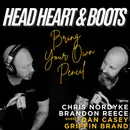
Ep 213 - "Bring Your Own Pencil"


Every once in a while you record an episode and you know, before you even hit stop, that it's a top-tenner. This is that one.
Chris and I sat down with Dan Casey and Griffin Brand - a football coach turned historian and an Army Ranger, to talk about their book Bring Your Own Pencil, the leadership playbook of the legendary Bill Walsh. But this isn't a football episode. It's a masterclass for anyone leading a crew or building a business in the trades - roofing, HVAC, restoration, you name it. How to hold a standard without becoming a tyrant. How Walsh turned betrayal into the greatest coaching tree in NFL history. Imposter syndrome, self-belief before the evidence shows up, and why you should never quit a hit show. Grab a notebook - and bring your own pencil.
Owning a business in the trades can be the loneliest job there is. Head, Heart, & Boots exists to change that, because the best leaders don't go it alone, and neither should you.
-Brandon
Why You Should Listen
- [10:19] The Hacksaw Reynolds story behind the title — one sentence that set the standard for a dynasty
- [18:31] Holding standards without a toxic, maniacal culture (their answer punched me right in the face)
- [21:49] Bill Walsh's origin story is failure — and what he built from it
- [43:20] The four most powerful words a leader can say
- [54:53] Lightning round: the books and daily habits every leader should steal
Did you know...
Only 30% of businesses listed for sale actually find a buyer? Even more striking, just 10% of those sell for the price their owners anticipated or higher, meaning only 3% of all business owners achieve their desired sale price. By focusing on understanding and enhancing your enterprise value, you can significantly boost your chances of joining that successful 3%.
Business Health & Value Assessment
Start Assessment Know Your Enterprise Value. See Your Potential Gaps.
Complete this assessment in less than 15 minutes and receive a free assessment for your business that includes:
- A Lite Valuation Of Your Business
- Your Value Multiplier Per Your Industry
- Health Assessment Per Our PYB Methodology
- Business Value & Growth Roadmap Tailored For You
- Value Acceleration Strategies
Spotlight on Floodlight: Your Secret Weapon for Sales & Scaling
This isn’t a paid plug. It’s real talk from the front lines. If you’ve ever thought, “How do I get a VP-level sales leader or even a sales team without hiring full-time?” Floodlight has the answer.
Fractional Sales Leadership
- They act as your outsourced VP of Sales, taking full responsibility for training, managing, and growing your sales team. No six-figure hire needed.
- Clients often close 20 to 50 percent more deals within six months, thanks to data-driven coaching, CRM setup, scripts, and performance reviews.
More at floodlightgrp.com/sales
Commercial Sales MasterCourse
- A self-paced, video-driven B2B sales course designed specifically for restoration teams. Perfect for building commercial revenue and getting free from TPA handcuffs.
- Covers mindset, prospecting, pipeline building, LinkedIn lead generation, and includes a $250 discount with code SALESBOOST.
Details at floodlightgrp.com/courses
Tailored Consulting & Coaching
- Floodlight’s Propel Your Business methodology offers a full-circle roadmap: financials, sales, marketing, leadership, recruiting, productivity. All built for contractors.
- These aren’t “life coaches.” They’re former restoration owners who’ve lived the chaos and know how to scale out of it.
Explore more at floodlightgrp.com
Live Training, Tools & Strategic Partnerships
- Floodlight also delivers live onsite and virtual training, keynote speaking, and leadership tracks covering operations, project management, and strategic growth.
- Bonus: They’ve vetted tools like Xcelerate, Liftify, and Sureti. Floodlight clients get access to exclusive discounts on tech that actually moves the needle.
See all partnerships at floodlightgrp.com/partners
Why it matters for you as a listener
- You don’t need to figure this stuff out alone.
- If you’re serious about sales growth, operational clarity, exit readiness, or leadership development, Floodlight is already helping folks like you scale smarter.
- And you get it from industry insiders. People who’ve sat in your chair, survived the fires, and built systems that actually work.
0:00 You know what, dude? I have a dark secret to tell you. Oh boy. I know. I'm glad we wear a lot of black shirts. You want to know why? Are we recording? Yeah. Oh yeah, absolutely. This is a full-blown professional intro right here. First off, I really like wearing black shirts because while we're recording, it completely hides my B.O. Or my, it doesn't hide the smell, but it hides the fact that I'm totally have been pitting out for the last hour. Oh yeah, sure, sure, sure. But here's the other thing. You can't tell that we just recorded several shows back to back because it's always going to look like we have a black shirt on. I know. There you go. Dark little secret. It's true. You now know the truth. Yeah, it's a hack behind the show. Yeah. Well, today I told these guests, I think out of all the 215 some odd shows we've done, you know, I don't want to go so far as to say the best because we've had some really great guests.
0:44 We've had some awesome shows. So if you're a past guest, We're not cutting you out, but this was a top tenner. Oh. Without question, right? Maybe. It might be top five minus. Guys, this was so fun. Dan Casey and Griffin Brand talk about their book, Bring Your Own Pencil. And we got into just a bonkers conversation. It was nuts. I mean, the guys and the people that Griffin and Dan are connected with and have learned from, it's just really incredible. And just for those of you that haven't read the book yet, bring your own pencil. You might as well just go order on Amazon right now. It's where they chronicle the career and the leadership of Bill Walsh.
1:24 And there's other stories from other iconic leaders in there, but it's just phenomenal. I don't really know what else to say. I mean, for a business owner, for a business leader, for a MIT manager, for a customer service manager, whoever you are, whatever your role is, husbands, wives, parents, there's just a lot of gold in here. It's massive. Like at one point I was, I started having problems keeping up with my own note taking because I wanted to stay engaged in the conversation. But there's at least two points where we ask him to go back and repeat something as an example, because it's just like, oh my gosh, that's so good. Well, I don't know. Obviously, I shouldn't be embarrassed to say this, but my heart was in my throat at least three or four times. Just like the waterworks were like right on the verge.
2:07 And I just didn't feel manly letting it out. Yeah. And nothing sad or lame. No, no, no, no, no. Just inspiring. And awe. Inspiring. Yeah, yeah, yeah. Very inspiring. Really good stuff. And guys, we barely have a time to give Dan and Casey a real proper intro. But Dan Casey, he's created an absolute bonkers following. We did ask him right at the opening in the show. So pay attention to that. Obviously, it'll be in the show notes of where you can find and follow him. He's basically, he's a football nut. One play a day. One play a day. Yeah, look it up. Yeah, massive following. This guy has a huge following of individuals that just nerd and geek out on play strategy. Voice for radio. Oh my gosh, dude. Incredible.
2:47 I mean, just all of it's so good. Yeah. But I love one of the things that Griffin talked about in this show and in the weeks previous, those of you who already listened or remember, He talks about the third door. And these guys just embody, there's an utter unwillingness to take no for an answer, to say, you can't do this. They're the find a way guys. And it's so inspiring. And Dan's knowledge and history of football and iconic coaches and the learning lessons and wisdom that we can all take from it. It's just, it's so fun. So strap in. This is one you'll probably share with your team. This is one you'll probably listen to a few times. Yeah, undoubted. All right, gang, let's get into this.
3:27 Wow. How many of you have listened to the Head, Heart & Boots podcast? I can't tell you that reaction, how much that means to us. Welcome back to the Head, Heart & Boots podcast. I'm Chris. And I'm Brennan. Join us as we wrestle with what it takes to transform ourselves and the businesses we lead. This new camera angle makes my arms look smaller than yours. I'm noticing that and I really appreciate it. I thought you did that on purpose. No, I don't. I didn't. And I am not happy with it. All right, gentlemen. Well, thank you very much for both joining us. For those of you that listened to last week's episode, and if you haven't, maybe push pause, jump back a show and listen to the episode that we recorded with Griffin.
4:08 Then that way you have a really deep background on why it is that we're talking to this dude. But we didn't have a chance yet, Dan, to really dive into your background. I'd love if you would just give us the elevator pitch. Don't undersell yourself, man, because you are somebody to reckon with. And we just want to do a little stage setting with the audience so that we can dial everybody in and give them a reason to pause on everything else that's happening around them and get them to focus on these two awesome characters that we have on the show today. So Dan, please just give us the pitch, man. Who are you? Well, definitely a character, I guess you could say. I'm a former high school football coach. Got a head high school football coaching job when I was 24 years old. Was really hungry for knowledge. Started a Twitter account and that kind of ballooned into Instagram, TikTok, YouTube, all of the things.
4:53 But really just connecting with coaches, trying to understand them, trying to gain information. I was so young and green and trying to learn and it just kind of... blew up, honestly, like it kind of blew up. And it was one of those things where, you know, all of a sudden you have hundreds of thousands of followers and you're sharing a lot of the information that you've learned. You're able to partner with so many different cool people from a business perspective and from a football perspective. The goal is definitely to get back on the field coaching, but I'm at a cool point in life where I have young kids and I'm able to be a hopefully a great dad and be around a lot, but also be heavily involved in the football world. So yeah, that's who I am and kind of stumbled into my dream job. So I would like people, again, like they may push pause and go check this out and come back, who knows.
5:36 But how do people find you? Because that 30 seconds didn't do enough justice in terms of what you've actually accomplished and built. But where would we point people to kind of just get a broad stroke idea of who the heck this guy is? What is he doing? Yeah, I mean, you can just go on pretty much any social media platform and search Coach Dan Casey. And I post a lot of stuff on there. It's like a lot of pretty nerdy football stuff, but then some really cool throwbacks of, you know, film from the 1930s that I've dug up and different things like that. So it's kind of like equal parts history and strategy. And it's definitely for football psychos like myself. Now, you've gathered a following that actually has some pretty meaningful names in it.
6:18 We don't necessarily need to highlight them, but you are actively engaged with NFL-level coaches. People that are winning at a high level are participating in what you're doing, sharing some of the ideas and concepts. Is that a fact or am I... Yeah. I mean, that's... That's been one of the biggest highlights for me is just the people I've gotten to meet along this journey. And you know, you share kind of that DNA of curiosity and being interested in something. I think people can sense when that's authentic and when that's not. And so I think when you talk about people at the height of their industry, everybody wants to talk to them and they really only want to talk to people that can offer some value. And even if you offer 1% value, which I'm probably around 1%, it's something that they're interested in. And so I've been very fortunate, had a lot of people...
7:01 been really warm to me and invited me into, yeah, some of the coolest buildings you'll ever be in, for sure. Man, dude. Yeah. Again, he's great at underselling. What's cool is that a lot of people can nerd out about football. So there's billionaires, there's entrepreneurs, there's leaders from other industries, leaders from other sports that are routinely reaching out to Dan. I mean, going to him first and asking for advice or a take on things, which it's been, I mean, as a fly on the wall, it's incredibly cool to see. And Dan is very humble the way he responds, but it's pretty remarkable and often leaves me completely astounded at the people that will slip into his DMs on a regular basis. I mean, I was just teaching U.S. history, coaching high school football.
7:41 And I was like, man, how can I do football full time? Like, I, you know, I like history. I'm a history buff for sure. But I didn't want to teach four periods of U.S. history anymore. I wanted to do football full time. And so there's a couple of paths. You can either go coach or do something unconventional. And I eventually do want to go coach. But while I had young kids, I was like, I'm going to find a way to do football full time. And, you know, here we are. I get pinched myself. I wake up every morning, cut on the film, make myself a cup of coffee. And we're off and running every day. so phenomenal. Wow. It's phenomenal. That's super fun. Well, Chris did a lot of prep getting ready to come into this interview and digging into this book. I don't know if you've got a bit of a segue that you want to lean into or... Yeah, well, I think we could start with just how did this book come about?
8:24 Like how did you guys synergize to bring... I mean, so we have an army ranger and we have a football coach and historian. How did this concept come together? Griff, you should take this because I think you're the one that kind of saw through the looking glass a little bit. Yeah. Well, I'll tee it up and then pass it over to Dan. But we talked about this on our previous conversation, but I started seeing trends in what led to success in a bunch of different business industries, in the military, at the highest levels. And I could tell that there were a lot of similarities. When I started comparing notes with Dan, he and I would talk throughout the years since playing football together about... And we realized that there were so many identical concepts that would span across industries, across sports, you name it.
9:08 And so we started deciding that we're going to try and put those in one succinct package and figure out what that looks like. Is there truly a way to kind of codify what we're seeing leads to success in so many different places? And, you know, fast forward to the end, we realized that there is a playbook for success. And that's what we tried to build here by drawing on the amazing entrepreneurs and leaders and military commanders from history and bringing their stories into one spot. And so we mentioned earlier that Dan has been really good at it. making people his mentor or being humble and asking people for advice. That's how he got started on Twitter. And so over the years, he had made Bill Walsh his mentor. A great phrase that we've used before is permissionless apprenticeship, where...
9:52 Bill Walsh died before we could ever meet him or get to know him, but he has so many writings out there and videos and other things. We can really learn a lot from somebody who we never will ever meet or never officially be a mentor. And so, Dan, I'll send it your way, but he made Bill Walsh his mentor and throughout the years had been incubating this idea for a book. And when we started pulling all these ideas together, realizing that we'd seen the same things in very different places, we thought we were onto something. So interesting. Yeah. What's with the title? Unpack the title for us. It's a really memorable title. I love it. I love the imagery. It's great. How did you guys land on that? So the story itself is a pretty iconic story from 49ers lore and Bill Walsh.
10:33 And it's, you know, they had a young team. They were building what he wanted to be a Super Bowl contender, and they just didn't have a ton of experience on the roster. So he wanted to bring in a veteran presence that would kind of bring some of that maturity and some of that preparation. And so he signed this guy named Jack Hacksaw Reynolds. And Hacksaw got his nickname because he was so upset after a loss when he was at the University of Tennessee that he went to Kmart, bought 20 Hacksaw blades and sawed a 53 Chevy in half. So he was just kind of like a little screw loose, psychopath kind of guy a little bit. But he was known for his kind of maniacal preparation. That was kind of his calling card. And he was older in his career. The LA Rams kind of cut him loose and Bill ends up signing him and he comes to training camp.
11:17 And then they had a rookie at the time named Ronnie Lott. Ronnie Lott's, you know, one of the best football players in the history of the game. I mean, he's just an unbelievable player. One of the most intimidating safeties ever. He comes up first day of training camp, sits down next to Hacksaw Reynolds, the vet, And Bill Walsh gets up in the front of the room. He says, all right, everybody, I want you to take out your notebooks, grab your pencils, and I want you to take notes. And this was something that was kind of abnormal to some meetings. Like some coaches would want you to take notes. Others would just kind of get up there and riff. And, but Bill was very structured in what he did. And so Hacksaw Reynolds has a pile of notebooks and 20 pencils freshly sharpened sitting on his desk. And Ronnie Lott, the rookie, not prepared, leans over, asks Hacksaw Reynolds. He says, hey, can I borrow a pencil? Because I want to take notes.
11:58 And Hacksaw just goes, kid, bring your own pencil. And it's just this idea of, hey, you need to be responsible for your own preparation if you want to be a success in this league. And Ronnie Lott, to his credit, instead of being offended, he took that advice, became an all-pro, a leader of the team. And he says, he points back to that day one interaction with a veteran that was like, this is the standard for what we do here in San Francisco. This is how we're going to be successful. And even though a Super Bowl seems so far away from a pencil, it's the little details that really start to show what kind of culture you have. And the cool thing about that story is the book we wrote is about Bill Walsh. Bill Walsh barely appears in that title story. Bring Your Own Pencil is about your organization embodying who you are as a leader.
12:42 And that's ultimately why we decided with the title, I'll never forget, I was driving from Missoula, Montana up to Whitefish Lake in Montana with my wife and my kids were asleep in the back and we were just chewing on, okay, what do we call this book? And I keep telling her this story about Hacksaw Reynolds and she says, well, why don't you just make that the title? And I was like, well, it doesn't make any sense. It's not, you know, what are we talking about? And she was just like, I think that's the title. I think Bring Your Own Pencil is the title. And when I told Griff, he was like, yep, that's it. And we kind of settled on it. And it really gave us a lot of direction for the book. Zoom in on those microscopic details, and they really tell the whole story. Man, that is so solid. That's really good. What a great way to start. Well, I mean, it really is. You know, this Griff, this came up even between us on our last conversation with you, this idea of preparation, leading behaviors, standards versus orienting completely around goals and objectives.
13:33 Yeah. And this idea, it reminds me actually of General McChrystal. I think he's credited with some kind of quote, and I'm going to butcher it. But he said something to the effect of the moment that a leader walks past a behavior that's out of alignment, that's off standard, without saying something and addressing that behavior, they have just endorsed that behavior for everybody involved. That always stuck with me. There's probably a better way to say it. But the concept is there, right? Like we either hold the standards or we have no standard. And so I'm curious, like what else did you uncover about that culture of standards that really stood out to you in Bill Walsh's organization? Like what did he hyper focus on to establish that kind of culture that would lead to that story that you just shared?
14:15 I'll chime in here first. We talk about the extreme ownership concept. We mentioned that in our last conversation. But the way that Hacksaw prepared for even the smallest team meeting, for just watching film, he would bring his own projector so he could stay after coaches left. He would bring his own pencil sharpener so that he could sharpen that stack of 20 pencils. I mean, the dude was extreme ownership to the nth degree. And I think that's the approach that... was instilled in the team, but by way of Bill Walsh took that exact same approach. And that's why he resonated so well with Jack Hacksaw Reynolds, who was in everyone else's eye a washed up linebacker. Bill Walsh saw that potential in him and knew that that would percolate through the rest of the team, and it absolutely did.
14:57 I think a concept that similar to what you're talking about, Chris, there is everyone will tell you to criticize in private, but praise in public. And I think that that's actually maybe bad advice in a lot of ways. I think the way you establish and hold standards is by, and it might sound harsh, but you have to criticize in public because you're not just going to walk by something that's wrong and let it become the standard. You're not going to let that just slip through the cracks. And it's not like belittling and criticizing are completely different. You can criticize something by criticizing the act or the idea without belittling the person. And I think that's the distinction you have to make. Anytime you walk past a problem, you're criticizing that action, but you're not criticizing or belittling the person committing the action.
15:40 And so I think we see that exact same act with, just like McChrystal was talking about, we see Bill Walsh do the same thing. He had a playbook for how every single person in the organization did their job. Which is crazy to think about. I mean, even the way receptionists answer the phone, he had a detailed script, a detailed kind of SOPs or standard operating procedures for how that level, all the way down to the very lowest level of the organization, how they would do their job. And he, whenever he saw things not upheld to that standard, he would correct it on the spot. And I think that's the way that you get those standards to completely transform an organization is by holding them at all costs. And then the people start doing it for you. They start holding those same standards to everyone else, just like Hacksaw did.
16:21 Do you think of any stories that come to your mind of where he corrected? It's like, are there any stories? Because I think all of us have this picture of other elite coaches like Bobby Knight and how he, how he policed the standard, right? Or Bill Belichick or, you know, some of these other key figures. What kinds of stories and examples did you come across? There was actually a pretty significant example of... One thing Bill would do is he would criticize the player through the coach. And so basically what would happen is a player would make a mistake on the field and Bill would go to his position coach and say... Is that what you're coaching them to do? Are you coaching them to do it this way? Like, that's not the way I want it done. And there was a sense of almost camaraderie among the position groups where they were like, you know what, man, I made my coach look bad in this moment.
17:04 And so there's, there's almost this like, again, it's, it's almost like indirect criticism, but just loudly stating, this is the standard. And what's interesting about that is he had a lot of conversations with the coaches. Hey, this is how I'm going to handle this. you're going to take the brunt of, you know, instead of me yelling at the players, I may get after you a little bit. And so it's just an interesting style, I would say. And then the other story that I wanted to chime in on with that Griff had kind of alluded to, I guess, was this idea of just attention to detail. And there's sometimes I think that especially as guys, as men, like that attention to detail can almost get looked down on at times. And There's this great story of Jerry Rice, the greatest receiver of all time.
17:44 He used to lay out his uniform perfectly before every practice, every game. He was just neurotic about how he tucked his jersey in, how his gloves fit, everything. And teammates would make fun of him. Coaches would make fun of him. And Bill would step in and say, hey, don't make fun of him for being neurotic about that. Because if he's going to make sure his jersey looks this way, imagine how precise he's going to be in his route running. And so he almost encouraged this sense of ownership, obsession, and bringing in A players into an organization. Because when you are seeing the way that Jerry Rice operates on a day-to-day basis, or seeing the way that Joe Montana operates on a day-to-day basis, that sets the standard for you. And so Bill maybe had to step in and be more aggressive early in the process.
18:26 But as time went on and as players stepped up, it was much less his voice and more the voice of others. I'm really curious on something because you guys have tapped into something here that's super interesting. So this idea of being crazy about the details, the standard, like I get it. I can align with that. I think there's so many stories and examples that point towards that creates an outsized outcome when there's that level of commitment. I think where I've struggled as a leader myself and being a follower of many leaders over the years, over the decades, is there's people that do that standard holding in a way that feels honorable. I want to be a part of it.
19:07 of pride. Like Hacksaw, that example is like, that bring their own pencil. He wasn't putting that individual down. He was clearly communicating, there is a standard. You're valuable, but don't make the mistake that that somehow is in place of, in lieu of, there is a standard and that's what we're committed to. From your guys' reading, research, lived experience... How does an awesome leader, an exceptional leader, hold that line of a standard without it becoming this weird, maniacal, negative environment? Because guys, I have struggled, honestly, to see very many situations where that's being done the right way. I've heard stories. I know it can happen.
19:48 But it just seems very difficult to get people to execute at a standard worth following and respecting. What did you guys see? Can you give us an example of what you learned on that front? Yeah, I think there was, it's very interesting because that tension is always at play for Bill. Of the standard versus are we working on the wrong things? There was always that self-criticism of making sure that the things that they were working on led directly to winning. I'll never forget the first NFL training camp I visited. I sat down with a tight ends coach who'd been in the league for several years and I asked him what it was like coaching a player that makes more than him. That's a tricky relationship, right? And he said, here's the deal. If I can offer this player, who's a multimillionaire, if I can offer him a path to success on the field, that's going to lead to his next contract.
20:37 That's going to take care of his family, generational wealth for his family. If I'm able to provide value for him, he will listen to me. listen to everything I say. But the minute that I'm no longer leading him to success on the field, he's going to tune me out. That's just the reality of this business. And I think Bill was so good about that. He's like, listen, the things, the standards we're holding you to, they lead to winning. And he used to be critical of, coaches that would be control freaks over, you know, how the lunch line was set up or how the team stood for the national anthem or, you know, little things that on paper, it looks like you're being productive, but we termed it productive procrastination. It's like, you're not actually dealing with the thing that matters. Bill would be maniacal about how we block Lawrence Taylor, not how we line up for the national anthem.
21:19 Okay, that makes sense. There's kind of Paul vibes from another conversation. Okay, so I'm so curious, and this is a bit of a deep cut question, but so Bill started out coaching at Stanford. In all your research, because you did say you're a historian, is there a certain arc to his leadership style? Like, was there an evolution of Bill Walsh? Because I think sometimes we hear this and we're just like, God, it's hard to relate as a leader to somebody who's just so circumspect and intentional all throughout their career. Is there an origin story to Bill where he had to maybe learn this post-failure or something? Oh, I mean, Bill's whole story is failure. I mean, he didn't get the head coaching job of the San Francisco 49ers until he was 47 years old, which doesn't seem that old to normal people.
22:00 Yeah. If you're not on your way, it feels like you're really falling behind. I mean, nowadays, you got guys that are 29, 30 years old getting head coaching jobs, Sean McVay, other guys like this, that are ascending so fast. And Bill had to take the long, slow road to the top. And there was times throughout his career where, you know, he was in line to replace a guy named Paul Brown in Cincinnati to be the head coach. everybody assumed he would just be the head coach. He was the natural successor. He would take over. And Paul Brown bypassed him and just said, I'm going to name somebody else head coach instead. In fact, I don't even want you on the team anymore. Go find another job. And then he found out, Bill found out later that Paul Brown had basically said, Bill's not a leader. He's too sensitive to be an NFL football coach.
22:43 I don't think this is going to work out for him. And so he was basically, his mentor was basically sabotaging his future career prospects. And he made up his mind at that moment that he basically said, I will never do unto others what Paul Brown did unto me. And he basically said, if I ever have a chance throughout my coaching career to advance the career of the people that I work with, I'm going to jump at that opportunity. I'm going to promote my people. I'm going to wish them well and send them on their way. And he has the greatest coaching tree in NFL history by a mile because that's who he was. He expected you to be excellent when you were there. And when it was an opportunity for you to have a promotion, he was first in line It's funny, man. When I hear these examples in my gut, I'm like, the level of confidence that you have to have in yourself, however you're getting that, whatever the foundation of that confidence is, it seems like in my limited worldview, the level of confidence that you need to live that way every day is very unique.
23:41 Griffin, you've been around lots of military leaders, obviously being part of 75th Ranger Regiment. You're exposed to some of the greatest leaders. From your perspective, I'm going to cite something you said. You had just mentioned you have your own imposter syndrome that you wrestle with. You're writing a book to teach leaders how to be great world-class leaders, and yet you're wrestling with your own imposter syndrome, just like the rest of us. How does somebody from your experience, did you see in a leader? Did you hear a story? Were you exposed to something, something you learned yourself? How do you remain that dedicated and loyal to equipping others while you're wrestling with that bullshit that we wrestle with that feeds or takes away from our self-confidence?
24:25 That's a great question. I think I keep on thinking about sweating the right small stuff, like Dan previously talked about, not organizing the lunchroom, focusing on what really drives outcomes. And I think when you get more and more feedback on what actually does drive outcomes, what actually does bring true results, you start gaining some of that confidence. And one of the sections in our book is called Self-Belief Before Evidence. And I think it's a bit of a misnomer because we tell the stories of Sarah Blakely when she founded Spanx and eventually became the first female self-made billionaire. We tell the story of James Dyson when he did 5,127 prototypes to build the cyclone vacuum and eventually absolutely blew up, but was in tremendous debt and didn't make it until he was in his late 40s.
25:12 I mean, just tremendous stories of entrepreneurship and just pure grit. But we say self-belief before evidence, but I think it's really self-belief before there's external evidence. There may not be external evidence that you have this enormous breakthrough or that you are going to change the world or accomplish your lofty goal. But deep down inside you, you're building this internal evidence the whole time. Every step that you take into the fear, into the unknown, into the uncomfortability of continuing to progress your career, your life along your journey, I think you build that internal confidence. And so there's self-belief with internal evidence, even if there is no external evidence to pull from or to call upon. Yeah. And so I think that really resounds in Bill as well.
25:54 I mean, Dan can tell big great stories, but Bill almost quit. Even after he got his lifetime goal, he achieved his dream job of being a head coach in the NFL. There were multiple times in the first two years of his coaching tenure that he was on the verge of quitting. if it wasn't for one conversation or one night to just sleep on it, he would have been done long before he accomplished anything. And similarly, I mean, Bill had, like Dan mentioned, multiple failures before he ever became a head coach. He had to change his offensive style. He had to change the type of play calling that he did over and over again to kind of develop on his quote unquote life's work that he compounded upon and built up to this moment. I think we're all kind of building our life's work as we go so that everything we do is better and better along the way.
26:38 Dan and I call this book our life's work up until this point, because the book that we've put together in these stories are the absolute best that we could do up until this point. But I have no doubt three, four, five years from now, we'll look back and be like, man, I'm kind of embarrassed by what we produced because we're capable of so much more now. Yeah, that's huge. I want to talk about vulnerability, guys. I'm so curious. I had this conversation with my daughter just like last week. She had a new job, 21. And she was just sharing some insecurities that she's already encountered in the work. And I stopped her and I said, hey, honey, just so you know, I still feel this insecurity sometimes in my work. And she was so wide-eyed like, oh, Really? Wow. And of course, it immediately settled her like, okay, I'm normal, right?
27:18 But I think often as we look to these high level leaders, we assume there's no insecurities. There's no gaps in their knowledge or confidence or conviction, right? Or whatever. I'm just curious in all of your interactions with these high level influential leaders, whether they be coaches in athletics or on the battlefield and in government, Did you guys ever have those moments of truth where these leaders were willing to be vulnerable and mention, I don't necessarily know exactly what I'm doing here or some version of that? Did you experience vulnerability with those leaders? I saw it quite a bit, honestly. And I think the best leaders don't display it as a lot of vulnerability or a moment of weakness where like, hey, I have no idea what I'm doing.
27:58 Help me out. It's really, it manifests as humility. And One of the best leaders that I've ever worked for, who was one of my commanders in the 75th Ranger Regiment, he had been through all kinds of stuff. He was a cancer survivor. He had been blown up multiple times in the Middle East. I mean, absolute stud of a guy. I mean, he had had so many things happen to him that physically he wasn't quite able to pass some other like PT tests and things. But he just, he pushed so hard to get back to the Ranger Regiment, to get back into the special operations community that he overcame just tremendous obstacles to get back to where he wanted to go. and there were honestly regular moments where he would say, look, Griff, I haven't done what you're doing right now in the embassy.
28:40 I haven't been in that position. I don't necessarily know exactly how I would respond either, but let's talk through it. And he would have similar vulnerable moments when I would just talk with him about the job that he was doing because he hadn't done that one either. And he was really unique in that way. A lot of leaders, especially in the military, like to put up the front that they've experienced everything, nothing phases them because that's how you get promoted or you get greater responsibility or so they think. But the best, Brandon, you're familiar with the command climate survey. The best command climate or the best evaluations that any leader had ever gotten was this guy who was vulnerable and humble about... I don't know everything. I haven't experienced these situations before.
29:21 And I'm willing to open up to some of my subordinate leaders to get their feedback and input on how I can respond to this. And so he's left such a tremendous impact on me and the way that I interact with people, whether they're subordinates or peers or any level going forward. And also just the fact that it's okay to open up like that. It's okay to open up like Chris. And in fact, that actually buys an enormous amount of trust in the people that are around you. By showing them that you're human, you're trying to be the best you that you can be. And you also can learn from anybody. And this leader is someone that literally when I make a decision in a business situation or whatever leadership problem I'm presented with, I think about how he would respond. Because he made such a tremendous impact on me in the way that he interacted with all of his people.
30:05 Are you a business that's under 5 million in sales and you're just now getting ready to try and scale your company up and hit some of those targets you've always wanted to hit but now you've got to build a sales team or maybe you just hired your first sales rep but you don't really know how to manage them. Like how do you manage, lead, train, develop a sales rep? Floodlight has a solution for you now. So we can actually assign your sales rep a turnkey VP of sales that will help them create a sales blueprint, their own personal sales plan for your market. They'll have weekly one-on-ones with that sales rep to coach, mentor them, hold them accountable to the plan. And they'll also have a monthly owner's meeting where they'll meet with you or your general manager and review the progress of that sales rep. Their plan to actual results, what kind of performance improvement they're working on with them.
30:49 Also let them know, hey, you might, they're doing really well. Maybe we should think of hiring a second sales rep. They're going to have that one-to-one advice for you as an owner or senior leader on the team as well. How great would that be to have a bolt-on sales manager for your one sales rep and it's only $2,500 a month? If you're interested in talking more about that, reach out. Let's grab some time and let's talk shop. Our floodlight clients this last year in 2024 generated over $250 million in revenue. Supported by, advised by, an industry expert who's owned and operated a business just like you. So take action. Don't kick the can down the road. Start with our business health and value assessment. And let's unlock the next chapter of your success story.
31:31 Dude, I'm kind of laughing about something as he was talking. In the background, Griff, I'm thinking to myself, the old grizzled veterans, platoon sergeants and stuff at the 82nd. And we used to make jokes about how bad their knees and ankles were. And so, you know, like a static line rolled in the back of your chute. You know, we used to just make jokes about the old grizzled vets, like all their ankles are all fucking S-rolled because they've had so many jumps and their body's all breaking down. It's like... When you're talking about that commander, I'm thinking about all the old grizzled guys from the 82nd with all the S rolled ankles because they all broke everything a million times. Dan, you got any stories from these iconic NFL coaches you're friends with?
32:12 Well, I mean, I think the common theme is the guys that have the longest tenure are the most humble typically. And you'd think it's the opposite. You'd think it's the guys that project the most confidence, but it's usually the ones that are continuing to grow and continuing to evolve over time. But I'll actually share a story of a high school coach. This guy named Bob Lattiser at De La Salle High School in San Francisco Bay Area. And he's probably the greatest high school football coach of all time. He at one point won 150 straight games. There's like movies about him when the game stands tall and different things like that. I had a chance to sit down with him and interview him several years ago, probably five or 10 years ago. I asked him, what was the magic? How do you win 150 straight high school football games?
32:54 And I was expecting him to have some long, elaborate thing on culture and what they do in the weight room, their off-season program, and how they get kids bought into the system, blah, blah, blah, blah, blah. He didn't say any of that. He said specific football knowledge. And I said, what? He's like, yeah. I mean, if my players have a question, I either have the answer or I go and find it. And if I don't have the answer, I tell them, I'll go find the answer. But he's like, my players had so much trust that we were going to put them in the best position to be successful. And we were humble enough to, if we weren't doing that, fix it, fix the problem. And so I just have so much respect for Bob Latiser. I think he's a phenomenal example. And the NFL coaches that I do know who have a similar mindset and mentality are the ones that are at the top of their game.
33:38 Wow. That's an impressive example, actually. You know what it kind of reminds me of? I won't name names, but today, just recently, a couple minutes before we jumped on, I had a conversation with one of our consultants. And it started actually with an apology. Went back, like some ways back behind us. And I just... mentioned there was probably several different ways that I behaved in our interaction. I just wasn't super proud of, and I wanted to make sure that he heard that I was sorry about that. And then he, in return, leveled up and said, you know what? Hey, I really respect these things about you. And you know what? I probably did X as well. And the way I'm tying those two examples together is it's just this moment of humility that's just willing to say, look, I don't... have all this figured out.
34:19 I didn't have it figured out several months ago when we had this exchange or we were working through this. But I am assessing myself and assessing the value I'm attempting to bring to you. And here's something that I need to know to bring to light. My point in sharing that story is both of us just walked away with a higher level of security and trust in what he's willing to do for the flag, and what I'm willing to do to support him as a company. And so just affirming exactly what you said, Dan, is that these moments of, and I think that's different than just vulnerability. And I think that ties back to what you were saying, Griffin, is this idea of humility is this cornerstone characteristic. And it can show itself in different ways, different shape, but it's the humility portion of that that's important.
35:02 Sometimes maybe it looks like a little bit more raw transparency. Maybe it looks like X, Y, Z. But that humility is what sounds like it built the trust between you and these leaders or these example stories that you guys shared. Am I on track there? Is that something you guys would connect with on that? For sure. I would say it's even parenting. Like this isn't just business and leadership and football and military. Like when we talk to our kids, our goal as parents, me and my wife is that they would have the psychological safety to ask us to apologize if they didn't like the way that interaction went. And, It has been one of the greatest gifts for me as a parent to be able to say, hey, buddy, I'm sorry I was wrong in the way that I reacted to that.
35:43 Do you forgive me? And you repair that relationship on the spot. I had a friend who used to tell me all the time, you're going to make mistakes with your kids. But when there's any sort of rupture in that relationship, the most important thing is the repair. And if you're able to make those repairs and Bill, I mean, it's crazy how everything ties together. Bill Walsh, used to say all the time, like, we're going to have infighting, like we're going to have moments where the stress of being a high performance team gets to us. And he said, the most important thing was to open back up lines of communication. He said, the worst thing that can happen in an organization is if you shut down those lines of communication. And so it was just cool to hear him talk through like, hey, we're going to have moments where we disagree, where we argue, where we might even hurt each other.
36:25 But repairing that and getting back on track to is a winning formula. And so it's funny, like these apply to business and everything and football, but they also apply to my everyday life with my seven year old and my six year old at home. I mean, it's it is all connected. Being a good leader and being a good person are very similar skill sets. how many times being a parent or being a leader or even in any relationship, do you feel like you have to get the first word in? I feel like it's like setting the hierarchy from the beginning. There's this hilarious, maybe not so hilarious, but there's this tradition in the military where any meeting of senior leaders, just imagine everyone sitting around a massive conference table or in a big like operation center in the Middle East. And when the senior ranking commander walks in, Everyone stands up, everyone's at attention until that person sits down.
37:10 And then it's customary for that senior leader to then give their opening remarks. And it's like, I'm going to speak for five or 10 minutes, kind of set the stage, give you my intent for this meeting, etc. 99% of the time, it's just wasted time because everyone already knows why they're there and what's going on. And in fact, they've all prepared briefings for that. It's just to set the hierarchy and let them know this person's important and they're higher than everyone else. Yeah. And one thing that I saw that was unique amongst some of these great leaders is everyone still stands when they walk in the room. Everyone is still at attention ready for them to sit down. But when they sit down, they don't give their opening remarks. They look at the person briefing and say, all right, what do you have for me? Like, go ahead. Let's see what you put together. And instead of like putting everyone beneath them. them, they put the person who had prepared for the meeting and was really the center of the show, they put them in the proper spot and really gave them a lot of confidence rather than saying, hey, I'm the alpha male in this room right now.
38:00 Everyone tell me what I want to hear. Instead, they opened it up and you hear a lot better things when you're not dictating what's being told back to you. So, okay, man, I just love this conversation. I had no idea we were going to go all over this place. Yeah. One of my favorite shows of all time is Ted Lasso. The sports aspects, it's really fun. But I think, you know, culture, basically my whole adult professional life has been this buzzword. It's like everybody's trying to figure out culture and culture drives results and all this kind of stuff. And I think, you know, for a long time, we thought culture was like, you know, free snacks in the break room and, you know, like foosball table and company barbecues and this kind of stuff. And of course, I think what we're talking about this whole time is our culture building initiatives.
38:44 But Ted Lasso, I think what was so fun about it is there were some goofy things that he did that we wouldn't necessarily replicate in our workplace. But there were some goofy things. But then he also really embodied a lot of these character traits that we've been talking about as well. I'm just curious, amongst the leaders that you've studied in the book, is there Were there any sort of unconventional or ways that they kind of put themselves out there, potentially even being kind of goofy or unconventional that you saw that worked, you know, that were especially useful? It's funny. I don't know if Ted Lasso was. Then I think it's the exact Sandowall story. Yeah, yeah. We're definitely going to go there. So before the first Super Bowl the 49ers played in, they are pulling up to the team hotel.
39:26 And I think they're in Detroit. And there's a guy just out there taking all their bags in and putting them on the cart, loading them up and shaking their hand and saying welcome. And then one of the players kind of like, looks at the bell man kind of funny and he's like, what, coach? Bill, is that you? Actually, Bill didn't let him call him coach, he made him call him Bill. And it was Bill, he had dressed up as the doorman for the hotel and was unloading all the players' bags. And it was just kind of a way for everybody to take a deep breath and relax into the moment. And there's so many pictures, like there's, Great photos of Bill right before the Super Bowl, like taking a nap in the locker room. Of just a way to say like, I feel so confident about where we are as a team and you guys are prepared to play and we're gonna go make this thing happen.
40:07 There was a sense of calm that he brought, but I think it was because of his attention to detail that when it was time to play, he was loose, he was relaxed, and he would just let people do their thing and be great. So yeah, I think sometimes that goofiness, it's like when the standard's been held at a certain point, the score takes care of itself. And you go out there and you just play the game in a free and exciting way. And Bill wanted to always hold the tension of preparation, sets the table, then go enjoy the feast. Wow. That's such a rad example. I'm just thinking about the awareness, the influential awareness that he had in terms of really understanding the effect that he had on the room, the environment that he was responsible for.
40:49 That is just so insane, like just a master experience. of understanding when to deploy these certain tactics, right, for maximum return is really powerful. You know, that thing that you touched base on, Dan, in terms of, like, if the hard work's been done, it's the whole idea of, like, you know, work so hard that you get lucky or whatever the term is, like... work hard enough to take advantage of getting lucky or whatever the thing is. But it's this idea of the playtime wasn't in place of. It wasn't the culture. The culture was winning and thriving under standards and commitment to standard. But because of that, the byproduct was, we can have fun. Like the fun is available because we've hit the standard.
41:31 And I think that that sometimes is a balance problem we struggle with. Like I remember back in the day when Chris and I were working on the first organization that we were a part of, there were times in the early days where our people, it just happened to be our core group that. existed at that point in the company's history was just very good at apologizing. For lack of a better way to describe it, they were good at service recovery. Like if I jacked something up, I was relational and aware enough and capable that I could go meet face to face with that client. I was going to get that thing back on track and we were going to be okay. And one thing I noticed as a leader is I began to allow and put an extra emphasis on our ability to repair a problem versus prevent the problem from happening in the first place.
42:17 And so this culture began to create it where, are you good at apologizing, service recovery? And this sounds stupid. When I say it out loud, please understand, I'm not setting the stage that we just went and jacked crap up and there was no accountability. and our team's ability to recover and or keep the relationship intact, that we forgot that you could circumvent a lot of that demand and need if you were just really good at the service delivery. Right? And so then there had to be this reorienting around, okay, wait, wait, wait, wait, let's meet and exceed the standard and be able to play when we have to because sometimes you got to pull that card out. And so for me, it's not an exact connection, but that's what I'm I'm experiencing, did you guys see examples of that?
43:03 Like maybe a leadership and a group or a team that you guys were a part of where we started to get out of whack on what it was that we were kind of centered around or building strength around. And then it required a little bit of a reorientation to make sure that we had that balance, right? Does that make sense? Yeah. Hey, Dan, you want to take this one? Yeah, I think Bill's superpower was not the organization. It was not the maniacal attention to detail. It was not really any of those things. It was the quote I'll always cite from Joe Montana was that what made Bill great was his ability to convince us that we could be great and we were. And it's this ability of a coach, a leader that's, to convince their people that they have a new identity, that their DNA has shifted because of being a part of this special organization, that they're going somewhere important.
43:54 And I think it's the identity piece more than anything. I'm the type of person that does it right the first time. I'm the type of person that shows up on time. I'm the type of person that doesn't sit on my helmet in between plays. It's not as much policing the details as developing these new identities with people. And I think the reality is like your point about tweaking, that should happen a thousand times a season. One of my favorite little parables, I guess, is from a book called Anti-Fragile by Nassim Taleb. And he talks about the taxi driver versus the banker. He talks about these two twin brothers in London. One's a taxi driver, a cabbie, and the other is executive at a bank. And one makes more money than the other. You can imagine the banker probably makes a little bit more.
44:36 But Nassim Taleb is arguing that the taxi driver is actually a more robust career move than the banker, even though it may look worse in society. And his reason is because if a cabbie has a bad day, they're going to adjust. They're not going to go on that same route again. They're going to find the best route. And they're constantly course correcting. And they're constantly thinking on their feet. Because to be successful in that job, it's a daily grind. It really is. And the banker can feel really safe and secure in their job. And then one mistake can tank the entire thing. And so I think the great leaders aren't the ones that say, I have the perfect plan. Let's go execute the perfect plan. They go in with a framework that they're confident in, but they reserve the right to change their mind.
45:17 At any point, if they need to adjust, if they need to course correct, they have that ability and they can do it confidently because they've seen the patterns of success throughout the course of their career. And Bill was unrelentingly tinkering with his style, with his offense, with his staff, with his roster. He was tinkering with the culture. He was tinkering with everything. And I think if you're not tinkering, if your hands aren't in it, I think it's going to get away from you. And I think we have countless examples of great, great companies, IBM and others that got away from what made them great. And I think that's something that I try to remind myself of all the time that like I need to be course correcting constantly and self-reflecting, not in like some deep transcendental way, but just making those minor adjustments along the way to keep going in the right direction.
46:07 And the way that you course correct the right way and you tack the right direction is by having your finger on the pulse. Like Dan said, there's so many examples of leaders that just took their finger off of the pulse of the organization and all of a sudden before you know it, it's the one in 60 rule. You know, if you're one degree off your azimuth flying a plane, over 60 miles is your entire mile off your destination. So just extrapolate that out further and further for decades. One small little deviation from your path and you're entirely off target. And we see one of our cautionary tales in the book is the chapter called Don't Quit a Hit Show. And we tell the story of Teddy Roosevelt after he lost his reelection bid to, And he kind of goes off the rails.
46:50 He doesn't know what to do without a lot of political drama, if you will, in his life. He's lost without this grand purpose of serving in political office and kind of driving the direction of the nation. And so he gets this invitation to go chart the River of Doubt, this uncharted tributary of the Amazon down in South America. And he's like, oh, great, a challenge. I'm sitting around. I don't have anything to do. I'm depressed. I need to pour myself into something. But he hadn't reflected. I mean, he could have run for office again. He could have done any number of things aside from chart out on this suicide mission. And if anyone familiar with the story that's read the book River of Doubt, they lose several of the people on the expedition. He gets a terrible infection in his leg to the point that he is never fully recovered again.
47:35 And the only way that he gets out of there is by his own son who's on the expedition carrying him along with some of their other guys out of the rainforest. And he ends up surviving. But again, he dies several years later and never was himself. And it's like, don't dive into something without having the time to reflect on where you've been and where you're going. And And I think there's just Bill Walsh, and I'll let Dan chime in with the Bill Walsh piece of this, but we see the end of Bill Walsh's career is not how he wanted to play out. And it's not a fairytale ending, unfortunately, but it provides a great example of how we can approach getting to the pinnacle, getting to the summit that we are chasing without falling down the other side and not recovering from it.
48:15 But I'll pass it to Dan for Bill's take on that. Yeah, I mean, Bill's greatest professional regret was retiring too early. He won a Super Bowl in January of 1989 with the San Francisco 49ers, won three in the decade, considered one of the greatest coaches of all time. And he steps away from a dynasty that won the Super Bowl the next year without him. He had Joe Montana, he had Steve Young slotted right in after. He could have probably won two or three more Super Bowls. I mean, we would have been talking about like Jordan-esque numbers. Yeah. And he regretted leaving because he got so burnt out. And unfortunately, he had all these protections in place to keep his players healthy, keep them safe, make sure they were having fun.
48:55 But he neglected himself in that same vein. He wasn't rested. He wasn't sleeping well. He really allowed the stress of the work he loved to totally consume him. And he never went back to the NFL. There were years and years of NFL owners writing him blank checks saying, I will pay you any amount of money to come run my franchise. And he said no to all of them because he was so burnt out. And he said it was his greatest professional regret. And so we talk about don't quit a hit show. It's like, man, if you're doing the work you love, find a way to do it as long as you can. Because if you really love it, then you need to structure your life around sustaining it and not like, I don't want to retire. I want to do football the rest of my life. I don't know exactly how that's going to look, but the people that talk to me about retiring early, I'm like, that's cool for you, but I have no interest in retiring early.
49:42 I want to do this work the rest of my life. I hope to be able to do that, but I need to set some boundaries for myself as well so that I don't let the work I love destroy me. Gosh, I can't. tell you how accountable I'm feeling to your guys' words right now. Oh my God. Hey, real quick, dude, because you mentioned a statement, dude, that punched me right in the face. And I want to make sure that we highlight it one more time It was a statement about what a coach was meant to do. It was the convincing of the players. Like the real win was his ability to convince the players that they were winners. What was that quote, dude? It was so powerful. Let me pull this up because I think it's on the last page of Bring Your Own Pencil.
50:25 I got a little copy of my lap right here. So here, I'm just going to read it because it's better read than said. Bill is remembered not for the plays he called or all the wins he accumulated, but for the coaches and athletes he developed. His influence permeates every level of football. As he famously said, the four most powerful words are, I believe in you. When discussing Bill, Joe Montana said his goal in life was to convince us that we could be great. And he did. And we were. And that's why he's such a great leader. Holy cow, dude. If you're a leader, shit, man, that cares about your responsibility and a statement like that doesn't move you, that's powerful stuff right there. That is powerful. Yikes. I got a question and then I've got a way that I want to wrap up and just kind of picking your guys' brain on some fun stuff before we close.
51:10 I want to ask this question. In all of your research and all of the interactions with these great leaders you've had the privilege of working with or befriending, Have you seen examples where they've deployed anger to great effect? Man, that is a great question. I think anger, if you can convert it into a longer burning fuel, has its place. I think in a lot of ways, like Bill made his career about anger. proving people wrong, that there was a different way that it could be done. But he didn't stay in the mode of, well, I'm going to show you and then I'm going to tell you that I'm better than you. But he definitely had that internal burning coal, I would say, that said, Paul Brown said, I was too soft.
51:53 to coach an NFL football team. Well, you know, he ended up dominating the 1980s in a way that, you know, in the 1980s, like the teams that we remember outside of the 49ers are the Chicago Bears, the 85 Bears, Smash Mouth Football, Mike Singletary, Mike Ditka. The New York Giants, Lawrence Taylor and Bill Parcells and the Big Tuna and just physical smash mouth football. And a lot of people at the time said Bill was a sissy, basically, for the way that his team played football. They threw the ball first. And Bill was actually an amateur boxer as a kid. And when he was in the military for a little while as well, he did some amateur boxing matches. And he took great pride in his toughness.
52:34 And so I think he was like, I'm going to demonstrate toughness in a different way. And so I think there was an anger there that smoldered in him. But I think it never got to the point where he burned bridges or cost himself opportunities. But I do think it was a huge driving force in him becoming who he was and doing it differently than everyone else. And in many ways, doing it better than everybody else. Yeah. Griff, you have anything to add? I mean, obviously in that military environment, I think we have at least a perception, many of us, you know, watching various military movies we've seen and so forth, that there's an impression that we're often left with of this alpha male energy, this white hot anger that comes out and that that's a good way to influence people's behavior.
53:17 What's your experience of that in the military environment? Like Dan's mentioning with Bill, I've yet to see white hot anger burn for a sustainable period of time. I think it can result in big outcomes really quickly. And maybe for periods, it might be effective, but it never wins the long game. It never wins the actual war. And I had several military leaders that would respond with a lot of quote-unquote alpha male energy that would come in really hot and just try and overpower people. And eventually, they lose all respect for people. And any subordinate eventually sees through that. even if they might have an impressive resume or background. And most of the time, guys that would have that kind of persona or lead in that way were running from something.
54:02 They'd either been denied something in the past or they hadn't made a tryout. They hadn't proven themselves wrongly to the world or even to themselves. They hadn't achieved what they wanted to internally. And so a lot of that came from somebody running from something rather than running to it. And I've seen the most success when you're running towards something, when you're running towards a calling, towards a big audacious goal. That seems to be the most sustainable way to achieve greatness rather than running away from whether it's a wrongdoing or fear or anger. Those things just seem to burn a lot quicker and they don't last. And so, yeah, Bill Walsh, I think, like Dan mentioned, embodies that. But I saw a lot of leaders that they burned really hot and then they lost all respect and their career ended pretty abruptly because, you know, that's not how you excel at the highest levels.
54:49 Yeah, that's unbelievably true. It feels like from my worldview. Well, so I wanted to do kind of this, a little bit of a lightning round of just quick hit questions for you guys. I think it's fun. I think certainly the audience right now is like hanging on every word from you guys. And so it'll be fun to get some of these kind of top of mind things. First of all, aside from Bill Walsh and obviously this great book that you guys have written, Best leadership books that you find yourself recommending to folks? I'll start with two because they're ones I recommend to everyone. It's Give and Take by Adam Grant and Range by David Epstein. Two books that are just phenomenally well-rounded. And I think any leader at any level in any organization would be a better person after having read and digested.
55:30 They're ones that I revisit regularly. Yeah, I was peeking at my bookshelf here because I feel like I have a revolving door of recommendations. But I would say my probably one of my favorite books of all time is a book called Peak by Anders Ericsson. It's basically Malcolm Gladwell's interpretation of it is where the 10,000 hours theory came from. I mean, Ericsson kind of pushes back on that a little bit, but I just think it's a phenomenal way to like, how do you get good at something? I think that's the starting point of being a leader is competency, in my opinion, and demonstrated competency that others can trust and want to follow. And then the other book for me, again, I just love zooming in on the details, The Inner Game of Tennis by Tim Galloway, one of my favorite books. I've never picked up a tennis racket in my entire life, but it talks about the two voices that we have talking to us and how to deal with the inner critic.
56:17 and how to silence the inner critic and get to flow state. And I think the best leaders don't just tell you how to get there. They show the way. They model it. And so I think a lot of it is just having these practices in our own lives where we're trying to improve and master our craft and bring others to do the same and invite them to live into their strengths. And so, yeah, I would say Peak by Anders Ericsson and The Inner Game of Tennis by Tim Galway. That's got to be the 10th time somebody's recommended that tennis book. You got to get it. You got to do it. It's a high time that I actually devote some attention to it. Is it up there on the shelf? It's not long. It won't take you very long. No, it's quick. You can read it on a flight. Right on. Right on. I think I'll have to. Yeah. One daily habit that you think every leader should adopt. My easy one is reading.
56:58 I think reading 20 pages a day will change your life. It goes back to that permissionless apprentice idea of making others your mentor, learning from the mistakes, failures, emotions of others as just an invaluable skill or practice to have on a regular basis. I don't know if this is so much a habit, but it's something I have plastered everywhere in my office, in my bedroom, in my bathroom. And it's just a simple phrase that just says, do the next right thing. I think sometimes it's easy to get overwhelmed with, especially when you're an entrepreneur or you're in a job search or you have all these opportunities coming at you, like, It can be overwhelming. And sometimes it can be overwhelming when you don't have the prospects. But what is the next right thing that you can do?
57:39 Me and my wife talk a lot about this idea, like we're going to do the best we can with the information we have, and we'll always be willing to update. If we get better information, we'll update the way we approach things. I think that phrase, do the next right thing for me, as someone who has a little bit of ADHD, is all over the place, sometimes that just brings me back to the present moment of like, what can I do right now that can get me one step closer? And it's a good reminder for me that just kind of grounds me. Well, I think that's a great, that's a great line to end on. Guys, this is, I don't know. This is episode 212, 214, something. 14, 15. Yeah, for us. And I got to say, for me, this is without a question, one of our top 10 best episodes of all time. We've had such a rich conversation here and I'm so glad that you guys showed up and were willing to spend time with us.
58:22 Yeah, big time, dude. I just have to separate every hour. Yeah, unbelievable. You guys, your minds are sharp, super articulate. I kind of mentioned this about Griffin earlier. There's just some people that are able to take their lived experience and boil that down to some quick-hitting information that people can hold onto and throw in their toolbox. And you guys are both very gifted at that. And so we appreciate your time professionally. And obviously, this is immensely valuable to us personally. I learned a ton hanging out with you guys myself. So just thanks again for your time. The book is called Bring Your Own Pencil. We already mentioned this, that General McChrystal audited this book.
59:02 He gave it the seal of approval and provided his words of affirmation. That's not a small deal. And then I think you guys have heard firsthand that these two gentlemen are more than capable of sharing some pieces of information that would change us all and make us all better. Support these guys. Go pick up the book. Is this both? I'm assuming they can get this in every method or manner possible, right? Audible and... Yeah, it's on Amazon and select Barnes and Nobles, but Amazon or our website, bringyourownpencil.com. Those are the two, by far the easiest ways to get it. Let's go. Guys, blow these guys up. They deserve it. They deserve your attention and they're going to continue to provide value for the long term as far as I can see. So thanks again, boys. Appreciate you. Thank you guys.
59:42 And if I can end it, one of the last phrases from our book is the true measure of success is how many others thank you for theirs. And so I think if our book can be a small part of someone else's success, I think that it'll all have been worth it. And I thank you guys for the podcast and all the good that you guys put out into the world because I know for a fact, there's a lot of people that will thank Brandon and Chris, the Head Heart and Boots podcast and all the other things that you guys have going for their success. And so appreciate the way that you add value to others and the way that you very selflessly give back regularly. So, and thanks for having us on. It's been a true pleasure. Absolutely. Awesome. Thanks, guys. Right on. All right. We'll see you on the next one, everybody. All right, everybody.
1:00:23 Hey, thanks for joining us for another episode of Head, Heart, and Boots. And if you're enjoying the show, but you love this episode, please hit follow, formerly known as subscribe, write us a review, or share this episode with a friend. Share it on LinkedIn, share it via text, whatever. It all helps. Thanks for listening.