Ep 181 - "Printing the Future: 3D Homes, Restoration, and What’s Coming Next"
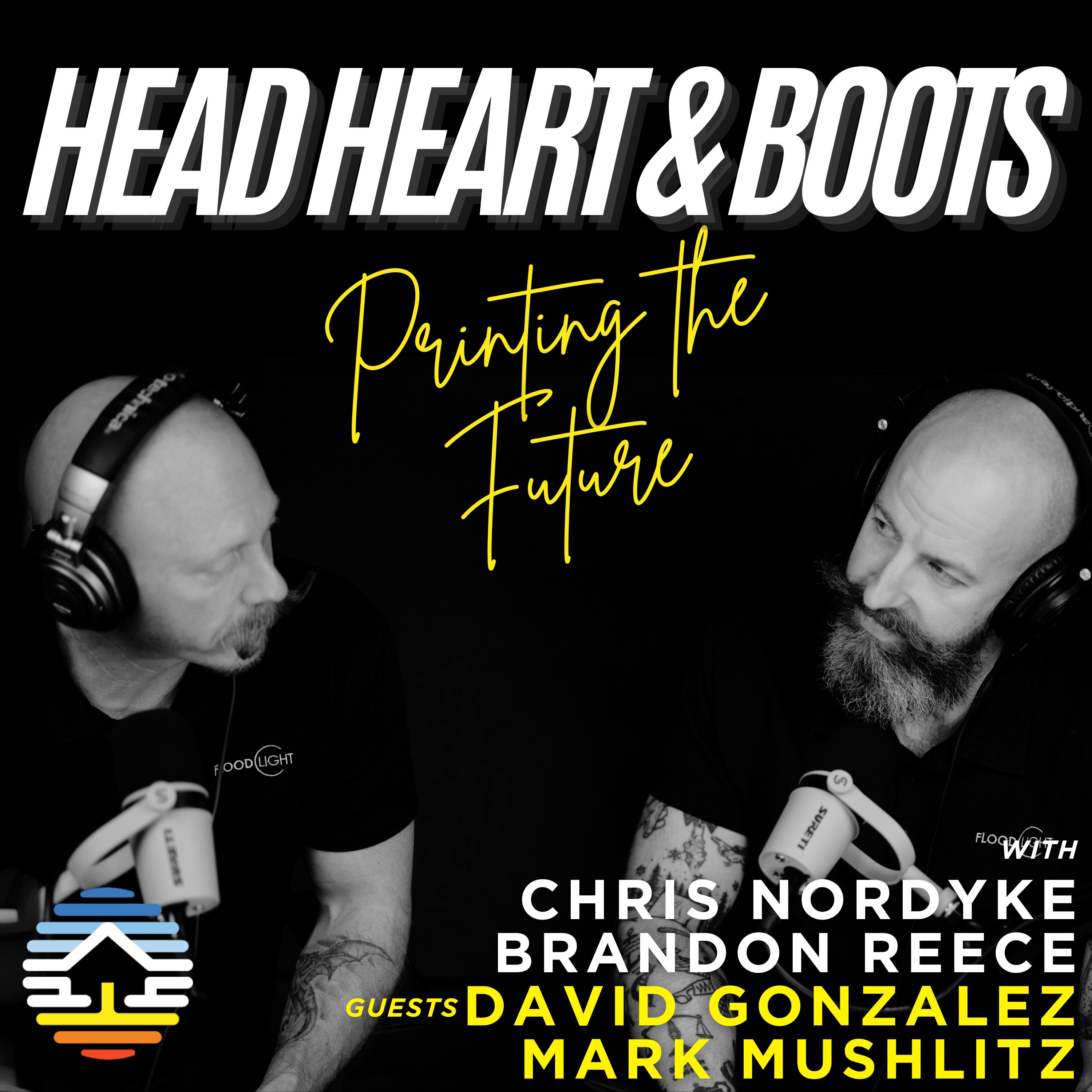


What’s up, friends! This week Brandon and I are coming to you from our brand-new HHB studio: vaulted ceilings, windows to the world, and a backdrop so good it deserves a tattoo. And for our first show in this space, we went big.
We sat down with David Gonzalez and Mark Mushlitz from K4K Construction, guys who are pioneering 3D printed concrete homes. Yes, literally printing houses.
This isn’t sci-fi anymore. It’s happening now, and it has massive implications for construction, restoration, and how we think about the homes we live in.
Thanks for listening, Chris
Why You Should Listen:
[00:04:41] 3D Printed Homes Explained – How concrete is layered to build faster, stronger walls.
[00:06:56] Early Adoption – Texas leads the way with hundreds of 3D printed homes.
[00:09:03] Economics – High upfront costs, but major labor and waste savings.
[00:13:10] Speed – Walls in days, not months.
[00:15:01] Commercial Use – Walmart already testing large-scale builds.
[00:20:08] Design Freedom – Curves, arcs, and finishes beyond square boxes.
[00:23:44] Durability – Fire, water, and pest resistance with better insulation.
[00:32:04] Restoration Impact – Resilient rebuilds that ease client trauma.
[00:39:16] AI + 3D Printing – Smarter programming, faster adoption.
[00:43:36] Next Generation – Why trades and future builders should pay attention now.
Did you know...
Only 30% of businesses listed for sale actually find a buyer? Even more striking, just 10% of those sell for the price their owners anticipated or higher, meaning only 3% of all business owners achieve their desired sale price. By focusing on understanding and enhancing your enterprise value, you can significantly boost your chances of joining that successful 3%.
Business Health & Value Assessment
Start Assessment Know Your Enterprise Value. See Your Potential Gaps.
Complete this assessment in less than 15 minutes and receive a free assessment for your business that includes:
- A Lite Valuation Of Your Business
- Your Value Multiplier Per Your Industry
- Health Assessment Per Our PYB Methodology
- Business Value & Growth Roadmap Tailored For You
- Value Acceleration Strategies
Spotlight on Floodlight: Your Secret Weapon for Sales & Scaling
This isn’t a paid plug. It’s real talk from the front lines. If you’ve ever thought, “How do I get a VP-level sales leader or even a sales team without hiring full-time?” Floodlight has the answer.
Fractional Sales Leadership
-
They act as your outsourced VP of Sales, taking full responsibility for training, managing, and growing your sales team. No six-figure hire needed.
-
Clients often close 20 to 50 percent more deals within six months, thanks to data-driven coaching, CRM setup, scripts, and performance reviews.
More at floodlightgrp.com/sales
Commercial Sales MasterCourse
-
A self-paced, video-driven B2B sales course designed specifically for restoration teams. Perfect for building commercial revenue and getting free from TPA handcuffs.
-
Covers mindset, prospecting, pipeline building, LinkedIn lead generation, and includes a $250 discount with code SALESBOOST.
Details at floodlightgrp.com/courses
Tailored Consulting & Coaching
-
Floodlight’s Propel Your Business methodology offers a full-circle roadmap: financials, sales, marketing, leadership, recruiting, productivity. All built for contractors.
-
These aren’t “life coaches.” They’re former restoration owners who’ve lived the chaos and know how to scale out of it.
Explore more at floodlightgrp.com
Live Training, Tools & Strategic Partnerships
-
Floodlight also delivers live onsite and virtual training, keynote speaking, and leadership tracks covering operations, project management, and strategic growth.
-
Bonus: They’ve vetted tools like Xcelerate, Liftify, and Sureti. Floodlight clients get access to exclusive discounts on tech that actually moves the needle.
See all partnerships at floodlightgrp.com/partners
Why it matters for you as a listener
-
You don’t need to figure this stuff out alone.
-
If you’re serious about sales growth, operational clarity, exit readiness, or leadership development, Floodlight is already helping folks like you scale smarter.
-
And you get it from industry insiders. People who’ve sat in your chair, survived the fires, and built systems that actually work.
0:00 What's up, man? What's up, dude? This is, you know what? I don't know. For those of you that sometimes watch us on YouTube, you're going to notice that there's some badassery happening in the background. This is our show number one. Yeah, show number one. In the brand new studio. With the new studio. And I got to say, I love everything about it. We have, I mean, let me see. Here's the difference. We have like 12 foot ceilings on one half. So we have this vaulted area that just has a really cool open. feel we've got windows out to the main street in our downtown below yeah we can see sky whereas we were in a bit of a dungeon in our previous no windows and so forth but we've got big plans yes for this space not the least of which at some point you will see a head heart boots episode a la joe rogan with live guests That's right.
0:46 That's the vision. That is the vision. That's the dream is we fly guests out to HHB headquarters. That's right. That is in the future. This podcast table will be going at some point. Yep. And we've got a lot of new things afoot. Yeah, we're hoping we'll probably get another two or three episodes in before we'll start seeing the big visual changes. The other thing, too, that you didn't point out. So, again, for those that can't see it and you're just listening. we have a new backdrop. And so the hefty new Head, Heart & Boots logo design Jana produced for us, and it had its maiden voyage on the big screen at the keynote at the Core Collective last week. That is now our backdrop. And I got to tell you, man, tattoo is coming. I know, dude.
1:27 Tattoo is coming. We got to go to the tattoo studio and get matching twos. Yeah, it's almost like we've had an old ancestor between us here in the frame. You know? It's the... It's the restorers that have gone before. Yeah, that's right. Well, we have a weird show today, actually. Yeah, it's a little different. Yeah, we get kind of on the outer edges. We're going to have K4K on today. We've got both David Gonzalez and Mark Mushlitz there. They're part of the founding group. of K4K construction. And these guys are printing homes. Well, they will be. You're going to learn very quickly in this show that 3D printing concrete homes is still very, very, very front edge. But man, there are some super interesting things happening on that front.
2:10 And we're We just were curious about it and we wanted to get some basics out in front of you guys as quickly as we could. This is probably not something that you're going to do tomorrow. But man, if it's anything like the rest of the technology gains that we've seen in the last two or three years, I think that whatever horizon they provide, you may cut it in half. And that's probably what really is. going to happen. Yeah, just imagine at some point, right, framing a house or completely completing a house in days, not months, or weeks, not months is remarkable. I mean, some of the examples they talk about are like Walmart using this technology to build extensions to their stores. 20 feet high, 20, 30 feet high. Yeah, and remarkably faster than standard cinder block or concrete tilt-up, you know, construction and some of these other current, you know, methodologies.
2:57 It's a, it's Pretty wild. It's wild. All right, let's dig in. Here we go. Wow. How many of you have listened to the Head Harden Boots podcast? I can't tell you that reaction, how much that means to us. Welcome back to the Head, Heart & Boots podcast. I'm Chris. And I'm Brennan. Join us as we wrestle with what it takes to transform ourselves and the businesses we lead. This new camera angle makes my arms look smaller than yours. I'm noticing that and I really appreciate it. I thought you did that on purpose. No, I don't. I didn't. And I am not happy with it. Well, boys, thanks for joining us. We've been excited to finally get a chance to talk to you all. It's good to be here. We had, probably unbeknownst to the average listener, we had a couple of false starts.
3:41 So we're actually legitimately really excited to finally get... chance to get in a conversation with you guys. So just a little bit of stage setting. We're talking 3D printed homes. I think so much of what's been happening right now, it's like we're either talking about AI or we're talking about automation in some way, shape or form. And so this is kind of a new iteration on technology that could potentially be influencing the service businesses and specifically from... from our perspective, the disaster restoration industry. So you guys, print homes for a living, which sounds just absolutely absurd to say out loud. And so we're excited to get into this conversation and start diving into what this even means.
4:23 So I think just to get going, guys, and you guys can both take a crack at this. Sometimes having more than one guest, you do a little bit of ping-ponging. But break down this idea of a 3D printed home. I know some of us are starting to see this stuff pop up in our feeds, but I think it's still new enough that many of us aren't fully aware of what's actually happening. So two questions, actually, to get us started. One, what is this kind of the true concept of what it means to print a home with concrete? And then I think second, what are you guys seeing in terms of how much of the broader building industries are even aware of this technology and how much adoption are you guys seeing kind of in its current state? Let's go there. Dave, you want to start and then Mark, you want to jump right behind him?
5:03 Well, what 3D printing is and how it works is it's a robotic arm of some kind, or it could be what's called a gantry, which is a beam that goes across with a nozzle that extrudes concrete out of the nozzle, whether it comes from the gantry or the robotic arm. And it basically lays down one layer of concrete at a time, usually about a half inch to used everywhere. We see it all over the place. And I think that's what's really intriguing about our ability now to deliver concrete very specifically. I did see some videos. If you see those video feeds, sometimes you'll see in 1947, they were 3D printing buildings, you know, it was silos.
5:47 So this guy had his wheelbarrow and he was putting concrete. He was going in a circle, but he was kind of limited to, you know, this circle as he went around and around and up and up, you know, building these silos. Well, with technology now, with these robot arms or the gantry system, you know, we're able to do it, putting together a whole program and then... using a well-known product. Obviously, we tweak it when it comes to 3D printing, but I believe concrete is top five of the most sold products on the planet. So it's used a ton. And so it seems like a real natural direction to go is, okay, now it's a proven product and we have the technology for the delivery system. How do we make this work?
6:27 How do we make this work in building a safer, stronger, more efficient home? So from your guys' perspective, I think if you watch YouTube, right, you can tell yourself that this is happening all over the planet in massive numbers. My gut says that's maybe not the truth of the matter. Give us kind of a breakdown. Like what's happening in terms of this being used in the open market? What are you guys seeing? Where is it penetrating right now in terms of its use? Just kind of give us a better idea of where these things are even being implemented. Well, Texas comes to mind first, of course, because... Their building restrictions are less cumbersome, and so there's a lot of projects that are going on in Texas.
7:10 I believe they have built hundreds of homes at this point. So that's kind of an epicenter of what's going on in the 3D printing space, but there are a lot of ventures in Florida and some starting in California and other parts. to try to solve some of these problems. But basically it's a little bit of a wild west in that, you know, people are trying to come first to market and trying to get it, make a name for themselves. But I would say adoption from the big names is slower because they're by and large already successful. So why mess with the good thing and why try to jeopardize or venture into something that may or may not be a profit center for us in the future.
7:54 So, Part of the industry has to prove profitability, not just it's a really cool, shiny thing. Yeah, that makes a ton of sense. Yeah. And if you've been building thousands of homes a year with a tried and true method, I can imagine it's a delicate process to be tiptoeing into new territory like this. So we were just chatting beforehand and we were talking about the cost, you know, and I asked the question about cost per square foot and you guys really quickly reminded me, well, it's no different than stick homes. It depends on... on the complexity and the nuance to the build and all of that kind of stuff, what that is. But I'm curious if you guys could just talk a little bit about the unit economics of it, right? Like I was watching some video on YouTube and it said that these gantry systems or these robotic arms can be upwards of a half a million bucks, right?
8:38 Oh, yeah. equipment pieces. So clearly there's a pretty high capital cost for somebody to get into this business. But at the same time, help us understand the economics of that and what you're able to do with that half million dollar piece of equipment. What does it replace? Because I imagine it removes a fair bit of labor out of the equation. For the builders listening to this, help us understand the economics of what this can be once it's fully in the market. Yeah, I think that the potential And, you know, it's a little bit like the first plasma screen TV right now, right? You know, they were the sucker that got the first one and then they got more affordable over the years. So there is going to be kind of that learning curve. There's going to be that process of getting down to where it's more and more affordable.
9:20 But what I'm hoping is that, yeah, it's going to be way different. It's going to be more of. There's going to be the computer programmer part of it, you know, that they're the one that's working on the files that go into the system. There's going to be some laborers that are filling the machine with the concrete. And then there's an operator there. And it can get a little bit more complex. And there's a lot of things like you got to watch humidity, you got to watch temperature, and you got to watch your bead as it comes out as it's going in this circle, you know, putting this concrete there. But as we learn and grow, I think it's going to take a little bit less workers, a little bit more trained workers, sometimes in computers. I'm hoping, too, that it's also going to be a little bit easier on construction workers' bodies.
10:02 You know, we see at these events that we go to some of these construction, these concrete guys with their blown out knees and bad backs and all that. And they're like, oh, I've been doing this for 40 years. I'm all beat up. And we're hoping that there's going to be that part of it too, that, you know, we let the machine do a lot of the heavy lifting. That doesn't mean we're not lugging stuff and there's not a lot of work that goes with it. But I think that's one of the things that has a potential there too, is it will. And as some of those costs go down of not beating up our workers and having, you know, maybe a little bit less framers, as we're talking about walls, less people that are doing that. I think that's going to impact construction costs. But it goes again to the complexity of what you're building and what you're going for.
10:44 And I would also add that there's a little bit of an element of a chicken and an egg thing going on here. insurance, right? Insurance is crazy. And we know that concrete doesn't burn the same way that wood burns, right? That's a no brainer. However, insurance is based on past tense, data, statistics, analysis, all that. And you don't have enough 3D structures for their actuaries to produce the tables yet. So they have to use common sense and they have to use their forward thinking brain rather than their rear looking brain. And so insurance companies, are they willing to make billions of dollars in a bet that this is going to be better on their costs so they can lower their premiums?
11:28 So there are some eventualities that will come to the industry because of this, that being one of them. But you have to be first through the wall and you have to start getting this thing going. So to directly answer the question on cost per square foot, we are targeting somewhere in the high 100s, low 200s. our average cost, and how we're able to achieve that would be similar to about a Dodge truck a couple years ago, brand new. I didn't need anything fancy on it. I just needed it to work and haul heavy things. And so with the 3D printed home, we have a lot of that type of variability that we can bring to the consumer.
12:10 For example, if you're okay with the corduroy, look, look, had some people call it like a wool blanket. You can just put some paint on it and you're done. Like you've saved a few steps on the interior if you print the inside and outside walls, for example. On the exterior, if you have stucco, you don't have to do the same kind of lathing and some of the other things because your stucco is just going to stick right to the beads. So there are some added advantages. Also, all construction has waste. We like nine-foot walls, but we don't make nine-foot boards. Therefore, there's a lot of construction waste. Well, what we can do with concrete construction waste is we have our job site ready with forms.
12:52 For example, we can make the kitchen countertops and bathroom countertops. And so when we have our construction waste, we can throw it in those forms and start utilizing some of that. So there are ways, I think. to make the whole project more efficient, but you're gonna have to think it through and make sure your chess game is on point. You know, the other thing too that I saw that's just astounding is you can build a home, apparently, in days instead of weeks. The walls. Yeah, the walls, the exterior, the structure, right? Talk about that a little bit, just how long this stuff takes, because you're describing a half-inch bead per pass. What does the future sort of custom home-build site look like? Two or three of these robo-arms or gantry systems all in place at once, working together?
13:38 What's this going to look like? Yeah, we are already looking at a robot, actually, that is just being produced that has two arms on the same machine, So, yes, your thoughts about what the future looks like is I believe it's going to be exactly that where you show up with a single machine and it goes through the floor plan and it just erects all the walls. I could see it happening even in a day with the right equipment. We're not there yet, but I could see that being an eventuality. It's going to mimic a little bit like getting your car painted. You know, a lot of the labor is not actually putting the paint on. It's prepping it.
14:19 It's getting it ready. It's putting all that on there. And I think that's where, you know, and the prep involves your permits. It involves, you know, working with the builder and the architect and all that. But yeah, once that prep is done, it's going to go fast. You know, you can do the walls real fast. So I'll let you continue. I'm really curious the application so far. So I think when we were kind of just going back and forth a little bit when we were exploring the idea of even talking about it, and you guys had mentioned several different projects that have been kind of looked at as examples of where the technology is coming and how far it's already come. Is this residential only? Are you seeing this in commercial application? Like give us kind of the breadth of what it is that currently is being developed or this technology is currently used to build.
15:01 Well, right now there are two Walmart extensions that have been 3D printed up to a 20 foot wall height. The first one was done in about, I'm going to say eight weeks without accurate information. It's somewhere around there. The second that I think was, I want to say 5,400 square feet or something like that. The next one I think was close to 7,000 square feet and it was done in eight days. So each project is exponentially better than the previous project. And once you hit that sweet spot, you can make money. You know, you just keep hitting the green button, right? So with commercial applications, it really is dependent on what the project is, I would say, right now.
15:48 The technology is for, like I said, about a 20 to maybe 30 foot high wall. There are some gantries, however, that you could go even higher, but I don't know of any projects in the U.S. anyway that have gone higher than that commercially. Residentially, a lot of the industry is still building square structures. And we believe that one of the benefits of this technology is that you don't have to build square structures. They ask, well, what about fires? We answer that question kind of with a knowingly obvious smile that, hey, well, concrete doesn't burn. The next thing right off of their mind is, well, what about earthquakes?
16:29 So we've been doing some research into that and we found that shape really matters. So in an earthquake, the 90 degree corner fails and then the rest of the structure fails because you've got all that tension from opposing directions meeting at that 90 degree point. So by, introducing curves and arcs into the structure design, you can really enhance its durability during a seismic event. So most of the industry, to answer your question, is square boxes, single stories. But we hope to provide some other examples of that in the near future with our company. Just to add to that, yeah, it seems like what we're seeing is we have seen a couple of Walmarts and we've seen a lot of like 800 to 1200 square foot homes that are box.
17:18 And so I think that's where we want to stand out. It's like Dave said, is a little bit more the custom homes, a little bit the curbs and someone that is really looking for a more artistic expression of what these machines can do. But yeah, for a similar cost. Exactly. Are you a business that's under five million in sales and you're just now getting ready to try and scale your company up and hit some of those targets you've always wanted to hit but now you've got to build a sales team? Or maybe you just hired your first sales rep but you don't really know how to manage them. Like how do you manage, lead, train, develop a sales rep? Floodlight has a solution for you now. So we can actually assign your sales rep a turnkey VP of sales that will help them create a sales blueprint, their own personal sales plan for your market, They'll have weekly one-on-ones with that sales rep to coach, mentor them, hold them accountable to the plan.
18:07 And they'll also have a monthly owner's meeting where they'll meet with you or your general manager and review the progress of that sales rep. Their plan to actual results, what kind of performance improvement they're working on with them. Also let them know, hey, you might, they're doing really well. Maybe we should think of hiring a second sales rep. They're going to have that one-to-one advice for you as an owner or senior leader on the team as well. How great would that be to have a bolt-on sales manager for your one sales rep and it's only $2,500 a month? If you're interested in talking more about that, reach out. Let's grab some time and let's talk shop. Our floodlight clients this last year in 2024 generated over 250 million in revenue. Supported by, advised by, an industry expert who's owned and operated a business just like you.
18:50 So take action. Don't kick the can down the road. Start with our business health and value assessment. And let's unlock the next chapter of your success story. That's one of the things I was going to mention is I don't know, I think it was after you and I talked the first couple of times and I think you guys had shared some images for us in the future, Chris. Mm-hmm . We'll be cool like Joe Rogan and be able to pull up images. But what I think you saw was just these, I mean, really unbelievably beautiful structures. Just to be really honest, it was more of an art piece and a statement versus just a dwelling. And I think that sometimes when we get into, we start talking as builders or as restorers, that we want to be a little bit more black and white functionality.
19:35 But at the end of the day, these are our homes. And if you walk inside someone's home, it's normally representative of very internal things. Who they are spiritually, what do they think of the world, right? How important is their family? And very little is looked at in terms of what we can do to modify the exterior or the actual shape of the dwelling. I'm just kind of blown away by the fact that somebody's artistic, creative inspiration could actually shape their house and not have near the limitations that a wood dwelling or some of our existing tech provides an I think that might be a little bit understated. That's probably one of the bigger value propositions of this, at least in the early stages of, let's get some creatives interested in how wild their home could look on the block versus somebody else's.
20:23 Yeah, that's right. And the other thing that we're finding in harmony with what you're just saying is that when you look at how mankind has lived in his or her dwelling over the millennia, you find some commonalities. And so we're actually researching, like in different cultures around the world, like how do they design... their dwelling and why do they design it like that? For example, the fire or the kitchen, the eating is usually a center point to the dwelling. And then you kind of go out from there. And another feature that is common is you go from public kind of more in the central to private, more at the perimeters.
21:06 And so, you know, including designs like that, that have that in focus should really feel nice too. That's interesting. So you're saying, I just want to make sure I'm tracking with you. Like subconsciously, we would feel more in tune with that design. We just kind of don't know it. Yeah, yeah, yeah. I don't understand the science of feng shui that well to be an expert in any way, but I know when people walk into our showroom in Sacramento, the way that we've designed the curves and the slopes of the walls in our showroom, people naturally, like nine times out of 10, they walk a particular direction. when they first enter and then they come around in another direction.
21:48 Like all of it's very designed and intentional and they love it and they say, we feel great. So interesting. I'm just really blown away by some of that. It is fascinating. Here's some of the other things that come up for me. You know, last week, one of our industry buddies posted on LinkedIn about how it was 118 degrees in Phoenix, Arizona this past week. It was a record for that day. Two degrees hotter than the hottest previous day on record. And clearly, regardless of what people think about climate change or what the trend is or isn't, it's certainly hotter in Oregon this past summer overall than it feels like it's been in previous years. So a lot of us are in various parts of the country are experiencing these increasing temperatures. And maybe it's a short-term thing.
22:28 Maybe it's a longer-term thing. But whenever I've been in concrete structure homes or ICF homes, I was in a home recently that has... 18-inch ICF walls throughout the entire perimeter of the building, they're so much better at regulating temperature. Yeah. These concrete or hybrid concrete structures. My wife and I also stayed at an Airbnb here this past year that was a cob, an authentic cob building, if you've heard of this. It's like a mud and straw. Oh, yeah. And almost concrete. I think it's mostly mud and straw. It's not technically concrete. It's like nature's concrete. Yeah. Very earthy. Yeah. Yeah, very earthy. And they're able to build the structure in such a way that it was perfectly domed.
23:10 And it was just a very comfortable space in terms of how the temperature is regulated. I'm curious, like, what, maybe, what some of the practical benefits of the concrete structures are in terms of temperature regulation. And then the other part of my question is, Is there anybody experimenting with seamless concrete roof structures integrated with the walls? Is the technology at some point going to be able to do domed structures where there's an entire enclosure with this robotic system and then the interior finishing is done separately? Yeah, so talk about those two things. You want to handle the first one? I'll handle the second one, Mark. Yeah. I think a lot of times when people talk about solar panels, they're like, it pencils out in about 10 years.
23:52 And I think the R value of our houses is gonna pencil out really fast because you're right. It is going to be this concrete and then it's gonna have the insulation that we put in between. And I think the practical application of how it's going to be, insulated way better. It's going to be quiet, you know, inside your house and from outside noise and within your house. I think there's going to be less noise going through the walls. I think there's going to be a huge value there when it comes to regulating temperature. When it comes to heat and cold, we're going to be able to contain that a lot better and control that. And I think there's a lot of, you know, Dave mentioned the earthquake. We've mentioned fires. I think when it comes to water damage, you know, that's part of, you know, the restoration companies you work with.
24:36 I think we're going to be able to mitigate water claims, water damage, you know, that comes to homes a whole lot faster and efficiently. So there's a lot of practical ideas. I think our homes are going to be bulletproof, too. So I think as that is a rising concern. I shouldn't put that out. I shouldn't say that out because someone will test it. But the strength of a home is going to have a huge value over time. It's not going to, you know, termites aren't going to be a part, you know, or, you know, things that dry rot, that sort of thing. And so when you look at the long-term practical values of... controlling the heat of what damage can happen. It's going to have a really sustainable aspect to it too. That's super interesting from being in the west side of Oregon.
25:18 I think as soon as you finish your house, it immediately begins to rot. So it's just an exercise for the rest of your ownership of trying to make sure that the building doesn't make it straight back into the earth. Yeah. a concrete structure here in the Willamette Valley or somewhere, you know, in our northern neighbors up around the Seattle market, having a whole lot of interest just from purely like your home's not going to rot. So what more benefit for us for there? Yeah, but dig into that roof thing. This is kind of interesting just to see where this is going. You know what I mean? Yeah, so step one, the robotic arm or the gantry system, whichever one you're using, doesn't care what you're spitting out of the nozzle, right?
26:04 It doesn't care. So what you're putting in through the hose and extruding out of the nozzle really is up to you and the ability and science really on how to deal with these badly behaved children, which are the materials that are coming out of that nozzle. Because each one has a particular temperament. Right. and they are spoiled children in the way that they want it their way or they're going to make you pay for it and so whether it be aerated concrete whether it be kind of a there's all kinds of rubber-based geopolymers and plastics and like all kinds of things that you can extrude out of that nozzle and so to answer your question with the roof Absolutely.
26:49 It is heading toward that direction where you could even just continue to go up, just like you experienced with your quote-unquote mud hut that you went into, that you can just continue to extrude. You just got to be aware of how the material will hold up at a slope and some of these other things that would... go into the science of it. You know, one of the things that we were chatting about earlier, first kind of taking a look at this was how we're finishing interior materials. And you had mentioned, right? And you used the term the corduroy or something else that I think you said. And I think for most of us listening, we didn't quite connect the dots there. So on the exterior, it could have your standard siding types, right?
27:32 There is a way for us to put that material out, put some kind of lap siding or whatever that you want for a more traditional look. But then there's this obvious stucco application. What about the interior? Talk like, what are our options? What could someone ultimately choose to do with the interior finish that home? It is fairly unlimited. Now, in my mind, if you're doing a 3D printed home, you're kind of wanting to showcase that this is a 3D printed home. So to go in and just put drywall over the top of it, you know, is probably defeats the purpose, but you could do that. You could kind of fur it out. You could put drywall there. You could even do an adhesive technique for it. What seems to be more, you know, interesting to people is more of like a stucco type finish inside.
28:13 If you want it to be a little bit cleaner and that, and it's hard to really describe the layer look, the corduroy look, But it is pretty artistic. It's pretty cool what you're able to do there. We were actually even able to 3D print our logo right into a wall in our showroom. We've talked about the ability to even like put in a planter right into the wall where it kind of it comes out and you'd be able to do, you know, plants there or shelves or things. you know, whatever it would be. So in my mind, I think that people would really want to showcase the fact that they're living in a 3D printed house and not, you know, cover it with conventional materials. But there are a lot of finishes that you could do if you want to do kind of a either rough or really fine stucco type finish.
28:53 So, yeah, in our showroom in Sacramento, we have sheetrock. We have what we call the natural look, which is just leaving the beads exposed and you put paint on it. And we also have the Venetian finish. We have a light rough. We have what we call Sacramento mission finish, which basically we just take some concrete, slap it on and put a trowel to it and let the natural kind of mission look happen. We have part of the walls finished with tile, some finished with stone. Like you can adhere almost anything to it. And I would say 90% of the people that come to the showroom, and we've had a lot of people go through the showroom, When we just offer no bias and ask them at the end of experiencing it, which walls finish do you like the most?
29:41 90% of them go with just the natural. They just love kind of that. Yeah, I wonder how much of that is just the new, right? Like that's just not everywhere. Novel. Yeah, exactly. Yeah, super interesting. So, okay, guys, I'm going to point something out that this isn't in a negative at all. I think it's just to kind of point out how experimental all of this still is. You guys have used the term hope and think a lot. And so what I'm hearing is that for all of us kind of listening about this technology and maybe for the first time really understanding its real world application, We are very front edge in terms of this being a wide used building material, meaning like you guys are still on a mission to educate people to a certain extent that this is available and approachable, right?
30:29 For the average person to use. One of the things that we were talking about in context of this early on was related to how restorers can think about this. And really builders, anybody in the trades, building that's listening to the show or our restorers. One of the things that we were kind of going back and forth in dialogue, so I'm going to try to tie several things here together, hang with me if you can. Mark, you mentioned that obviously damage post-cause of loss could be subdued or mitigated just by the natural building material itself. And I think... For a restorer listening, the first thing that we think to ourselves, well, how would that affect me negatively from a revenue generating perspective? And I think at the end of the day, that's no different than us doing more drying in place versus more ripping and gutting.
31:13 And what we find over time as a restorer is that we don't really lose. At the end of the day, you're getting more work, you're more trusted work, and the work that you're doing when you dry in place is more technical in nature, making you more valuable. Right. And so I don't think really people suffer any negative consequence from that. But what we were talking about was this idea of, imagine the implication of when you're listening and talking to a client that just got done going through a severe fire loss, And you provide something that could potentially be highly, highly customizable, very unique in its end result or product. And you're able to lean in and talk about how this person who now has some form, often, of a form of PTSD post or traumatic fire loss.
31:59 I heard you and we think about the future a little bit differently than your average bear. And the reason we're presenting this as an option is because it is fire resistant and it could create a different outcome and maybe prevent from you ever experiencing the same level of damage that you did this time. I think the reason I'm trying to slow us down for a minute and point that out is, it's no different than us talking about creating an option for somebody to really create the exterior that matches their interior. Like who they are, personally. I just did a keynote not long ago about how we make them feel in the process. And the point is, is that AI and automation and technology is going to come at us at light speed.
32:41 We're going to have to adapt and overcome and absorb that. But something that stays true forever is going to be, what are you doing to prioritize how you make people feel in the process? And I think one of the things I'm hearing from you guys about this technology is that, one, you create something that's beautiful and different. And that in and of itself can create a remarkable customer experience. But I think the other thing I'm hearing is that somebody could approach this technology early and begin advising and consulting their clients in a way and presenting options to them that could really be profound in terms of their impact on that client experience. And so I just don't want to lose track of that as we're talking about nuts and bolts.
33:21 And how that relates to the fact that you guys are still in an experimental phase, hats off to you to have the balls to get into a part of the technology and industry that's new. Right. And so, again, I want to be clear. I'm not saying that or hacking on anybody. I think it's impressive that you guys are out front trying to be the first ones to throw your head through the wall. Because the rest of us reap the benefit when guys like you pioneer that way. So sorry, a little preachy diatribe, but I just kind of... Well, I like it. ...building as we were chatting on this. You guys, let's kind of come back to reality here now that I'm done on my soapbox. What are you guys seeing near steps? What is it for you guys in terms of client base? Where are you marching this next? Because it's the most low-hanging fruit or realistic application from your guys' perspective.
34:05 Well, the next domino that needs to fall is we need to provide an experience for the public to enjoy. So it's cool, shiny concept. Everybody likes talking about it. Get out your checkbook. Well, that's what it comes down to. And so we are going to be building, and you're welcome to share on your website if you want the picture of the one we're going to build at the golf course. We're going to build that home to really demonstrate what a 3D printed home can be. And we're going to make it an Airbnb. So anybody can come and test it out and stay the night. go golf if they'd like to, or go to the lake because there's a lake nearby.
34:46 But it'll be a way for people to visit and experience what it's like living in a 3D printed home. And once that iteration happens, then people will have a real-time understanding of what they want when they place their order. So you're not going to the restaurant looking at a foreign menu and hoping that your pick is good. You'll be able to know with some confidence on what you're selecting. So that really is the next part of the process for us. Mark, what are you seeing in terms of just kind of like wider market adoption? Like, give me kind of a rough timeline. When do you see this being something that someone's going to consider it with the equal amount of effort as they would any other kind of design build if they're getting ready to do a big extensive remodel or build a home for themselves?
35:34 Yeah, really hard to judge, you know, because like Dave said, you know, we need to get some people that experience and can see it and get those testimonials because right now it's a really cool shiny toy. Yeah. that is really hard for people to wrap their minds around. If you would have asked me a year ago, I would have said, oh, we're probably about two years away. We're close. Now I'm like, maybe it's more like four. I think it's going to be a little while, and correct me if I'm wrong, Dave, but at one point we looked in the United States, there's 12 or 15 3D printing companies in the US. And it's hard to keep track of because some restructure and all that. So there's just not a whole lot of examples out there of it going and going well.
36:16 And really, particularly in the custom market, not just like doing a tiny home type model, but, you know, in the custom market for family, you know, for a full family. So it's hard to say, you know, I'm very hopeful that we're going to have rolled out our first few examples in the next year and that we'll be able to people have, you know, be able to put their hands on it and really see it. Like they've mentioned our showroom. It's really cool. And people do see that because that's when it all comes together because, you know, they go, they see the machine and they can see the end result. And it's like, oh, now I get it. It's a little bit harder to without some sort of demonstration or that's something you can touch and feel and look at. it's hard to really grasp how this is going to really be a game changer. I think what it's going to change too is when one of these are built and it's one of the few left standing in a tragedy, you know, sadly.
37:03 But I think that's a game changer. Whether you just compare it to like a brick built house or whatever, you know, we do know that they have a much better chance of surviving tragedy, surviving a wildfire, which is big in Oregon. That's a big, big issue, big in California. So hard to say, but I'm hoping that, you know, in the next decade, it's going to be something that is very commonplace, that people have seen them in their neighborhoods, that they are really considering them, that we're dollar for dollar an amazing investment for, you know, checking a lot of boxes. I would add to that, that profitability is going to be a key marker. So one of the largest 3D printing companies in the country is, I think they just took on like another half billion dollars of debt or something like that.
37:49 Like just a big chunk of money to keep their wheels turning. And no disrespect to the way that they're doing their business, but it just shows that You know, at the end of the day, it's going to take money. And where investors are going to get excited when you can get investment, you know, institutional investment dollars coming your way is when you can show green numbers, not red numbers. And so that's part of it. Another thing I would say that could be a significant game changer is government. subsidies that could help kind of kick the industry off with the long-term intention that, hey, this could really help in many respects how the American people live in their homes.
38:30 So some government subsidies for research and for initial projects, et cetera. I would say another one that could really help things take off is for insurance companies to understand the use their educated minds to look at this and say, ah, we've just, you know, out of a thousand claims, we've just taken 600 claims off the table, you know, or minimize the cost. Those types of things could be significant game changers. Then the next question becomes, how quickly can the industry ramp up to the demand once the demand takes off? So I would say that a solid four to five years at least, and we're trying to proceed cautiously and methodically so that we can be strong long-term.
39:16 I love that. It's so interesting. I don't want to get us too distracted on this and kind of get ready to wrap up here, but what would AI, like what are you guys thinking about in terms of AI as it has an impact on this from a design implementation perspective? Is that like just a whole nother massive variable? Yeah, it is. Yeah, we've seen some interesting designs thrown at us by AI. And we look at it and it came up with, you know, this really cool design. It's like, that's not buildable. It looks super cool, but it's not buildable yet. Things hanging in the middle of the air, you know, all that kind of thing. But, you know, AI, so one of the difficulties in this industry is the programming, right?
40:02 So of the files, when you're creating the file, you come up with your really cool design, you think it's awesome, and then you actually try to put the computer file aligning with your really cool design. And sometimes the robot can't quite tweak that way. And so you have to calibrate your robot to move in such a way so it can deliver the product that you're looking for. And right now, AI is helping, we think, It's helping with developing some of those programming errors so that we can have that programming feature go much quicker. But as we know, AI typically is built on past tense data. And so we're accumulating that data along the way.
40:45 Yeah, it's intense. I mean, it's pretty interesting to think about this like broadly. Okay. Before we close shop here, just one last question. If just based on your guys' current experience and the things that you guys have been wrestling with being way out front on this, what is like kind of one mindset that us in the trades or us in the disaster restoration industry could consider as we prepare to take a more serious look at this over the next couple of years? Well, I think that the point that you made that when you go in and you're doing disaster restoration, one of the hats you're wearing is you're dealing with someone that's been through trauma, that has lost property due to usually a smoke, water, fire is when the big losses are.
41:27 And you're dealing with tragedy. You're dealing with them losing a lot of money, a lot of things they care about. maybe a pet, you know, whatever it is, you know, it's terrible. And we're trying to offer a solution that will mitigate that, that will help tragedies to be lessened, you know, that it won't be as catastrophic. And yeah, that is giving hope to your clients that there are some products out there that will keep this from happening in the future. Yeah. I would answer that was saying that this industry is going to be like, let's fast forward 10 years now. I think 3D construction will be very common in 10 years to where it doesn't make the news anymore. Right now, almost every project makes the news.
42:09 In 10 years, I don't think that's going to happen. In five years, I think it'll make the news occasionally. But as the public's acceptance and knowledge of it increases... You just kind of want to be the name on their lips that they think of when it comes to their mind. So I think really from the perspective of the restore is not just how can we rebuild something that doesn't cause the same trauma as what they just experienced, but also when somebody is thinking, you know what, I think I want to, I'm going to try out this 3D printed construction this time because I have the stars aligning for that right now. And you want your name to come to mind? Yeah, I think that's smart.
42:50 Okay, so I think I have a good closeout question for us. You know, there's potentially a lot of blue-collar men and women listening to this in their 20s and 30s. Got a lot of career in front of them, right? And presumably some of them, like us, are pretty enamored with this whole idea. Like, wow, this will be really cool when it comes online. What would you suggest to contractors listening to this that are curious and inspired by this new tech? What kind of learning should they maybe be investing in or reading if they're curious to start preparing themselves for this space? Because I imagine you guys have gone through a learning process of trying to understand the tech and how it applies in the construction process and so forth.
43:32 What would you suggest in terms of people trying to prepare and learn? My response to that would be, The people that you just described grew up on Minecraft. hours and hours and hours of Minecraft. So that is a mentality that they have put into their lifestyle, frankly, and the way that they think as far as variations, customization, creating something that they think is cool that maybe their neighbor doesn't, you know, whatever. So to adapt to something that feels like it has that level of individuality, I think is forward thinking. What do you think, Mark? Yeah, I think that, you know, I mean, in terms of where you would approach this, I think if someone is really interested in practical design and building, that narrowing in on building these files and, you know, pursuing education on that, which we are seeing some of the masonry schools out there that are starting to offer, you know, training classes on running these machines.
44:34 And so they see it coming, particularly in Seattle, right? So the market is moving that way. And I think it's a very exciting way, particularly, I think there's going to be a big movement of trade schools being more prominent as an option for, you know, young people today. And so if you're, you know, if someone's kind of looking into, you know, what I want to do for a trade, concrete is not a bad way to go, you know, to kind of, you know, to be on the ground floor of that. And I think this is the, this is the direction it's going. And so to be aware of that and to be taking classes, you know, that direction would be pretty cool. Smart. Right on guys. That was fun. Appreciate you hanging out with us. Yeah, thank you. Yeah, thank you, yeah.
45:14 My gut says we'll have to do this again, and it's maybe possibly post-build. And so we'll have a chance to ping-pong back and forth how that went and what you guys learned in that process. So stay tuned on this. I think we've got some more stories coming. This is cool. Right on. Thanks for joining us. Thanks, guys. Thanks for having us. All right, everybody. Hey, thanks for joining us for another episode of Head, Heart, and Boots. And if you're enjoying the show, but you love this episode, please hit follow, formerly known as subscribe, write us a review, or share this episode with a friend. Share it on LinkedIn, share it via text, whatever. It all helps. Thanks for listening.