Ep 187 - "Radical Candor"
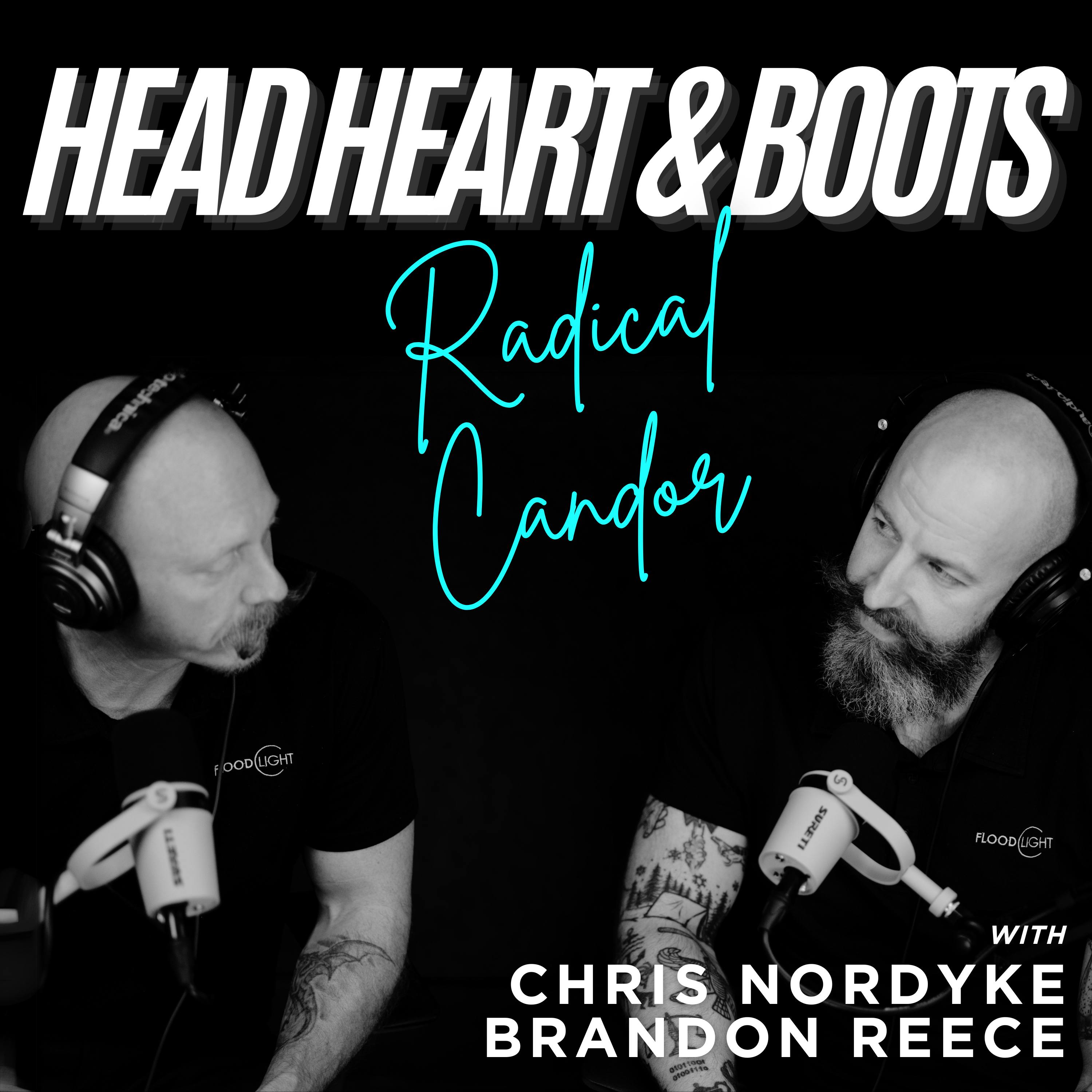


In this episode of Head, Heart, and Boots, Brandon and I dive into what Netflix got right about radical candor and how restoration leaders can use it to build healthier, faster-growing teams. We pull insights from No Rules Rules, share how we’re applying those same principles inside FP Restoration, and talk about how fear of feedback quietly kills trust, growth, and leadership potential.
hope you enjoy - Chris
Why You Should Listen
-
[00:03:40] How Netflix built a culture of radical candor and why it became a competitive edge
-
[00:10:00] What happens when leaders reward truth instead of politics
-
[00:18:00] How we’re using radical candor inside FP Restoration to drive real growth
-
[00:27:00] Creating safety and structure so your team can speak up with honesty
-
[00:38:00] Why someone has to go first if you want a culture built on trust
Did you know...
Only 30% of businesses listed for sale actually find a buyer? Even more striking, just 10% of those sell for the price their owners anticipated or higher, meaning only 3% of all business owners achieve their desired sale price. By focusing on understanding and enhancing your enterprise value, you can significantly boost your chances of joining that successful 3%.
Business Health & Value Assessment
Start Assessment Know Your Enterprise Value. See Your Potential Gaps.
Complete this assessment in less than 15 minutes and receive a free assessment for your business that includes:
- A Lite Valuation Of Your Business
- Your Value Multiplier Per Your Industry
- Health Assessment Per Our PYB Methodology
- Business Value & Growth Roadmap Tailored For You
- Value Acceleration Strategies
Spotlight on Floodlight: Your Secret Weapon for Sales & Scaling
This isn’t a paid plug. It’s real talk from the front lines. If you’ve ever thought, “How do I get a VP-level sales leader or even a sales team without hiring full-time?” Floodlight has the answer.
Fractional Sales Leadership
-
They act as your outsourced VP of Sales, taking full responsibility for training, managing, and growing your sales team. No six-figure hire needed.
-
Clients often close 20 to 50 percent more deals within six months, thanks to data-driven coaching, CRM setup, scripts, and performance reviews.
More at floodlightgrp.com/sales
Commercial Sales MasterCourse
-
A self-paced, video-driven B2B sales course designed specifically for restoration teams. Perfect for building commercial revenue and getting free from TPA handcuffs.
-
Covers mindset, prospecting, pipeline building, LinkedIn lead generation, and includes a $250 discount with code SALESBOOST.
Details at floodlightgrp.com/courses
Tailored Consulting & Coaching
-
Floodlight’s Propel Your Business methodology offers a full-circle roadmap: financials, sales, marketing, leadership, recruiting, productivity. All built for contractors.
-
These aren’t “life coaches.” They’re former restoration owners who’ve lived the chaos and know how to scale out of it.
Explore more at floodlightgrp.com
Live Training, Tools & Strategic Partnerships
-
Floodlight also delivers live onsite and virtual training, keynote speaking, and leadership tracks covering operations, project management, and strategic growth.
-
Bonus: They’ve vetted tools like Xcelerate, Liftify, and Sureti. Floodlight clients get access to exclusive discounts on tech that actually moves the needle.
See all partnerships at floodlightgrp.com/partners
Why it matters for you as a listener
-
You don’t need to figure this stuff out alone.
-
If you’re serious about sales growth, operational clarity, exit readiness, or leadership development, Floodlight is already helping folks like you scale smarter.
-
And you get it from industry insiders. People who’ve sat in your chair, survived the fires, and built systems that actually work.
0:00 Wow. How many of you have listened to the Head, Heart & Boots podcast? I can't tell you that reaction, how much that means to us. Welcome back to the Head, Heart & Boots podcast. I'm Chris. And I'm Brennan. Join us as we wrestle with what it takes to transform ourselves and the businesses we lead. This new camera angle makes my arms look smaller than yours. I'm noticing that and I really appreciate it. I thought you did that on purpose. No, I don't. I didn't. And I am not happy with it. Wow, what a week. Bro-sif-is. What a week. God damn. A couple weeks, my friend. It's been wild. I literally texted my wife today. I was like, babe, I'm so damn emotionally tired.
0:41 Oh my God. I just found, I hit a wall today. I was like, good God, I'm tired. Dude, it's for another show, but there's a Marcus Aurelius quote where he talks about anxiety. Oh yeah, yeah. and stress and just how really it's a function of our thoughts. It's internal. It's not external, right? We can't control external things, but we can control the internal thought life, right, that we cultivate. Oh, yeah. And it was just a reminder. I'm like, God, I've really been, yeah. It's been stressful, anxiety producing. But on the positive side of things... Yesterday we flew in from Toronto and from that workshop I did. Dude, that thing of the falls that you shared. Well, part of that's the freaking awesome camera that are on the new iPhone.
1:24 Whoa. That was unbelievable. Yeah, but Niagara Falls is great. I hadn't been there since 2003 or 2004. Wow. And it's gorgeous. I've never seen it. Incredible. Yeah. Wow. It's worth it. So anyway, beautiful in Toronto while we were there. Yeah. And we were outside a bunch and no rain. Virtually. And Kara went, right? Yeah. Oh, that's cool. Awesome. Virtually no rain. And then the beauty, you and I have had several of these, but not every time, when we flew into Eugene, Oregon. I mean, it's October. Yeah. It was beautiful yesterday. Yeah, it was. It was. And I was just, I was counting my blessings just thinking how many times have you and I come home and it's pouring, it's gray and we've come from like Texas or Florida or San Diego or whatever.
2:07 And it's like, we go from beautiful weather to back home to like the worst part of Oregon, you know? Yep. But oh my gosh. Yeah. Here, tail end of October and... we were greeted by wonderful weather. So I just kind of lifted my spirits, to be honest. Dude, right now. Yeah. I mean, it's jamming here still. Yeah. Late October. We're really lucky right now. Thank you, global warming. Please keep it up. Just keep it moderate, you know? Moderation is the key. Let's not melt the ice caps. No. Keep it real. A little more average daily temp, though. We're cool with that. That's right. That's right. Well, all right. I got a direction I want to go. Yeah. Yeah. So some of you guys know, we just got done with the One Tom annual conference a few weeks back.
2:50 Three weeks ago, yeah. Yeah, a few weeks back. And as usual, like those events are always a really good time because we just get to see our friends from the industry. And it's like... Most of us have virtual lives. Anyways, there was a great lineup. One time was a really dang good time. But one of the talks that was done was done by Alex Duda over at Albie. That guy, look, I just really respect Alex a lot. I think he's been... My experience with Alex so far has just been very gracious, super sharing, transparent, open, great communicator. It's just been, I just really enjoy him and his team. And anyways, he did a great talk.
3:31 And I'm not going to steal his thunder. I'm sure they're pumping out social about it. But the point is, is that he keyed in on like kind of three fundamental requirements for a highly scalable restoration company. And basically the majority of his talk came from the book about Netflix, No Rules Rules. And since that talk, I was like, I got to go through that book. And so I have been listening to it kind of back and forth as I go to the office. And there's some really interesting things happening in there. Long story short, one of these pillars... is essentially, I'm going to use slightly different language, but it's this idea of radical candor inside the business. And it's both up and down the org chart.
4:11 And I actually just got done processing through a portion of that in the actual book about Netflix. And they really go to great lengths to describe the level of adoption that radical candor was taken inside Netflix and how it fundamentally was a major superpower for the success and rapid growth of that company and also how they were able to keep their shit together as they exploded. And for those of you that don't know much about the Netflix story, by the way, this is a great book. So no rules, rules. They just kind of talk about some of the big pivots that they had to make in the beginning.
4:52 And I think, so really quick side note is that just blew me away. And it was a great affirmation because I think sometimes as business owners, we feel like the first version of the plan has to be the best plan ever. And the reality of it is, is that Netflix's first time out of the gate publicly in front of all for us to see, they were a mail you a video program. Yeah, I was a customer. I did it. They're not anything like they are. today. And there was several big iterations in that business in the early stages before it became what all of us understand and see now. And it's absolutely one of the top predators in its industry, right?
5:33 And anyways, so it was a good reminder just going through that stage of the book of as entrepreneurs, as leaders, guys, we're iterating. Our lives are bad. businesses are a work in process. But if we're afraid to take action because it has to be the very best thing before it's deployed, we're going to miss out on such great opportunities. And the reality of it is, is like you got to measure it while it's being deployed. Otherwise, you don't know what the best version is. It's all assumptive. Yeah, yeah, yeah. Anyways, side note, but it was motivating for me. Okay, so this idea that's happening inside Netflix, and they use several stories, like examples where key leaders, like we're talking CEO down, where these key leaders are expecting radical candor up and down the chain of command.
6:21 So not only are they able to provide it, and there's rules to this in terms of how do you do this healthy, but... versus it just being people spewing out their opinion all over people. But then this radical commitment of up, and one of the examples they gave just kind of staged that, really high-end person that was, I would say these are probably folks in the VP layers of the business, so not the executive suite, but definitely people running regions and things like that. This person got hired, opportunity of a lifetime, and they're like, They've already been a successful VP-level operator in another type of industry or businesses where the politics is how you get there.
7:01 Yeah. And in most businesses, if we're honest, there is some form of politics that helps someone when they understand it, they're going to leverage that for movement inside the system. Yeah, sure. So this individual comes to Netflix and starts getting exposed to the inner circle for the first time. And they're trying to navigate the politics and figure out what do they need to do, right? Probably super destabilizing for them, right? Bro. And the very first thing this person does is sits down in a company meeting with one of the highest level executives, not the CEO, And one of the individuals in the audience is pressing hard against this leader of, I think you're wrong.
7:41 I think what you're trying to tell us in this particular scenario is off. And here's why I think you're off. Here's these things I don't believe you're recognizing. And then there is somewhat of a heated, and I would say heated probably with the caveat of, maybe from an outsider that's not used to that environment, it feels aggressive because it's just conflict. It feels angry because most conflict that people encounter is anger. Or it's not being reciprocated or respected. And so long story short, for several minutes, this back and forth happens. And the whole time this person's taking stock and they're going, hell, I'm glad I'm not that person.
8:22 I can't believe they're doing this. And then when the meeting's over, this executive walks up to the individual that was pressing back, puts their hand on their shoulder and thanks them and recognizes them for an awesome conversation as part of the meeting. And the impact on this individual that was a new team member, their mind got split open. Yeah. Not only at first were they going, holy hell, this is scary and this seems totally stupid and almost like a certain death for this person's career. Then this leader walks up in front of the entire organization and thanks that individual for contributing to that conversation in a meaningful way. And I think that that is somewhat felt as an extreme example, but I think it really clearly defines the importance and the value of radical candor in the system.
9:12 And the only kind of one other thing I would add before we just kind of go back and forth on this a little bit is Netflix and their leadership understood that we're going after some of the best people in the industry. We have a mission that's not small in its complexity and its scope and what they're trying to accomplish and achieve. And if we bring these brilliant people into our company, we're doing ourselves and them a disservice to ignore their feedback. And what they found, like many of us, is that people are afraid. And so they had to implement systems and intentionality to get that kind of conversation beginning to happen inside the company at mass.
9:55 And then it eventually became almost a performance evaluator where when people are quiet and noncommittal and they're not contributing and pushing back, it's a sign that they're probably not a good fit for the company. Yeah. And this is not a get out of jail free card to be an asshole. Right. To just talk, speak your opinion and barf all over people. disagree in public to disagree. There has to be an intentionality behind it and a value that's coming from the exchange. And so there's this key kind of focus on the radical candor is meant to improve people's capability and performance and the service delivery and the relationship with the client.
10:38 Yeah, what I hear is, and I've heard, was it Reed Hastings? Yeah. Who was the founder? Yeah, yeah, yeah. So I've heard him interviewed and just like I'm recalling some of this stuff as you bring it up from podcast interviews I've heard of him. It was really a function of trying to get the most out of the talent of people. That's right. That's right. That so much of people's intelligence and so much of their experience goes unsaid and uncontributed to the team because people are afraid of the politics. That's right. People are afraid of being seen or interpreted a certain way. And so they just don't say anything at all. Yeah. And just how much intelligence is lost by the company because of that, you know?
11:18 Oh, yeah. Or true evaluation of the current performance. Yeah. Like how many times are people kind of hiding or skirting a problem, a discrepancy, because they're afraid of how it will be received versus being radically committed to being awesome? For the company to be awesome. And so there's just so much room here. It's interesting that you mentioned Reed. So one of the stories in this radical candor, again, scenario where you have a newer team member, I believe this had something to do with the marketing side of the business. Anyways, long story short, Reed was in an environment with lots of key leaders inside the company And he responded to one of those key leaders speaking up in the meeting in a way that was kind of demeaning and really created an unsafe experience.
12:06 So basically, this was Reed, essentially founder, CEO, being out of alignment and responded to somebody in a way that basically shut him down. And this person, this employee that witnessed it, ends up sending an email to Reed and basically saying, look, I was told to do this, so I'm going to do it. And they were very afraid of what it would mean, but they felt like this is what I was expected to be in alignment with. And she does a great job of just highlighting for the CEO and founder of Netflix, like, here's what you've said. Here's what I witnessed. And dude, without skipping a beat, this guy writes back and says, I really appreciate this. Long story short, as soon as I walked out of that meeting, I felt like shit.
12:48 I knew I had done the wrong thing. Bro, that is like, these are the best of the best companies. These are companies that are worth tons and tons of money. This guy's a titan. A titan. In the industry, in the world. Yeah. Yeah, I mean, this guy's operating at a level that a fraction of a percent of the population can even comprehend. And the radical obsession with this and his commitment to follow, like, look what it's done. Like, their company, who are they competing with legitimately, right? So anyways, I think it's one of these things that as leaders... We just wrestle with this idea that being honest and transparent with our people is somehow a negative.
13:31 Well, you know how this goes, like things come in threes, it feels like. So I'm listening to another podcast this morning. I'm a Greg, I think his last name's, you pronounce it Gorshell? Yeah, yeah, yeah. Right? He's a pastor guy. Yeah. Leads a ridiculously huge church and all the things. Anyways, he was talking about this. He's jacked too, if I remember. Massively jacked. Yeah, right. Okay. And he's older than you and I. He's just freaking solid. Yeah, he's 50s. So he was talking about, he's done a short series. He does like 20-minute podcasts, so really short and punchy. But he's been doing a series on blind spots for leaders. And one of them he brought up this morning on my way in was the same idea, is that when leaders are afraid to tell their personnel what's really happening...
14:15 And again, it was just this affirmation. Here's another gentleman that leads a massive organization with several layers of competency and leadership, locations all over the nation, thousands and thousands and thousands of clients And he's hammering on the importance of this is a blind spot that if you're not careful, it will tear down the business and prevent you from creating what is possible. And he was just basically saying, it's withholding love. Like it's a reality that if I'm not honest with you and your performance inside my organization, I'm failing you.
14:58 Like it is my responsibility to be honest, controlled. Think about, have self-awareness, like what you're communicating. Yeah. Yeah. But like, dude, we owe our people to be honest about where they stand in their performance against the standard. Like, that's not a bad thing. It's the thing that's best for them and for us as an organization. So, bro, this is such a growing edge for me, man. Yeah. You know, we've talked about this before on the podcast. Like, the family culture, the file folders that I pull, right? There's a, my default wiring is... intense hyper-index on what other people think and concern about how other people are going to react.
15:38 If I say this thing, what are they going to think of me, right? This came from my dad, largely, and all the things. And so this hits home for me. And we've talked, I think, a couple weeks ago on a podcast, this idea of congruence. Yeah. Yeah. I've been thinking a lot about it. It's the same thing, right? It's the congruence being alignment between what we think we say and do, being ultimate expression of congruence. And I think that's part of what they're touching on here is that so often in organizations, because people are afraid of what the impact will be or the consequence to them will be, they're often perpetually thinking certain things, expressing another, and maybe doing another yet still, right?
16:22 And if you think, and I think one of the things I've observed in my own life, just because of this maybe default way that I can do things, is it saps a lot of energy. Yeah. Like it has its own stress and anxiety attached to it. Yeah. It just is this like this steady drumbeat of anxiety because you're always sort of considering how is this thing that I'm thinking, feeling, going to land. Yeah. And they're talking about it in the context of a giant mega corporation. Of course, it wasn't always a mega corporation. But they're talking about a venture-backed technology startup, yada, yada. But I think it's the same everywhere. It doesn't matter if it's a five-person team or a marriage or a business partnership or anything.
17:06 I think you're spot on. I think this is fundamental to relationship. It's fundamental to relationship. Are you a business that's under five million in sales and you're just now getting ready to try and scale your company up and hit some of those targets you've always wanted to hit but now you've gotta build a sales team? Or maybe you just hired your first sales rep but you don't really know how to manage them. Like how do you manage, lead, train, develop a sales rep? Floodlight has a solution for you now. So we can actually assign your sales rep a turnkey VP of sales that will help them create a sales blueprint, their own personal sales plan for your market, They'll have weekly one-on-ones with that sales rep to coach, mentor them, hold them accountable to the plan.
17:47 And they'll also have a monthly owner's meeting where they'll meet with you or your general manager and review the progress of that sales rep. Their plan to actual results, what kind of performance improvement they're working on with them. Also let them know, hey, you might, they're doing really well. Maybe we should think of hiring a second sales rep. They're going to have that one-to-one advice for you as an owner or senior leader on the team as well. How great would that be to have a bolt-on sales manager for your one sales rep and it's only $2,500 a month? If you're interested in talking more about that, reach out. Let's grab some time and let's talk shop. Our floodlight clients this last year in 2024 generated over 250 million in revenue. Supported by, advised by, an industry expert who's owned and operated a business just like you.
18:30 So take action. Don't kick the can down the road. Start with our business health and value assessment. And let's unlock the next chapter of your success story. It's interesting though. So like, you know, for some of you listening, you guys are aware that we also have a restoration company and our partnership inside that organization has required us to really evaluate some of these things. And, you know, I'm going to highlight Steve. Think about it. So you're an owner of a business and this thing's been in your hands for 14 years. You've pulled nothing from nothing out of the dirt and started to shape this organization. And like all of us, we're figuring it out as we go.
19:13 And sometimes those decisions are great, and sometimes they're not. Sometimes we fully understand the impact of our decision in that moment, and a lot of times we just don't. And so this guy who I just respect and love the hell out of is building this monster, making his way forward to work in process. He's had all sorts of successes. He's had challenges just like the rest of us. And then he brings in three very strong personalities and has to begin hearing their opinion about his company. And so I'm not sure if anybody, when they hear that, can relate to the fact of how hard that must be. Sure. But it's freaking hard.
19:54 Like I wrestle having a downline team member sometimes give me their opinion when I don't agree with it. Well, but I would say too, I would say too, though, it hasn't necessarily been easy for these three new partners to share. Exactly. That perspective either. In fact, I'm probably one of the ones who hasn't necessarily had any of those come to Jesus moments yet. But no, I mean, it's both ways. Oh, for sure. And it's just like with us coming in, he's had to help set some new anchors. He has to communicate back to us like, hey, I know you guys have these certain ideas. Let's talk about it. Let's slow down and consider those because we don't have it all figured out either. Yeah. So the point is, there's this huge, robust conversation that has to go back and forth between the four of us in order for this thing to really be successful.
20:40 And it requires two things. One, radical candor. We have to be honest in the moment what is going on and how it's affecting the business from our perspective. And two, you better be ready to receive that information with some sense of humility because otherwise you're going to clearly identify you are not a good fit. for taking this operation where it needs to go. And so I think even in just like that scenario, let alone what we're about to start talking about with our people downline, we have a very interesting event coming up in November that we're going to be meeting with some personnel and putting out some messaging. And part of this is going to be in it. of like, in order for us to go where we need to go, we all have to get really good at finding a way to professionally speak from our perspective in the organization and you better be damn good at taking that response back.
21:30 You know what I mean? Well... And I was actually going to be kind of my next question was, how do you cultivate this across a team? And it seems as though it's easier to start with that principle and that perspective. But I think most don't. Yep. Most don't. And in fact, I think it almost goes directly against a common business culture of... Yeah, the downline doesn't need to know about that. Yeah. So that's on the one hand is the ivory tower has all the information, knowledge, and talent. And so the high level talent to be able to discern what the downline needs to know about and needs to understand. And so we kind of gatekeep information.
22:12 So I feel like that's part of it in this radical candor thing. Yep. But then there's also often an unspoken culture of stay in your lane. Yeah, for sure. And I think that can get in the way of radical candor too, right? Like that example you gave of the dude in the theater for the big company meeting. Yeah. And he's spouting off from the cheap seats, so to speak. Yep, yep. with SVP guy in the front. And it's like, that is a radical, I mean, yeah, radical candor, but that is a radical shift from how most businesses are even what we think is the best practice. Right? It's like hierarchy of authority.
22:53 Hey, watch what you say to the boss. Just because you think you know something doesn't mean you have the right to say it. That's a lot of what most of us are experiencing business culture. So it seems like the first thing you have to somehow establish is safety. Did they talk about that in the book? No, they do. They absolutely do. And you're right. If you insert that kind of candor, and then you destroy the messenger, that's going to happen one time. And then the message is going to get circulated really quickly. Because a lot of times when we destroy the messenger, And so then what we've done is we've planted this very clear action that's in direct conflict with what we're saying.
23:40 And then people are going to act on what we act on, not what we say. And so then it just becomes this thing that you're spouting from the front of the room and no one cares because they know that they're not going to live that out. There's no chance in hell because the last time they tried it, they got destroyed. And dude, that's been me. You and I just... Had a keynote together at one time, and part of what comes up in that keynote is you and I describing, I've had, and I still have, some behaviors that at time would be in absolute conflict with what I'm talking about right now. Even though principally I love it, and I agree, and I know it's best for the business, by default, it's hard to live out. We have different problems with it.
24:22 We have different problems with it. That's a really great way to put that. Yeah, we have different problems with it. But it's, yeah. Well, I guess they call it radical for a reason. It's, yeah. There's obviously something incredibly attractive to it. Because, and we've been in conversation about this for a while, it's this idea that all of us are so desperate for real, true, like truth, honesty, because there's such a short supply of it. Or there's so much fakeness, and there's so much politicking, and so much... of people trying to cajole one another to think a certain way or interpret a situation a certain way. It's like all of us are so gosh damn tired of that.
25:02 I can imagine that today, this Netflix culture of operating is almost like more, like this is the time that we need that even more than 20 years ago when Netflix started, right? Yeah, more than ever we need. More than ever. Yeah, and I think people are more hungry for it But I like where you were going there. Let's get back in this pocket. You said, well, what do we got to do first? We need to create some sense of safety. And I think concretely, when I think about that, when I'm hearing some of the stories and the examples from Netflix, I'm even thinking about on the time horizon, companies we've been partnered with from a consulting perspective or what's happening inside FP. And I think that that safety, there's a few different things that happen with that.
25:47 One, it's a standard that has to be adopted by the top first. And they have to show that when that candor starts to get sent upstream, how they behave and react is going to set the tone for the entire organization, period, end of story. And so if they're not prepared to understand the value to the business in living that out, And they're not prepared to ask for forgiveness when they fail and call out the fact because we're a work in process. You know, just because you want this to be the case doesn't mean tomorrow you're not going to make a mistake. That's totally unrealistic. But if you call yourself out and say, hey, I did this.
26:29 This was out of alignment with what I'm asking all of us to be committed to. I sincerely apologize. And I hope that this does not prevent you from bringing this to my attention. Yeah. in the future. That's a great way to start. I think, too, you have to consider who you're hiring. And if this isn't part of what you're trying to pull out in your open-ended interviewing questions, the culture fit that we're looking for when we're interviewing new team members, this would be one of those pillars that we're trying to identify. Because if someone can take feedback and provide feedback, the chance of them iterating on skills and competency to meet the demand of the business are exponentially higher, if not. Right? Yeah. Yeah.
27:09 And I, I just keep coming back to, to, I can see it in my own life and my own career where at times my inability to communicate the full truth and full candor, it's limited. It's, it's, it's suppressed the full value of my engagement in that team or that situation. Absolutely. Like, like I think it doesn't mean everything I have to say is really smart and really useful. Yeah. Yeah. Obviously, but I think a lot of times I leave useful and important things unsaid because of how it might land with somebody in the room or how they may feel about me after the fact, etc. And I think you extend that across an entire company of people.
27:50 Yeah. And it's easy to see why, you know, Netflix, like the delta in performance between Netflix and say Amazon Prime, which last time I heard, I mean, there's just a significant delta in market share and viewer share. I mean, Netflix is just so widely used. And can you attribute it all to that? I don't know. big portion of it. Because if you're engineers, you're salespeople, you're marketing people, when they think a thing, they feel safe to communicate it without having to package it in a particular way. It's like the speed at which and the quality of the engagements you get. I would imagine you're just radically different. What happens in a restoration business or a trade service business where an employee, frontline tech doing the grind.
28:36 They're a good employee, man. They show up every day. They give a shit. They want to do great by themselves. They want to do great for the company and the client. And they're out in the field beating their head against a wall in one piece of the process. And just like every day, they're doing this thing that we thought is the right way and they're afraid to tell us. And then the next thing you know, every other tech out in the field is fine except for that one piece of the puzzle. And they all have this shared conflict with it. And they all know it's broken and that there could be a better way to address it. And they're afraid to tell us because we haven't created an environment where they are motivated to give us feedback.
29:20 Like, think about that. Yeah. Yeah. How many employees do we lose? How much margin are we losing in that moment? Are we not getting a referral because of something that's broken in the process that someone won't tell us about? There are all these things that we miss when we create an environment where people are afraid to experiment and communicate. I think about a lot of these development companies where R&D is critically important to the future of the business. Imagine if you had an environment where everyone's afraid to experiment, try new things, and then tell you how it's going. It's counterintuitive when you think about it this way.
30:01 Safety, big deal. I think we also need to create some separation between behavior and personality. Right? Oh, that's good. Right? So I'm thinking about this like, okay, where are the times I'm the most afraid to say something about someone's performance? Or what gives me mental friction and a lack of conviction to go to the individual and tell them how I think about how things are going? Nine times out of 10, it's because I'm trying to approach somebody about an opinion or emotional or a fear. feeling instead of data that we can agree to the definition of. Yeah. Right? So like if I come to you and I'm going to talk to you about some kind of personality issue, it's a little eye of the beholder.
30:46 Now I'm not saying there's never a place for this. But it's more eye of the beholder than if you and I agree, hey, in your position, here's When you're operating at these levels and these are the performance metric that you're winning at, it's clear. And then when you're not, I can come to you and I can say, hey, it looks like this metric now has been missed three weeks in a row. Let's talk about what additional support you need to create a fix here. Because this is out of alignment with standard. You and I both know it. And what do we need to do to help you get back into alignment on the standard? That's a lot better place to start in a conversation my experience with you is you're missing the mark.
31:28 Yeah, yeah. Right? It's just, I don't know. Well, I think part of it too, in my experiences, we have cultures where it isn't really permissible to be totally honest all the time. Right? Like most of us don't have cultures of radical candor. And so people sit on things. People will noodle on stuff like, well, is this worth me bringing up? Yeah. There's, there's just a, there's a lot of anxiety around what should be said, what shouldn't be said. And so then the emotions behind that experience with that person or the team or the decision that's being made or whatever, just kind of fester and grow to where people get afraid or angry or both. And so then when they feel like they have no choice but to bring this thing up, it's become an emotional ordeal versus a counterpoint.
32:16 Somebody shares something, it's like, whoa, I don't think I agree with that. Or I think that's dangerous or not the right move or will be slower than this other path or whatever. And then you can wrestle with those ideas without the personalities. But when you let things sit for a while, right? then you start to form judgments about the other person or the other team. Yeah. About how dumb or reckless or whatever our judgment is. Whatever the motivations were. Yeah, why they said that, why they're approaching it that way. Yeah. Yeah. And so then it becomes a personal thing versus a battle of ideas. Yeah. Then it becomes us versus them.
32:56 Yep. Me versus that other person. And we start to protect ourselves and all the things. For sure. You know? Yeah, yeah. That's huge. Yeah. And I think too, like fundamentally, there's got to be a stage setting that happens at the beginning too, where people are introduced to this idea and this concept the moment that they onboard into the organization. And that's kind of like those Netflix stories. Basically, the reason there was a story is that someone got told in their onboarding, hey, we're a company that leverages radical candor. We're expecting smart people to say things in the room to make sure that we get the best outcome. Well, then they tiptoe into an environment and they get faced with it right out of the gate.
33:39 That's the whole reason there was context for the story in the first place. And so I think, again, it's like creating that safety, but then stage setting and saying, okay, this is going to happen here. Yeah. You know what I mean? Like, get ready for it. Do you think, I mean, because obviously we're intending to deploy this and live this out with an FP. Do you think there's maybe a connection to Jim Dethmer's feedback rich environment and what he recommends? Because you probably remember this, but he made a comment in that knowledge project interview that we've referenced a whole bunch of times. Yeah. where he said, if necessary, make something up. Yeah. Like when he's working with boards or leadership teams and he's talking about this, he has them do an exercise of, hey, we're going to give feedback.
34:23 I want feedback on me. And if you can't think of anything real, just make something up for practice. And I wonder... I wonder if there's even a way to introduce us to your leadership team and just say, hey, we're just going to practice. I want you just to say something that is real for you. Yeah. And we kind of drill on this. You know, I wonder, I could imagine it being very hard for some people at first. Yeah. Because that first volley of shares feels very risky. Oh, for sure. But I just, I wonder, and I think this is something that you, me, Wayne, and Steve can do, where we just really lean into that. It seems to me it is one of those things that requires practice to get past...
35:08 the fear, concern, anxiety of what's going to come after me saying this. Yep. Right? Yeah, you're spot on. Another thing that I remember, because as you're saying that, that stuck out to me, is they actually talk about how in their one-on-one agendas, they actually build an agenda item. And they tend to close the meeting with it. Where the leader specifically is asking for feedback during that one-on-one before they even close up shop and let the meeting end. And so to kind of like affirm what you're saying is for a lot of people, if this is newer environment, newer behavior, they're not going to live this out just because we talked about it or we promote it.
35:51 And so again, as part of the container, that would be a perfect example of there's a fixed agenda item that says feedback for leader. Actually, this is part of our meeting cadence that we establish this formal opportunity for you to provide me feedback. And I think going back to what you're saying is, you're going to probably have to coach that. Get them to talk about what's going on. I think it's probably also going to be especially awkward. So what this is stirring up for me is my marriage. Oh. I think if anything, like, and people that listen to the show regularly, they've heard me bring this up many times. But, you know, my wife and I, it'll be 24 years in March. And without question, the last five years for our marriage have been better than the previous 15 combined.
36:36 Like there's been so much movement and it's remarkable to me. I can only attribute that. I could probably sum up all of the success we've had and sort of bringing our marriage to this point is radical candor. It's been this willingness. Mm-hmm. for us to dig into conversations that are very candid, very awkward, and a lot of times very painful too. Like us, her sharing stuff with me, me sharing stuff with her, whatever. And even after years of that, like over the weekend, we had a moment. Kara was traveling with me and we had... we just got into a bind. And I was feeling like I can't say what I need to say because I've already said it before.
37:17 And in the past, she's responded a certain way. And she was feeling exactly the same thing. Like there was these unsaid things between us. And this is after, well, 24 years of some form of practice, but really intentional. Five years plus. Yes, over the last five years or so. And I just, it's so funny how... tuned, I guess we are, to packaging the information we're delivering, concerning ourselves with, over-concerning ourselves with how the other person might react or feel, and then pushing down that thing that probably in a lot of cases, really desperately, it is the answer. Saying this thing is the answer to what's happening.
37:57 And yet, even after all this work together, both of us, and we kind of laughed about it after the fact, we always do. Like whenever we get bound up and then ultimately the salvation is in the honesty. Yeah. And we get to the other side of it and we're all lovey-dovey and connected again. And we both just kind of sit back and like, why do we do this? Yeah. Again. Why do we do this again? Yeah. Yeah. It's like we know what we know, and yet, obviously, it doesn't just happen. I mean, if it happens in marriage, it happens in everything. Oh, yeah. Right? It happens with our kids. Yeah. But I just, that's why I think that practice thing is, and now that I think about it, it's like, God, what would it look like for us to have a more routine of just having a moment set aside? Yeah. Like on Sunday afternoon or something?
38:39 Do a little bit of a reset. Hey, let's just have a get real moment. Yeah. You know, let's practice. Yeah. Just being totally honest. Yeah. It's a journey. You know, I think at the end of the day, just like with anything, whether it be with interactions with team members, business partners, you know, relationships is, it's a two way street. Like one person can't do this in a silo. Yeah. But, and the person that understands the connection to this, to, to, in terms of how much more successful a relationship or a business can be. Yeah. how much better of a leader we can be if we do live this out, then it puts the onus on us to continue to develop the kind of relationships that can live this way. And it's going to require some patience.
39:20 It's going to require some consistency. It's going to require us taking action first to invite that individual, that team member, whatever, to participate in this kind of communication. But I think all things point towards a clear path of a higher chance of success. Mm-hmm. if you're willing to lean in and commit to radical candor. Again, whether it be in personal relationship or at work and with your business partners and leaders, this is meaningful, dude. It adds Ws in the win column. It really does. And I think there's virtue in being the first mover. It takes courage. Yeah, for sure. You know, and I think, yeah, I mean, I think that's just something important to keep in mind is at some point it does take two to really get the full benefit of candor.
40:10 But at the same time, somebody has to offer it first. That's right. You know, and. Yeah, I agree. So. Fun. Okay, guys. Yeah. Until next time. All right, everybody. Hey, thanks for joining us for another episode of Head, Heart, and Boots. And if you're enjoying the show, but you love this episode, please hit follow, formerly known as subscribe, write us a review, or share this episode with a friend. Share it on LinkedIn, share it via text, whatever. It all helps. Thanks for listening.