Ep 188 - "Tap Out or Level Up - Leadership Lessons from the Mats"
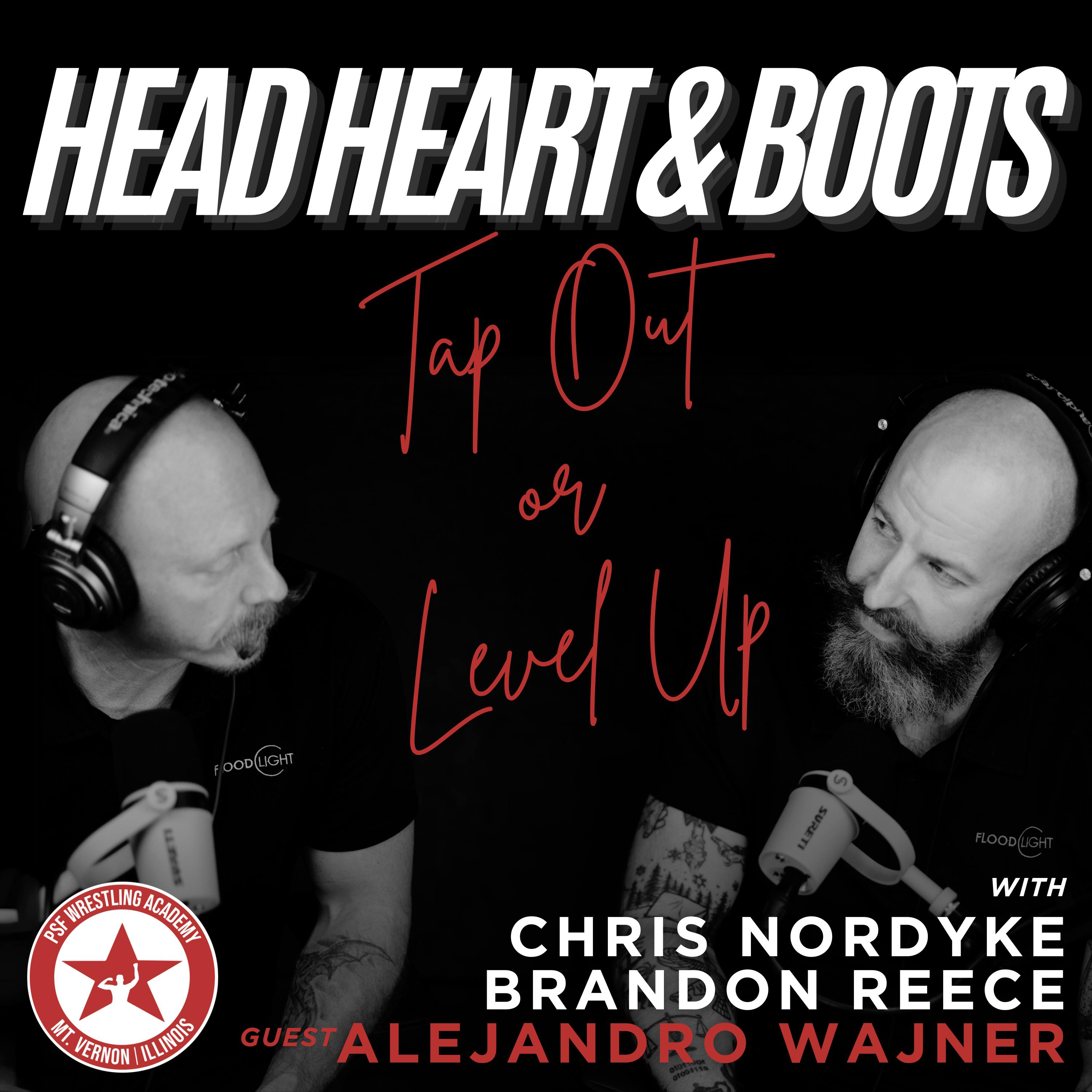


In this episode of Head, Heart, and Boots, Brandon and I sit down with Alejandro to unpack what ten years inside one of the toughest jiu jitsu cultures in the country can teach us about leadership, loyalty, and personal growth. We dig into how a broken season in his life led him to a mentor who changed everything, why the Daisy Fresh laundromat became a proving ground for world class competitors, and how the same principles that shape great fighters also shape great teams.
Hope you enjoy
Chris
Why You Should Listen
-
[00:02:36] How one mentor’s belief and availability created lifelong loyalty and a culture people wanted to be part of
-
[00:11:03] What living and training in an old laundromat taught fighters about discipline, discomfort, and eliminating excuses
-
[00:21:00] The long, unglamorous process behind becoming a world class grappler and why consistency beats talent over time
-
[00:25:39] How wrestling and jiu jitsu build confidence, emotional control, and character in kids and adults alike
-
[00:36:05] How Alejandro revived a dead high school program by applying the same leadership principles that shaped him on the mat
Did you know...
Only 30% of businesses listed for sale actually find a buyer? Even more striking, just 10% of those sell for the price their owners anticipated or higher, meaning only 3% of all business owners achieve their desired sale price. By focusing on understanding and enhancing your enterprise value, you can significantly boost your chances of joining that successful 3%.
Business Health & Value Assessment
Start Assessment Know Your Enterprise Value. See Your Potential Gaps.
Complete this assessment in less than 15 minutes and receive a free assessment for your business that includes:
- A Lite Valuation Of Your Business
- Your Value Multiplier Per Your Industry
- Health Assessment Per Our PYB Methodology
- Business Value & Growth Roadmap Tailored For You
- Value Acceleration Strategies
Spotlight on Floodlight: Your Secret Weapon for Sales & Scaling
This isn’t a paid plug. It’s real talk from the front lines. If you’ve ever thought, “How do I get a VP-level sales leader or even a sales team without hiring full-time?” Floodlight has the answer.
Fractional Sales Leadership
-
They act as your outsourced VP of Sales, taking full responsibility for training, managing, and growing your sales team. No six-figure hire needed.
-
Clients often close 20 to 50 percent more deals within six months, thanks to data-driven coaching, CRM setup, scripts, and performance reviews.
More at floodlightgrp.com/sales
Commercial Sales MasterCourse
-
A self-paced, video-driven B2B sales course designed specifically for restoration teams. Perfect for building commercial revenue and getting free from TPA handcuffs.
-
Covers mindset, prospecting, pipeline building, LinkedIn lead generation, and includes a $250 discount with code SALESBOOST.
Details at floodlightgrp.com/courses
Tailored Consulting & Coaching
-
Floodlight’s Propel Your Business methodology offers a full-circle roadmap: financials, sales, marketing, leadership, recruiting, productivity. All built for contractors.
-
These aren’t “life coaches.” They’re former restoration owners who’ve lived the chaos and know how to scale out of it.
Explore more at floodlightgrp.com
Live Training, Tools & Strategic Partnerships
-
Floodlight also delivers live onsite and virtual training, keynote speaking, and leadership tracks covering operations, project management, and strategic growth.
-
Bonus: They’ve vetted tools like Xcelerate, Liftify, and Sureti. Floodlight clients get access to exclusive discounts on tech that actually moves the needle.
See all partnerships at floodlightgrp.com/partners
Why it matters for you as a listener
-
You don’t need to figure this stuff out alone.
-
If you’re serious about sales growth, operational clarity, exit readiness, or leadership development, Floodlight is already helping folks like you scale smarter.
-
And you get it from industry insiders. People who’ve sat in your chair, survived the fires, and built systems that actually work.
0:00 What's up, man? How you doing, brother? Really good. I feel like I've officially taken over the opening line. I have noticed that, but it was kind of like, what's the saying? A frog doesn't know it's getting boiled or something because it's slow over time. The temperature keeps, or maybe that's a crab. I'm already getting bored. It's a little too easy. Yeah, it's like you've taken over officially. Kind of, sort of. Move on. The challenge is over. Yeah. Dude, I got to say, this is the first interview we've done that's kind of like this. I have another jujitsu buddy that we may get on. It's a national. Oh, cool. He's an MMA fighter too. But this is a little bit of a turn for us. It is, yeah. Down a little rabbit hole. And holy cow, man. I know. This is really fun. It's a fun show. And he's just an animal.
0:41 Like for those of you that will end up watching this episode on video, you'll see he's got the fighter DNA. Like there's, Wayne's a perfect example. Like guys and gals that put their time in the trenches as fighters, like you see it. You see it on it. There is a, I think all of us have been watching this trend of our friends, relatives maybe talking about jujitsu. Yeah, I just joined a gym. Oh my gosh, it's so great. There's a lot of evangelism around jujitsu right now. I did three months into jujitsu jiu-jitsu gym and then broke my hand, which really probably has more to do with me than jiu-jitsu. But my boy just started doing jiu-jitsu. And so if you're curious, or if you're one of the converted, you're probably going to really enjoy this chat.
1:23 But I think for me... my biggest takeaway is his mentor. Yeah. There's a really special sort of through line through the whole conversation that just constantly referencing back to what this mentor did for him in his life and what it still means to him today, you know? Yeah. That really is captivating for me. It makes me want to meet the guy. Yeah. It makes me want to go out to this place. Yeah. Yeah, I think Alejandro, when you listen to his story and his journey and what he's created with that effort and that success, and now the level of influence he has in his own community and the coaching programs that they run, man, I think it's pretty clear for people to see this really distinct connection between what being committed to, let's say in this particular experience, jujitsu, that hard work, that humbling environment, that ego check at the door that he gets into, you can see how that easily translates into skill set that moves way beyond fighting.
2:22 Oh, yeah. And into things that we can apply to relationship, effort, the way that he's raising young fighters and wrestlers, like, how he's influencing them and helping them prepare their minds and their bodies for the hard work of life, you know? The connections are all over the place, and the guy's just super humble and down to earth. The whole thing of building physical confidence— I just had a very brief experience with it. I feel like you and I, obviously, we do feel a certain kind of it through just weight training and kind of being disciplined around that stuff. But I've seen it in my boys. There is something as, and I don't think it's just for men. I think it's absolutely true for women too.
3:03 But there's definitely something really deep and innate in a man of knowing I can handle myself. Yep. Now, of course, you can have that feeling and still not be capable of handling yourself against some people, right? There's always going to be somebody that's bigger, stronger, faster, whatever. But there's this innate sense that when I encounter people who have really committed themselves to jiu-jitsu or some other form of fighting or grappling sport, there's a sense of... One, I tend to experience them as having better self-control over their anger response. Oh, yeah. They tend to be less reactive, which is interesting. You would think somebody who's perfected the art of fighting would be more reactive. But the ones who really are serious about it and high-skilled They're not.
3:44 The Calm is a Cucumber. Yeah. And we hung out with one of the superstars, I think, that comes up that he works with and that we're kind of all mutual friends with. Yeah. And I hung out with him at a music festival this last summer. It was the same deal. It was like he had nothing to prove. Yeah. And he rolled around. And there was no arrogance attached to it. It was just like there was this sense of... Just self-knowing that I think we pick up when we get really in tune with our body, which is what these grappling arts, I think, help people do. So anyway, it's really interesting. You've been curious about jiu-jitsu, where we go pretty deep into it, that and wrestling and all the things. Yeah, so Alejandro, he's literally a Pan Am world champ, black belt, and over 10, 12 years of dedication to the sport, teaching it, training it.
4:26 Award-winning college wrestler. Yep, award-winning college. I mean, this guy has got winner written all over his life and his career so far. And I think you're going to hear pretty clearly how that's possible. It's fun. Wow. How many of you have listened to the Head, Heart & Boots podcast? I can't tell you that reaction, how much that means to us. Welcome back to the Head, Heart & Boots podcast. I'm Chris. And I'm Brennan. Join us as we wrestle with what it takes to transform ourselves and the businesses we lead. This new camera angle makes my arms look smaller than yours. I'm noticing that and I really appreciate it. I thought you did that on purpose. No, I don't. I didn't. And I am not happy with it.
5:07 Well, my friend, thanks a lot for joining us. This is going to be a fun experience. I think most of our listeners haven't had a chance to talk jujitsu. And for whatever reason, man, in our industry, this is becoming a bigger and more popular thing where I'm meeting with business owners and leaders and they're like, Yeah, you know, one thing I found was jujitsu and here's what it's been doing in my life. And so we were really excited to get a real fighter on the show to share some of that experience and obviously some of the mindset that's translated into other areas of your life. So again, dude, thanks for hanging out with us and spending some time on the show. I'm excited to meet another sibling of Sophia's too, man. Oh, yeah. Oh, we love Sophia, dude. So this is especially fun because of that as well.
5:48 That's right. Yeah, yeah. She's the best. She's the best, man. Yeah, I'm so inevitably, we'll have to hear some more of the story of how you talked her into joining the jujitsu world for a while as well. She's got a bit of a story there that took us a little while to learn, but that's pretty exciting as well. Oh, yeah, totally. Right on, man. Well, you know, let's just kind of start with the 30-second, right, like life adventure. Like kind of give us the background on where you were raised, how you grew up. And then eventually, what ended up putting you in an environment where you ended up at Daisy Fresh and making your way through the ranks as a jiu-jitsu fighter? Yeah, totally, bro. So I was born in Long Island, New York. I'm the first born of four kids. And basically, I lived there for like four or five years, moved to Connecticut, lived there for two years.
6:33 When I was seven, I moved to South Florida, Naples, Florida area. Grade school all the way through high school, started wrestling. Keep in mind, I was like, not an athlete by any means. I tried to play all the sports, not good at very many of them. I was like the guy on the baseball field when the coaches would be like, go to the outfield. I'm like, further. Keep going. You know what I mean? So I fell into wrestling. One of the football coaches, because I was like fourth string JV, never played. He was like, why don't you try out for the wrestling team? I'm a coach on the wrestling program, and we're pretty good. I got into wrestling in high school. My first year was like brutally tough, but like I saw like a little like achievements and I saw myself getting better, even though I was like not having success on paper.
7:18 So I like kind of just like glued myself to it and I stuck with it. And so I wrestled all through high school, had a lot of success eventually and wrestling in college after that because I just was like obsessed with it. I really liked it. So I left Florida, moved to the Midwest, into the St. Louis area, wrestled all five years of college. I graduated from Linda Wood University, wrestled Division II in NCAA, and then I got into cage fighting. I was fighting MMA at the amateur level right out of college. And I was 2-0 in MMA, undefeated. And at the time, I had been seeing a girl and we had gotten married when I was like 20, 21. And I was too young. And our marriage didn't really work out very long. And it like crushed me. You know, we were just too young. She, you know, she was unfaithful to me and stuff.
8:00 And like, it really hurt me bad. I would have been in St. Louis area for five years and I was training MMA exclusively out there. And I was like, I got to get out of here now. You know, like. My feelings are hurt from this breakup. I'll do my MMA career somewhere else. I'll find a gym maybe in the West Coast or something like that. And at the time, Heath Pedego, who's an owner and head coach at Pedego Submissioning Fighting, where I do Brazilian Jiu-Jitsu, he was going to my MMA gym at the time and he was teaching Jiu-Jitsu classes there. We were just like kind of friends. Like just someone you see from time to time. You're like, Hey, good to see you, man. Yeah. He reached out to me and he heard I was going through some issues and he was like, Hey bro, what's your plan? I told him my plan. And he was like, look, it's a 36 hour drive to California. Why don't you drive an hour and a half to Mount Vernon?
8:41 I'll let you sleep on the mats in the gym. You can train for free. And you know, you can train full time with some of the guys, you know, we all train full time and we'd run the circuit pretty hard. And you know, at the time our gym wasn't very well known at all. Oh, that PSF wasn't very well known I was like, I don't know. You know, I kind of got my heart set on this MMA thing. And he was like, look, give me two weeks with you. If you don't like it, I'll help you move to California. Wow. So I just said, okay, you know, hour and a half compared to 36 hours, you know, what's to risk? So I went down there to Heath's over at Pedagogy Submission Fighting. I've been there ever since. He like gave me a chance. Let me just connect a couple dots because I want to make sure I'm tracking with you. So this story of life challenges, something happened, rocked you, right? And so you're looking for some extreme change in your environment and some of your relationships.
9:26 This is not a too dissimilar story for Wayne. I'm not going to speak on Wayne's behalf, but he followed a similar track and ended up in this world that you've been a part of. We met this coach, the owner, at Wayne's wedding, I believe. Oh, yeah. Nice. That's right. You guys got to meet Heath. Yeah. And man, the story of the relationships that this guy has built with the fighters, you're not alone, I guess is what I'm trying to say in that theme, right? Like that's similar to a lot of the fighters that have had success under his leadership, right? No, I'm just one of the first guys that kind of was in the beginning before like our gym got kind of big. Okay. Plus, he has the same haircut as us. Yeah. naturally. Yeah, naturally.
10:07 Makes you a faster fighter. So tell us about these two weeks, man. You're a great storyteller. I want to hear more. Yeah. So, he got me out there. I moved into Pedego Submission Fighting. It was me and like four or five other guys that were trying to become professional level grapplers. We lived in this gym. It was called Daisy Fresh Laundromat. It was an old laundromat that Heath had rented out. I think he rented it for like 500 bucks a month. And we ripped everything out of the laundromat and we just had mats in there. It was small. It was maybe one strip of mat could fit in there. It was tiny. And no heat, no AC. Keep this in mind in the middle of Illinois. You know what I mean? And we slept on the mats. We slept on the floor. Sometimes we sleep on crash pads. Yeah. I slept in there. It was tough.
10:47 I found out pretty early that I wasn't going to be going anywhere. Not so much because, you know, obviously like the living situation was tough, but the training was exceptionally good. It was like very high level training. When I was in St. Louis, I was running the Brazilian jiu-jitsu circuit to help my MMA. And I was beating people pretty successfully with very minimal amount of sort of experience. Just with my collegiate wrestling experience, I was having a lot of success with a couple of little jiu-jitsu moves mixed in. Before I actually moved to Mount Vernon, I had visited previously just to get some training in. And I was like, so like jaw dropped. I was like, and like anyone that competes in grappling, like at the wrestling level, at a high level and stuff like that, you kind of chase that group of people that can push you because like being a big fish in a small pond isn't going to get you to where you need to be.
11:31 So I kind of just like, I was like kind of obsessed with that place kind of internally already because every time I went there, I had to fight to the death with certain guys. I had guys that I would go neck and neck with. I had guys that would just beat me up. And then there's always good to have three tiers of, people to improve you, you know, people to help build your confidence, people to help test you, people that'll just beat you up so that you have to work on certain things. And I was just like really drawn to that. And that's what like initially like made me love it. But what really made me like lock in on like I'm staying here is that Heath Pedigal, he's He genuinely cared about me and my success, not just on the mat and jujitsu, but with my personal life. And just like, he just kind of told me like, look, I can tell you're a good guy.
12:11 You seem like one of the most sincere, nicest guys I've ever met. And, you know, I know you're dealing with a lot of crap with this girl. He's like, I've been there too. And he kind of just gave me really good advice. And I didn't really realize it until later, maybe even years later, is that, you know, he took me under his wing, kind of was mentoring me through this whole process without me even realizing it. I owe him for a lot of the success of being a leader myself in a lot of aspects, whether it be jujitsu or coaching or wrestling or, you know, our, my business, et cetera. You know, that's what really made me lock in there. You know, um, my loyalty for him for being so selfless to help me, you know, I was nothing special and then, you know, I hadn't won any titles or done anything yet. You know, I was still really young. I think I was just turned 23 when I moved to Mount Vernon full time.
12:51 So for him to go out of his way to like really help a guy like me and, uh, He just helped me get over a girl. I've seen him help people save their lives, help them through all types of really way more bigger level stuff. But to me, it was like he gave me a second chance at life. And I was very grateful for that. And I've been with him ever since. Even when things got hard, man, I stuck through it with him and things have only gotten better and better and better. It's almost been 10 years. It's so interesting because it's hard for me to ignore. I've seen some of the pictures of the laundromat back in the day. And it's This man has, and we're going to get into it a little bit when we hear more about your career in jiu-jitsu and what you've been able to accomplish. But this guy is creating loyalty with fighters. And for those that don't know, this particular group has produced a lot of real class act fighters, like high degree, high winning fighters.
13:39 And like you talked about in the facility, like nothing. Like an old converted laundromat, no heat, no AC, very bare bones. There was no glitz and glamour, yet he created this unbelievably capable team, high performing, loyal team. And it sounds like the bulk of that was done on the base of relationship, like him leaning in and really caring about you guys. Yeah, he did kind of the opposite of what most coaches tell you growing up. Like, I'm not your friend. I'm your coach. He's kind of the opposite, you know. And in a lot of respects, there's a lot of professionalism that goes out the door and stuff like that when you do things like that. But he didn't care. He genuinely wanted his guys and his athletes to know that he had their back.
14:20 And every single person that walks through that door knows that after a small amount of time of being around Heath or being coached by Heath, that this guy genuinely cares about you. He's messaging you about how you're feeling, how you're doing, how's life. He's got your back, man. And Heath gets these guys and girls and all these athletes to move here from all over the world, from all different places and walks of life with like... way nicer stuff. Like they're moving into Mount Vernon, Illinois, the population of 15,000, just small little podunk town to be a part of this because it's, you know, they feel this something, they feel this specialness about this place and it's contagious. And now it's like starting to bleed off into my wrestling program. We got kids moving, their families moving to be a part of our wrestling program now. So, you know, it's an infection.
15:01 Being nice to people and being caring, it's an infectious thing. People are drawn to it, especially when they feel like, you know, the person that's leading them really has their back. They're not just being told what to do. So there's this picture forming in my mind where on the one hand, I know from knowing Wayne and all the things that he shared about the experience, there's a super hardcore nature to the gym, both the training cadence, the how often people are training and the, It's like all day into the night, like there's still people that sleep outside in the parking lot. And so like, there's still kind of some of that OG culture. Like give us kind of like a day in the life of what does this leadership style look like? Because it sounds like very hardcore on the one hand, super high level. And then there's also this heavy relationship component.
15:44 I'm just curious how that looked and felt, you know? So some things have changed and some things haven't. The rest of the relationship component hasn't really changed. But like we don't live, the Daisy Fresh laundromat, we actually left and moved three years ago. So we have a new facility now. It's a little bit bigger, bigger parking lot, but we don't have anyone living in the gym anymore. Okay. The reason we, so we wrote it out as long as we could, but the city found out that we had people living in the gym and we got a C-Syns, we got a C-Syns assist letter. So we had like 90 days to figure out a new place to get a gym. And so we have a nicer facility now. It's not anything like crazy nice, but it's for us, it's like the Taj Mahal compared to that laundromat. And we'll miss that laundromat and all the memories that we had in it, but I don't miss living on that mat.
16:30 Hard, hard, hard winters, brutally cold winters, brutally hot summers. It was intense. But, you know, there's a lot of special things going on in that place. And there's camaraderie that was built. And people were changed living in there. You know what I mean? At one point, the laundromat was getting so full of people living in there that there was all these people living outside of their cars. Building shacks on the side of the building out of storage containers. Yeah, the city saw, like, we had, like, clotheslines where people's, like, geese drying, and people were starting to think it was a homeless shelter. You know, so the city eventually came down on us, and we moved, but it's all the same. And, you know, we have a little bit nicer facility. My wrestling room's on the top floor. The bottom floor is the jiu-jitsu, and it's great.
17:13 We don't use the heat in AC very much anymore still to keep the electric bill down, but I pump the heat every once in a while during the wintertime. For the kids. What was that like training environment like though? Because yeah, that's been our impression from Wayne is like, man, the guys that take it seriously, the men and women that take it seriously, it sounded like there was training that was literally going on all day, every day. So every day minimum, there was two training sessions a day. There was one morning afternoon session. And then there was one night session always at 6 p.m. The professional level guys usually always trained in the morning. That was like our pro pro session. And then the night session was still like a hard session, but it was like the whole general population was there because, you know, everyone was getting off work, getting out of school, et cetera, et cetera.
17:55 But like, dude, we were jamming like sometimes 60 people into that tiny enclosed space. I mean, during the wintertime, we never had to pump the heat. We just had to get out. We had one of those like little rocket heaters with the propane. Yeah. And we would just turn it on for the first 30 minutes to get the mat softened up enough because it was so cold. But once people started moving around, there was like 60 people in such a closed environment. And there'd be steam shooting out of the windows because there'd be so much body heat in there. And like we had to have fans running during the summer and sucking the hot air out. Otherwise, people would be crawling out of there overheating. But it was hardcore, man. And like everyone was in there trying to chase a dream. So everyone's in there fighting their, fighting hard, you know, going at it, you know. But at the same time, everyone's in there building each other up, you know, going through the same stuff.
18:35 And, you know, everyone's trying to help each other out. But it's a tough end. environment, man, because it takes away all your excuses living in Mount Vernon because he's created an environment where the price of living in Mount Vernon is really not much. You can live there for very inexpensively, especially if you were living at the gym at the time and all you needed to pay for, yeah, gym dues at the time were 50 bucks a month to train at one of the top gyms in the world. It was nothing. And he made it so that there was no excuses. All you needed money was for a $50 gym to do, food, and then your tournaments. So if you wanted to be a professional grappler and have a chance at winning world titles, Pan American titles, this was it. What you're going to have to sacrifice was your comfort. And you're going to have to be uncomfortable, probably for longer than you'd like.
19:17 Because everyone comes there thinking, I'm here. I'm going to be a world champ. But a lot of people weren't willing to put in the monthly. of time, years of time. You know what I mean? We've had people come and they spend a couple of days and they're like, I'm out. A couple of weeks, they're like, I'm out. A couple of months, a couple of years even, and not follow through. Because it's tough, man. Getting beat up every day, being hurt, because it's a tough sport, especially doing two-a-days. And everyone's at different ages. When I got there, I was 23. I'm 32 now. So a lot of changes for people and it's tough. But we all do a really good job at making sure everyone has each other's back and help getting everybody through it. But it's a tough one to sell to a lot of people because obviously everyone wants immediate gratification and wants results really quick.
19:58 But it's a long hustle. So talk about your career, man, because you moved. You moved through the ranks. You put your time in and saw some successes there. Can you give us kind of a rundown of what that looked like? Yeah, it was tough, man. And I found out pretty early how tough and how hard it was going to be. I remember asking Heath when I was brand new there. I said, how long, honestly, do you think it's going to take for me to win an adult medal at one of these like Open tournaments? Not even at a major tournament like a Pan American or a world title. I said, how long would it take for me to win a medal at one of these like high level like US Open tournaments through the IBGE? Yeah. And he was like, you're not going to like what I have to tell you, but it's going to probably take about two years of hard training for you to be successful consistently at that level.
20:40 And I was like, two years. In the long run, man. I'm here. I'm here. And you know what? The son of a bitch was right. It took me about two years to finally start getting on that podium. But once you get on that podium, it's hard to get off, man. You stay consistent and you stay on there. So I ran the circuit pretty hard. I competed consistently all over the United States. I went to the Europeans. I really stayed active. Me and like a handful of others on our team, we really stayed at it. And on top of like gold medals in the opens and stuff like that, silvers, bronze, I eventually I took bronze at the Pan Ams. I blue belt like two times. I took bronze. Silver at purple. I took bronze again at brown belt adult. I actually took bronze at brown belt adult twice. And then I won the world championships in the gi at brown belt.
21:23 And then just recently, like over the summer, I got my black belt in Brazilian jiu-jitsu. Wow. 10 years. Were you doing any of that prior to? It was just the wrestling, right? You hadn't been exposed much to it. I was just wrestling from ninth grade all the way through college. And I like, like messed around with jujitsu. Yeah. Just like kind of like for fun. But like, I didn't really take it seriously probably until the end of 2016. How would you describe the difference between jujitsu and wrestling? Because my boy, so my boy just started training at a local jujitsu gym like a couple months ago. And he's like super fired up and excited. And he also did his first year of high school wrestling last year. And so he experienced... So he's like 15 years. Yeah, yeah. And he's like, he has talked about how dramatically different the culture is between wrestling and jujitsu and how he feels like the wrestling has helped him a lot coming into jujitsu.
22:12 But he's also just talked about how radically different it is. And I'm just curious, like from your perspective of people that are listening, they've been thinking about all this, like, what's your thoughts on that? What are the differences? So I agree with him 100%. Wrestling is a very gritty, like be tough, let's go hard, push yourself harder, go, go, go, go, go, you know, type like sport, especially old school. I mean, a lot has changed in the last couple of years, you know, with technology and people learning more and yada, yada, yada. But it's a very gritty, tough, tough, tough sport. And I've, you know, I've, I've learned that obviously by doing it in the last five years coaching, it's a very different jujitsu is kind of like most gyms. They're like, take it easy, go slow. Yeah. The pace isn't as aggressive, but it can be. It totally can be. It depends, you know, consistent wise, I'd say 80% to 85% of wrestling practices are go, go, go.
22:58 Whereas jujitsu, it's like the last 25% of practice or something like that. Yeah. And I totally agree. I think the biggest investment for your jujitsu is definitely doing wrestling. So if you're a high school kid and you think jujitsu is going to be something you're going to do for a long period of time, I know it'll suck. But invest those four years of high school and just do the high school wrestling. Because you'll be an adult my age or your guys' age and you'll be like, damn, man, I wish I would have wrestled in high school. It's only four years of my life. You know, you look back as an adult, you're like, man, it was only four years of my life. Why didn't I do it? Yeah. Yeah. But when you're in high school, you're like, I want to get a job or I want to chase girls or whatever. I try to tell that to all the kids I coach, but, you know, it's tough. And I think that's what's special about PSF at PSU.
23:38 at our gym is that we're like a hybrid of like wrestling and jujitsu. And I think that's why we get a lot of ex-collegiate wrestlers that end up with us. And they have a lot of success because a lot of these guys that have success with us, a lot of them are already coached like at a professional level, you know? So, cause when some people come in, they have to be coached on how to be coached or absorb information. Yeah. And I think that's why we get, we have a lot of success with some of our ex-college wrestlers that come in and do jujitsu with us cause they're ready to rock and roll. Yeah. Yeah. But yeah, it's a big gap. It's all on the mat. Same muscles are kind of being used, but pace is definitely a little different. But if you can mix the both together, you're well-oiled machining and it's ready to go. Yeah, it toughened him up. And I think the way he described the wrestling culture, and he was at a little Christian private school.
24:20 So presumably it's just a little softer maybe than some of the other environments. But he's like, the culture is you grind people down and beat people up as hard as you can go. Like there's a culture of domination in the wrestling side, whereas his experience so far in jujitsu is there's much more collaborative sort of co-learning. That's kind of part of the culture where you don't feel like everybody's trying to beat you up every time you roll. And so he just saw that as kind of a dramatic change, you know? Yeah, it's wrestling. Even if it's something that you're only going to do a couple years in high school or just only through high school, I've watched it change and save and improve so many kids' lives. Especially in this day and age where kids are kind of like obsessed with technology and their phones and doing other things that just, you know, some kids just don't have sports or objectives yet.
25:08 You know what I mean? Like in high school, you just don't know what to do. And I like to tell it like this to most of the kids. I say, listen, give it a shot. It'll be hard. You know, we make... ourselves very available to the kids. We make them know that we'll be there, we'll be a support system to them on and off the mat. It's a very demanding sport. You know, you're demanding three to four months of intense, intense training to kids that might have never even felt this type of physical trauma. Yeah. Mental anguish and exhaustion before in their life. Yeah. So, you know, I just tell them, look, if you can handle this, you'll go through life and you'll get, things will happen to you and you'll be able to get through it because this is, will be some of the hardest stuff you'll ever done in your life. Cause I'm not gonna lie to you. This is, will be the hardest stuff, some of the hardest stuff you'll ever go through. And, uh, I've watched it change lives.
25:49 Kids that weigh 340 pounds, losing 150 pounds and, you know, kids, uh, that had no purpose in life and were kind of like running with rough crowds or doing bad things and kind of like finally honing into something and like giving them a chance at life and, you Kids that didn't have friends or just didn't fit in. Having someone, having a group of people for the first time to hang out with. So it's done a lot. And that's where coaching at the high school level is really, it feels good. Because not only are you getting kids really good, really fast, especially if they're brand new. like you're developing human beings. Because like a lot of these kids, like a lot of them have great parents, but a lot of their parents are busy working or maybe they don't have great parents and they're not around. Maybe they're being raised by a grandma or an uncle or they're in foster care. So, you know, you really get to be at the forefront of like building young humans into adults.
26:33 That's really powerful. You know, I'm curious, just as you were kind of working your way through the ranks and getting, earning some of these wins, what was going on in your mind just in terms of that combination of keep working harder, keep being driven to level up, but then kind of experiencing the success? What was that push and pull relationship for you as you were advancing in your ranks in the jujitsu sport? Like while I was coaching? No, while you were actually fighting. Yeah. Okay. Yeah. Like, it's just like, I always knew that it was going to be a long hustle. And I always told myself like, look, I'm only a blue belt or I'm only a purple belt or I'm only a brown belt, or I've only been doing this so many years. You know what I mean? I always knew.
27:13 And he's always told us like, it's going to be worth it. It's going to be brutal. But you know, this is how all the best guys came up. You just got to go get through it and keep learning, you know? And. It's the truth, man. You know, you got to think of it like this, like your black belt's like your PhD. You know, I got a long time to get to that, you know, and the struggle between when I started to that is going to be tough and I'm going to go through all the highs and lows. And there's times where I, you know, doubt myself or don't want to do certain things. But, you know, that's what it takes to separate yourself from everybody else. So regardless of what was going on in my life, I always could guarantee and count on one thing. Well, really two things. That practice was going to be at 12 p.m. and 6 p.m. Monday through Friday. so, uh, you know, I just stuck to the plan. I knew it was going to be a long hustle.
27:54 My coaches and my teammates never quit on me. So why should I quit on them? And I came into the gym at a point where I was like one of the first guys to be a part of it. Cause I kind of saw myself as an example. You know, I knew people were like watching me and I was one of the older guys. And, uh, I just knew whether, regardless of my success, whether I won a tournament or whether I didn't even place or get on the podium, my attitude and my perseverance and the way I kept myself and the way I showed up to practice after a loss or a win and the way I prepared before one, those are the things that people were watching. You don't realize how much people are watching you until you start coaching kids too. You get kids that come up to you four years after you coach them. They're like, man, when you said this to me back when I was this age, it really meant a lot.
28:34 And you're like, man... I didn't even think that was big of a deal. But for them, it was like a life-changing sentence you said to them. So I always just imagined that everyone was kind of watching. And I wanted to be great, not just for myself, but for Heath and for his brand, for the team that he created. It did so much for me. So it was the least I could do to represent. Man. You just probably summarized what I think probably every company would want to establish, right? And it's difficult, right? But if we just kind of think about what you just shared, this idea that you felt supported to the extent that you were very loyal to contributing to the future benefit in the way that people perceived the gym, right?
29:15 And your team. And then in addition to that, you being super aware of your actions, your behavior, your attitude, how you showed up, and how that was influencing for the good or potentially for the bad. I mean, this is the kind of stuff that every company culture probably would love to set the stage with and establish where we have an entire team of people that are aware, paying attention to how they're showing up, how they carry themselves because of the influence that they may be having on newer team members, right? Or someone lower down in the org chart. And then this idea of a loyal team that carries themselves in such a way that they want to honor and respect the brand. You just kind of summarized, I think, and from my perspective, what the perfect company culture looks like and feels like.
29:57 And I think it's pretty hard to ignore in your story how much the relationship between leaders, the coach, if you will, and the team members, how that created that space and that environment. So I think, Chris, you kind of alluded to this, but I just want to make sure we take a second to dive into this a little bit. So clearly, the way that he checked in with you. asked questions, showed that he cared about your real life off the mat. That had a profound effect. But how was that balanced with the work hard, train hard, high standards and expectations? Like how was that drilled into the team on a day-to-day basis? I mean, he ran it. It was like, at one point, it was like, you know, we're cool.
30:38 We're friends. But like when we were working, we're working. You know what I mean? And like he had that understanding with us that there's a point that where we have to switch gears and get kind of serious and lock in to get what we want done. But, you know, and there was also times where, you know, he made himself very available to us where we needed help sometimes mentally, physically, with work, et cetera, et cetera. But there was times where we didn't even realize that he was kind of like doing us a favor, but he wouldn't answer our questions or he wouldn't make himself available on purpose to force us to have to figure it out on our own. These are things that I realized later down the road. But in the moment, I'm like, Why can't he get a hold of me? Why isn't he teaching me this? Why isn't he showing me, you know? So he was very methodical with how he mentored us and how he instructed us. Cause like he gave us a lot, but he didn't give us everything to where we couldn't do without him.
31:22 Man. Yeah. Say more about that. Can you think of some examples? That's really good. Yeah, so Heath would do this thing sometimes where he wouldn't purposely not answer his phone, but he would be like kind of like watching through one of the side windows to see how we would react and like how we would. Because he said he's watched studies on how, you know, what your athletes will do when you're not around if you don't show up to practice. So, you know, I mean, he could determine. how he can help build certain athletes and which athletes are doing things on their own without having to be told and just stuff like that. And even with just problem solving, simple things like creating, say like a training got canceled for whatever reason and us having to figure it out on our own, get a group together or even simpler things like ride situations.
32:06 He's got to teach simple people skills to us sometimes too. We're a bunch of low lives that live in a gym. I just think I'm laughing even more just because I'm thinking about all of Wayne's stories about people carpooling. And I think carpooling is probably a loose use of the term. And then the mass amount of people sharing single rooms because you're all broke fighters and trying to be on the road for these championships and these tournaments. It was wild. Literally, at times, seven of us in the same room sometimes... 15 of us in the same room. Oh my God. With one bathroom, no shower. Oh my God. We had a, we had like a makeshift like camping shower with like a bag and a hose that hung from it outside.
32:52 At some point I eventually made friends with other teammates that had homes and I would just go and shower at their houses. Get your showers there. Oh my goodness. There was dudes that would have like the big totes. They'd have big totes filled with water and they'd be like, like homeless people scrubbing them. That's dedication. We're freaking diehard. Well, take us into your kind of more current status right now. So obviously you've started a business and you're coaching both the high school team, it sounded like, and you've got this every day, right? Coaching and gym that you guys are running on the wrestling side. Bring us up to speed. What does that look like? What are you focused on? Yeah. So in my life now, I'm the head coach of Mount Vernon Township High School over here in Southern Illinois. This is my fifth year, my fifth season coaching, man.
33:33 And then I'm also a co-owner of PSF Wrestling Academy. Me and Michael Pixley, he's a very well-accolated wrestler and well-accolated... Jiu-jitsu athletes, one of the top-ranked Rapplers on the planet right now. Him and I, we both run the Wrestling Academy together upstairs, right on top of Jiu-jitsu. We've been doing that. This is our fourth season doing that. After the first year coaching at the high school, we both realized we needed to have a feeder program to get a little younger kids started off so that when they get to 9th grade, we don't have to spend so much time building. Oh, yeah. It's just like kind of like sharpening their tools. Yeah. And now in year five, we're starting to see that, you know, coming to fruition because now we're getting kids that we've been working with for the last three and a half years coming in as ninth graders and starting to come in a little bit nicer.
34:17 But that was pretty proactive. So you guys were thinking about like the wrestling team of the future. Like, how do we ensure that we've got good talent coming into the system? Yeah, because the program down here was dead. The only reason we even wanted to, because we didn't honestly at the time, we didn't really want the responsibility of being head coaches or coaches at a high school, but they were going to kill the local high school program that had been around for over 30 years because it was abysmal. The coach that had it at the time wasn't really in it. And the program had like four kids on the team and they had won a duel in 10 years and The school was just getting ready to kill the program as a whole. So we had like a couple of people reach out and they were like, look, we wanted to offer it to you guys because we're going to kill it if someone doesn't.
34:58 And, um, I kind of was like, I don't know if I want to do it. It's a lot. Cause if I'm going to coach, I'm going to do it right. Just like you do, you know? And he was like, look, you know, you know, you know, you know, you know, you know, you know, you know, you know, you know, you know, you know, you know, you know, you know, you know, you know, This is the time to do it. I don't know when another opportunity will come around where you can pick your whole staff and have a chance to do it like this. So we just said, you know what? Maybe he's right. This is the chance to do it. And we did it. And we had a winning season our first year for the first time in a decade. And the following year, we won the regional championships for the first time in 35 years. And then the year after that, we repeated. And we've sent a kid to the state championship every year. We coached. Wow. We sent kids to college every year we coached.
35:39 Wow. Wow. And the high school was really grown up and it's only going to get better because of that feeder program. After that first year, we realized we needed to get kids because the kids program in our area wasn't necessarily abysmal. There was a kids program, but it needed more. It was a bunch of dads that cared about wrestling, that wanted their kids to be good, but they didn't really know how to run the program efficiently. So we sat down with the people that were running the local kids club and we absorbed it. We talked to them and we absorbed their club. We rebranded it to the PSF Wrestling Academy. And then we just blew it up from there. And right now we're the biggest and most successful club in the Southern Illinois area. Right on. So tell us a little bit more about the group dynamic. So what is the age range as a kid that you guys are partnering with in the academy?
36:20 Ages 4 to 18. 4 to 18. Yeah. Wow. Yeah. So during the high school season, it splits. Like we don't coach high school kids in the high school season because they're with their actual high schools. Okay. Like we'll do private lessons and stuff with them. But during like the winter season, the PSF Wrestling Academy focuses solely on like grade school kids ages four to 13. And we run our club season all through the winter pretty hard. Yeah. We have like a group. We have two sessions. We have like a beginner-ish group for like the young kids and like the beginner kids. And then we have a group right after that, which is for our elite kids. Okay. And like the goal for those beginner younger kids is to eventually get into that elite class. So we have two different classes. One to kind of like teach them how to crawl and then one to hit the ground running and get right.
37:05 Are you a business that's under five million in sales and you're just now getting ready to try and scale your company up and hit some of those targets you've always wanted to hit, but now you've got to build a sales team? Or maybe you just hired your first sales rep, but you don't really know how to manage them. Like how do you manage, lead, train, develop a sales rep? Floodlight has a solution for you now. So we can actually assign your sales rep a turnkey VP of sales that will help them create a sales blueprint, their own personal sales plan for your market, They'll have weekly one-on-ones with that sales rep to coach, mentor them, hold them accountable to the plan. And they'll also have a monthly owner's meeting where they'll meet with you or your general manager and review the progress of that sales rep. Their plan to actual results, what kind of performance improvement they're working on with them.
37:50 Also let them know, hey, you might, they're doing really well. Maybe we should think of hiring a second sales rep. They're going to have that one-to-one advice for you as an owner or senior leader on the team as well. How great would that be to have a bolt-on sales manager for your one sales rep and it's only $2,500 a month? If you're interested in talking more about that, reach out. Let's grab some time and let's talk shop. Our floodlight clients this last year in 2024 generated over 250 million in revenue. Supported by, advised by, an industry expert who's owned and operated a business just like you. So take action. Don't kick the can down the road. Start with our business health and value assessment. And let's unlock the next chapter of your success story.
38:32 Do you guys do any summer programs? Like, can the kids fly in to do like a week-long camp or anything like that? Oh, yeah. Oh, yeah? We got kids that come here all the time. I have like a little fighter barracks attached to my property that I live at. And depending on the age of the kids, sometimes I'll let like high schoolers live in the fighter barracks for like a couple bucks a week or whatever. And they stay and they do the whole trading regimen with us. I'll even have them do jujitsu with us if they want to try jujitsu. And, you know, we get people, especially during the summer, they want to come and live the lifestyle. Mm-hmm. Because our high school group is hardcore in the summer. We got like state champs from like 20 different high schools that come and train with us. Oh, wow. Jeez. I'm hearing gears turning in Chris's head right now. Yeah, my son Simon is, he's nerding out on wrestling. He really liked it. It was really hard, but he's kind of drawn to it.
39:14 You know, the sophistication of it. He's a small kid. He hasn't really hit his full growth spurt yet. He's a freshman. It's like 120? 120? Not quite. 105. 10. Oh, perfect. That's fine. We got a bunch of guys inside. Yeah. We'll send them down. Hopefully by summer. You know, he's hoping anyways. He's a little bit bigger like his brother by summer. We'll see. Yeah. Don't worry. We got a ton of guys right around his age and size. That's frigging super cool. All right. This has been awesome, man. I think as we kind of draw this to a close, there's just a couple things I want to pull out of you. So, just as you look back over your career, obviously you chalked up a ton of success, made your way all the way to the PhD, as you said, with the black belt. And one thing just for listeners, there is a distinct difference between, I think you guys refer to it as retail, jujitsu, and the stuff that some of these champions are training under and coming out from.
40:03 So 10 years to a black belt in a real fighting environment is substantially different than, let's say, somebody kind of making their way through the retail ranks. Is that fair to say? Or am I... No, that's totally fair to say. But I mean, like, it's really up to what you want and out of it. You know what I mean? Like, don't, you know, there's guys that they want what I wanted out of it. And then there's a guy that works a nine to five and he's got five kids and he wants to get a good workout. Maybe learn a little self-defense and hang out with a cool group of guys. Yeah. You know what I mean? So, I mean, there has to be like an understanding, I think, and realism. Yeah. If people don't know about that, like, you know, some people, maybe their gym is blinding them to that. Or maybe they just honestly don't know. But I mean, like, you just have to know what you want. I don't think that my black belt's anything special than, you know, Joe Schmo that's 60 years old that has six kids and works 60 hours a week and comes in when he can.
40:51 Yeah. He just put in his time and got a belt. You know what I mean? Yeah. I think everyone's journey is different. And I think you just got to know exactly what you want to get out of it. Yeah. You know? Yeah, that's super helpful. You know, I'm thinking about the conversation. We just recorded a podcast with Ben Ricciardi. He runs a marketing company and an excavation company in Florida. And he managed to pepper it into our conversation a couple times. Just what he started jujitsu, I think two or three years ago, maybe. Yeah, yeah. And it's like you just hear the language of people that are picking up jujitsu later in life. I had an experience. I hurt myself. I broke my hand and I didn't end up going back to it. But I spent about three months in it. And it was actually a really profound experience for me as a late 30s something guy back when when I did it. I'm curious, what do you think it is about specifically jujitsu that seems to be so transformative for adults that kind of come to it later in life?
41:38 Yeah. I just think there's a, I think a lot of people just have never felt physical, like no one likes being like controlled or being uncomfortable or not having success. So I think it really exposes a lot of people's egos, even in people's egos that they didn't know they had. But then I think seeing little feeling, even as a beginner. Because you come in that first day and you don't know crap. But in that first day, you're going to learn a couple things. You know what I mean? And then the next day after that, you're going to learn a couple more things. And then the next week, you're going to be like, oh, I used to get caught in this submission all the time, and now I'm not. Maybe there was a guy that was in there that used to whoop your butt, and then... Three months in or a year in, you finally scored on him or submitted him.
42:21 You know, so there's a lot of like trial and error and like self-growth that you can get out of jujitsu. And it's very raw. It's very real and it's very cut and dry. You know, especially from an outside perspective. Sometimes when you're in it, you can be really hard on yourself. But I think you got to remember it's a long hustle. There's a small percent of people that would just come into jujitsu and just whoop everybody. And those guys, they're usually like ex-collegiate Olympic level type people. So I think it's just a very like humbling and like religious experience to feel it. Cause it's not like you have to wait for it to magically happen. Like you can like feel the Jiu Jitsu, the physical thing, you know? So I think it's like a very like gratifying thing you get right there and then, whether it's in the moment or whether it's like in that journey, you know?
43:01 Yeah. Yeah. Especially for people that are getting older. You know, you spend, you know, once you get out of high school and you're in college, you spend that mid part of your life grinding into studying or working hard. You know, you're not in the high school sports anymore. But now you have this little thing that you can do an hour out of your day and get back on the mat with other guys your age and stuff or younger guys and feel young again. You know, feel adversity and then learn from it and get in shape. It's a lot of things. Yeah, I think for me, you talk about the humility and it's kind of like a safe place to get humbled where it's like everybody gets humbled. I remember I'm a 200 pound plus guy and lift weights and all the things. And when I showed up my very first time, a girl... that was no doubt like 125 pounds put the hurt on me, you know?
43:46 Yeah, it's crazy. It was incredibly humbling, but it was a safe humbling. Nobody made fun of me, you know what I mean? Nobody was like, you let a girl beat? No, it's not, it wasn't that at all. It was just, it was this internal knowing of, okay. I have this new thing I need to develop, right? I've got something in front of me that I can build on here, right? And you're right. You just feel it. Like there's this knowing. There's this truth to jujitsu where everything is equal when you show up to a jujitsu gym. It doesn't matter how muscly somebody is. It doesn't matter necessarily even how much they weigh, right? What gender they are. Like there are some people that are going to surprise you almost every time you show up, right? Yeah. It's a very fair experience.
44:28 You know what I mean? I mean, obviously, people can cheat and do weird things. But I mean, everyone's going to learn the same technique. And so many people come from different experiences and walks of life. I've seen so many different types of people. People that don't have a dime to their name, broke, suck it, all types of stuff. To people that are CEOs of companies. And they can both learn, enjoy the mat together. You get people... you'll get ex-criminals on the mat with state cops or the state's attorney, and they're in there rolling and hanging out. That's what it's like in Mount Vernon. You get dudes with like tattoos on their face, rolling around with the state's attorney. You know what I mean? It's like, you know, it's a special place. You know, some gyms are different, sure. But from my experience at PSF, it was a very special place where like everybody from different walks of life, very different education levels, could all come and learn something at the same level together.
45:17 Hmm. You've brought quite a few people to the gym. I mean, you became a bit of a prophet and started recruiting. So obviously you have a sibling that made their way there. But I mean, how many people have you had some kind of role in bringing them into the sport or that team? So I'm just like really proud to be a part of this. Even before we grew up on Flow, For those of you that don't know anything about our gym or Jiu Jitsu or anything like that, and you want to like kind of like hear more about what we did and what happened, feel free to go on to Flo Grappling's YouTube channel and just put in Daisy French. And like we have three full seasons of how we grew up in the laundromat and how we all did it and competing all over. And it covers a whole story. Heath, me, all the guys.
45:59 It's all free on YouTube. Put it in there and you'll get the play-by-play. But like, I was just so proud of what he did for me and what he did for the guys before that show even debuted. Because when it debuted, it blew up and a lot of people started coming. Yeah. And even after that, I just wanted to spread what he did for me to everybody else. Because like I said, all he helped me do was get over some girl, but it was like he saved my life and gave me a second life. I knew he could do so much more for everybody else. You know, I know there's better athletes out there and, you know, I wanted everyone to get a piece. So I just always like went out of my way to make sure everyone had a chance to come. So like Jacob Couch, he's a very successful world champion. I contacted him and literally physically drove five hours all the way out to Kentucky and picked him up and brought him to Mount Vernon. And he ended up staying. He's still out here with us.
46:39 My own sister, she got done wrestling. She's an NCAA all American track runner, murderer. And she didn't know what to do with her life after college, you know, being nearly a professional athlete in college sports and just was lost. I just told her to come down here and hang out for a little bit. It's a good environment. And she ended up staying out here. Ended up being a PANS finalist in jujitsu. I've reached out to countless others and, I've probably contacted thousands of people to come out here and they probably came. But I know at least 10% of the 100 or so people at our gym, I at least probably had some hand in getting them here. That's pretty epic. So obviously, man, you're having a profound influence in the community, in the environment, the youth. I want to be able to point people to them because I think Chris probably isn't the only one that potentially has...
47:22 a son or a daughter that's interested in maybe potentially exploring. So how do they find out more specifically about the wrestling program? Where would we point them for that? Yeah. So the best thing you can do is go to some of our social media pages at PSF wrestling on Instagram, PSF wrestling on Facebook, and then a TikTok. You can also check out our website, PSF wrestling.com. Okay. And you feel free to email us at PSF wrestling at gmail.com. Okay. PSF wrestling at gmail.com. And one more time, what was the YouTube channel? Because I've seen some of it and it's actually super epic. So what is it specifically that they can go see? The three seasons of a Daisy Fresh American Jiu-Jitsu story is on Flo Grappling's channel on the YouTube.
48:05 You just put in Daisy Fresh and then it'll have like season one, episode two, whatever. Seasons one through three on there, it's all three. And then on top of that, We built our own YouTube channel at some point too. We need to upload some more newer content, but we got probably like a couple hundred videos of content on our own personal YouTube channel, just the Daisy Fresh YouTube channel on YouTube. And there's a bunch of stuff on there too. And if you just want to learn more about what we do and some of the matches we've done, some of the places we've traveled, we got blogs on there, hours and hours of content and just kind of shows what we've been through and how we got to where we've been. But just so you guys know, I have hair in some of those early videos. So you might not recognize me. You're not recognizing you. That's me.
48:45 I just had hair. I started coaching wrestling and all the kids, this stressed me out so much. All my hair fell out. Well, you know, we also used to have hair at one point. Yeah, yeah. Oh, we all weren't born like this? No, right. It's surprising. Technically, I was. And then I went through a phase with hair. Yeah. So that's... That's probably how it goes. Man, this was fun. Just a super cool experience to learn a little bit more behind the scenes. As we've said, I think jujitsu in general right now has just picked up a whole new recognition in the business and leadership environment as an experience that enhances your life and business competency. I think you're a perfect example of that. The time and energy that you dedicated to this sport has just continued to influence you.
49:28 And now look at the level of influence that you're having and the give back and the community. It's just, it's a cool story, man. So we really appreciate you hanging out with us and sharing just a part of what that looked like. For sure. Yeah, man. It really is jujitsu and running a gym and all this stuff. It really is like similar to running a successful business in the workplace, you know? So it really does go hand in hand because, you know, you have leaders on a team, you got leaders in the workplace, you got captains, and you know, it trickles down from there just to make sure that this whole entire machine works properly. Yeah, I love it, dude. Nicely done, man. And again, thanks for your time. Appreciate it, brother. Yeah, of course, guys. All right, everybody. Hey, thanks for joining us for another episode of Head, Heart, and Boots.
50:08 And if you're enjoying the show, but you love this episode, please hit follow, formerly known as subscribe, write us a review, or share this episode with a friend. Share it on LinkedIn, share it via text, whatever. It all helps. Thanks for listening.