Ep 185 - "The Heart Of Planning"
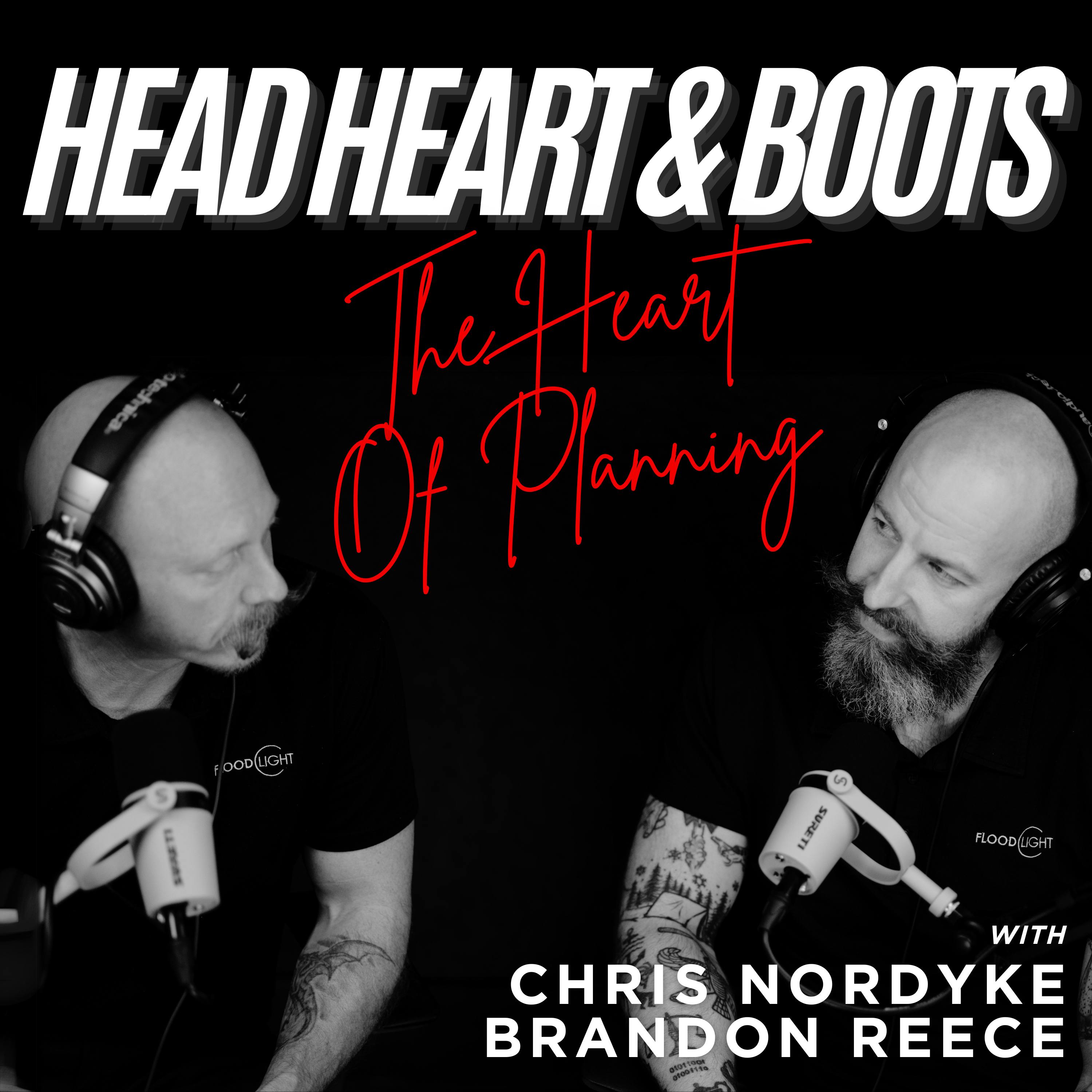


I’m Chris, and in this episode Brandon and I talk about what year-end planning really looks like when you stop chasing perfect dashboards and start leading with purpose. We unpack what worked for Floodlight this year, how we intentionally ran lean to leap ahead, and why your team’s buy-in depends on more than KPIs.
What We Cover
[00:01:12] Planning Q4 like an investor and how we turned red months into green growth
[00:05:11] Why most leaders undervalue strategic planning and treat it like a checklist
[00:08:57] Mission before metrics and how to build KPIs that actually drive vision
[00:14:25] The “100 Point Week” system for sales reps and why simple wins
[00:20:06] How C-suite dashboards actually work with 3 to 4 key metrics
[00:31:38] Aligning sales and operations around customer experience, not just numbers
[00:53:36] Tommy Mello’s story about building a dream big enough for others to fit inside it
Key Takeaways
-
Plan on purpose, not by habit.
-
Use fewer, clearer KPIs.
-
Simplify tracking so reps can sell, not babysit CRMs.
-
Make your mission about people, not profit.
-
Audit your own leadership because culture is the real KPI.
If you’re leading a restoration or home-service company and planning for next year, this episode is your field guide for making 2026 different.
Did you know...
Only 30% of businesses listed for sale actually find a buyer? Even more striking, just 10% of those sell for the price their owners anticipated or higher, meaning only 3% of all business owners achieve their desired sale price. By focusing on understanding and enhancing your enterprise value, you can significantly boost your chances of joining that successful 3%.
Business Health & Value Assessment
Start Assessment Know Your Enterprise Value. See Your Potential Gaps.
Complete this assessment in less than 15 minutes and receive a free assessment for your business that includes:
- A Lite Valuation Of Your Business
- Your Value Multiplier Per Your Industry
- Health Assessment Per Our PYB Methodology
- Business Value & Growth Roadmap Tailored For You
- Value Acceleration Strategies
Spotlight on Floodlight: Your Secret Weapon for Sales & Scaling
This isn’t a paid plug. It’s real talk from the front lines. If you’ve ever thought, “How do I get a VP-level sales leader or even a sales team without hiring full-time?” Floodlight has the answer.
Fractional Sales Leadership
-
They act as your outsourced VP of Sales, taking full responsibility for training, managing, and growing your sales team. No six-figure hire needed.
-
Clients often close 20 to 50 percent more deals within six months, thanks to data-driven coaching, CRM setup, scripts, and performance reviews.
More at floodlightgrp.com/sales
Commercial Sales MasterCourse
-
A self-paced, video-driven B2B sales course designed specifically for restoration teams. Perfect for building commercial revenue and getting free from TPA handcuffs.
-
Covers mindset, prospecting, pipeline building, LinkedIn lead generation, and includes a $250 discount with code SALESBOOST.
Details at floodlightgrp.com/courses
Tailored Consulting & Coaching
-
Floodlight’s Propel Your Business methodology offers a full-circle roadmap: financials, sales, marketing, leadership, recruiting, productivity. All built for contractors.
-
These aren’t “life coaches.” They’re former restoration owners who’ve lived the chaos and know how to scale out of it.
Explore more at floodlightgrp.com
Live Training, Tools & Strategic Partnerships
-
Floodlight also delivers live onsite and virtual training, keynote speaking, and leadership tracks covering operations, project management, and strategic growth.
-
Bonus: They’ve vetted tools like Xcelerate, Liftify, and Sureti. Floodlight clients get access to exclusive discounts on tech that actually moves the needle.
See all partnerships at floodlightgrp.com/partners
Why it matters for you as a listener
-
You don’t need to figure this stuff out alone.
-
If you’re serious about sales growth, operational clarity, exit readiness, or leadership development, Floodlight is already helping folks like you scale smarter.
-
And you get it from industry insiders. People who’ve sat in your chair, survived the fires, and built systems that actually work.
0:00 Wow. How many of you have listened to the Head, Heart & Boots podcast? I can't tell you that react how much that means to us. Welcome back to the Head, Heart & Boots podcast. I'm Chris. And I'm Brandon. Join us as we wrestle with what it takes to transform ourselves and the businesses we lead. This new camera angle makes my arms look smaller than yours. I'm noticing that and I really appreciate it. I thought you did that on purpose. No, I don't. I didn't. And I am not happy with it. Be here now. I am here now. Present for Christopher Ryan. Who said it? This is right on the tip of my tongue. The one who said present is better than perfect. She was the shame researcher. Why can't I think of her name?
0:40 Oh, Brene Brown? Brene Brown. I don't think that's a Brene Brown thing. Channel Brene Brown. Okay. Hey, everybody. Welcome back to the Head, Heart & Boots podcast. I'm Chris. And I'm Brennan. I guess we already did that thing. That's our news caster. Yeah, our new caster. This show is brought to you by Slate Ultra Protein. Was not paid, but it's, you know, fueled by it. Big difference. Big difference. Yep. Slate, if you heard this, you know what to do. Yeah, so we talked about your end plan and we're coming into Q4. Yeah, it's come screaming. We had a meeting with our consultants this morning and we were kind of going through a framework and kind of preparing for client planning and so forth.
1:21 And I just got off a call with prospects and not yet a client. Well, actually they are a client, but from our commercial sales master course and we're looking at maybe engaging sometime in the new year. Yeah. They were just talking to me about what this year's been like. They hired a new sales manager. They had a different outside consultant they engaged with. And so they just kind of walked me through how the year's been playing out and how they're looking at next year and so forth. And I just thought, God, this is a good topic. I think it's on a lot of people's mind. Yeah. I think for some people, it's been a really good recovery year from last year. For others, you know. More face smacking. Not so much. Yeah, yeah. But certainly, regardless of what kind of year people have had, I think the smart ones are thinking about planning.
2:02 And what are we going to do differently this next year to make next year different? You know, it's so funny because I think we say this a lot. Like, we'll start to get keyed in on kind of a certain initiative or topic. And then this theme just kind of, it just seems to keep getting hammered on. And, you know, I've been on huge Tommy Mello kick. It's going to get maybe more obvious over time why that is. But yeah, you and you and Wayne both were like just loving on him. And I want to just just to be the detractor to be like, I personally, I hate Tommy Mello. There's really not much to hate. No, yeah. It's hard to hate a guy that's winning at spades and does it through intentionality. Helping other people win.
2:43 Helping thousands of other business owners make it. But part of the magic sauce, I think, of Tommy Mello is, one, he's probably bar none, the most prolific home service business owner, founder. currently right now out there actively still building and scaling a company. I don't know who else I would point to. And it's also super interesting because he's created a massive following of business owners that are keyed in on this idea of creating a business that's a platform for others to succeed in. And so it's easy to become kind of a fan of Tommy Mello because he has built an organization Yeah.
3:49 a brand that's trusted and recognized. And anyways, my point touching it to what we're talking about now is, you know, when you listen to kind of his story, he'll go back from the beginning and he'll, he'll talk about like at 3 million bucks. Okay. What was happening? And of course he's like 99% of the rest of us absolutely frustrated with the current state of his business. Yeah. But it was in that moment that he made this shift mentally. And he talks about how he kind of stepped away for a minute and just kind of wrapped his head around what he wanted to build. And he landed on this, I have to build a dream big enough for others to fit inside it. And I think it's pretty epic. But it was this stopping and a pulling away from the business and then creating a new vision.
4:35 And really understanding what it would require from a company for it to be the kind of company that he was proud of, that he was enjoying the experience he was still passionate about. And it's interesting because that, granted, he had to do several decades of hard work to actually bring that thing into fruition. But what a major turning point to go from years of running home service businesses, being frustrated, being stuck at $3, $4 million a year in revenue, hair on fire, to slowing down long enough to create a new vision for where he needed to go. And it literally changed the trajectory of that business forever. Mm-hmm. And now it's the kind of business that you look at and go, holy cow, if only, right?
5:16 And so I think this annual planning, this strategic visioneering of your business is so undervalued. I think we get so caught up in the busyness of what we're doing. that we forget how important the plan is. Yeah. And we undervalue how much time and commitment should be given to that process of planning and mapping out the following year. And for whatever reason, we treat it like another box that needs to get checked. And I think we totally miss the fact that... that everything else is a box. But if you slow down strategically and give this thing the time and attention it needs, it could literally change the face of your company, not just for the next year, but forever.
5:59 Yeah, I totally agree. Well, and I think we've lived that out at Floodlight this last year in particular. I think we've certainly always had an orientation around planning, but we took on a very particular kind of strategic planning this last year at the same time. Yeah. And it made all the difference. You and I are going to give a keynote here, not next week, but the following. Yeah, it's coming quick. And it's going to be really fun. We've kind of got a fun idea around how to deliver it. I think one of the interesting things about our story is we've been in a process of scaling ourselves. And part of that, I think most business owners watching this, there's two ways to scale, right? You can take on debt or you can bootstrap. And when you bootstrap, in a lot of cases, one of the trade-offs you're making as you grow is, I'm planning to lose money in the short run.
6:47 Hmm. so that I can leapfrog where we're at in the medium term or the long run. Like for us, it was, for us, it was a seven month play. We knew we were going to lose money probably the first half of the year. If we got really lucky, maybe not so long, but, but according to plan, yeah, we knew we weren't going to make a profit till August. And because we were reinvesting very strategically with hires, with technology, with advertising and so forth, like our whole plan. And we watched that play out in full color. And sure enough, August hits, boom, we're in the green. And moving forward, and it was just a really fun validation of what we've, always taught people, but you know, the consulting business is a different game.
7:30 It's a different game than running a restoration company. And so it was really fun to validate that inside this business. But dude, I want to, do you mind if I kind of lead us down a little road here? Because- Well, it depends. Well, I feel like there's a couple of ways we could talk about year-end planning. And I think maybe this even becomes a two-part episode. I don't know. Sure, yeah. Because certainly there's plenty to talk about in that way. But I'm still really hanging on some of the conversations we've had in the last couple of days. And now, of course, As needed, we're going to remove any names so we aren't dealing with any libel and slander lawsuits. But there's just been a lot of things, and this is always how it hits, right? Is that themes tend to come in waves. And so as I think about long-term plan, or excuse me, like the year-end planning, strategic planning, one of the things as I talk with teams relative to the sales side is...
8:19 many teams, in fact, almost the more they try to professionalize themselves, the more mired and frustrated they get in the CRM management, the tracking, the KPIs, the accountability holding, and everything else. And I'm saying this, I'm holding this in a certain amount of tension because I think in order, you talk about Tommy Mello, I think he would probably validate this. In order for the KPIs and the tracking and the measurements to have meaning, you have to have a very, very clear mission. And like he said, it's big enough to engage the whole team. Because if your mission is just for you to make a million dollars of profit next year, well, good luck selling that to your team.
9:03 There's not much motivational for the W-2s to really latch onto. You need this mission that's full of meaning for the entire team. But you don't put KPIs and measurements and accountability in place to fuel the vision. The KPIs enable the vision. I've just been thinking a lot about this. I think this is something worth wrestling with. Maybe over time... our measurements and our accountability tools can become cumbersome. And I think maybe it's true that for some of the bigger companies listening, is that at times I think we need to look at our measurements and say, is this helping us drive more top line, drive more employee retention, drive more bottom line?
9:46 Or is this thing kind of just become another thing to track? Mm-hmm. You know what I mean? Sure. And I think sometimes that's a tough dance to do because data is powerful and the more data we have, generally speaking, the better decisions we can make. Yeah. But as I was talking to this team just in the last hour, they engaged another consulting company and they're like, you know, to sort of simplify the conversation, it's become analysis paralysis. They become so consumed with a particular way of filling out their CRM and reporting during their one-on-ones and their team meetings and everything else that what they're seeing is the team is spending less time knocking on doors and more time in their home office or whatever preparing for their meetings.
10:29 Yeah. Like the internal meetings, not client meetings. Yeah. Now, of course, I think there's some degree of exaggeration there, right? That making their point, but that's a problem. And I think that's probably something that a number of people listening to this can relate to maybe at different times with their business, where it's like you try to do a really good thing and then it almost takes over from the really important work. Yeah. It kind of reminds me of political positions. Okay. Sorry. You're going to get us off track, bro. Come on. All right. So coming back. All right. We already went down that rabbit hole last week. So... No, I think you're spot on though, dude. Something that triggered in me when you say that is, there's also, I think, a recognition of the, I'm going to use the word competency.
11:09 I am not saying that as a value statement of somebody's intelligence. But when we have leaders learning new things, new skills, new concepts, new ideas, new ways to lead, Sure. And then a lot of times in service companies, when we start identifying KPIs and these leading measures and things like that, that is a level of sophistication often that the business hasn't been living in. And then likely their staff, to include their downline leadership, probably has never been exposed to it as well. Like there's a high chance that they haven't. And so what happens in these scenarios as well is our company might get excited about adding these layers of sophistication and all of it has value in terms of steering the ship more concretely in the future.
11:49 But we need to be cognizant of the fact that you can't go from zero to like 15-year data veteran Just because we decided it's important. And so what I think I see teams do often as well is they go to an event, maybe even an event that we're a part of, where we talk about the possibility of things and they immediately go from, I've never tracked information to now the new mission is to gather every ounce of data that the company can get its hands on. And I think the reality of it is the leadership, even if you gave them that, they're they don't understand what to do with that information anyways. And so absolutely it becomes a distraction. And then it's complicated. Like it starts to take their time and energy to maneuver the data and gather the data and look at the data.
12:34 And yet they really don't understand most of what it's saying. And so they can't use it to actually make concrete decisions or change their behavior. And so I think part of it, like what you're referring to is, one, I think that we need to understand the current competency of our team. And we need to incrementally introduce these measurables and make sure that we prioritize the kinds of measurables that yield the most impactful information. And as we get rad at that, almost kind of going back to Alex's more better new, Once you get really rad at the baseline data gathering and leverage, well, then we can add layers of sophistication as the team becomes more common. Yeah, the thing that I started to think about kind of relative to that is, yeah, what do you select as the, well, I think thinking, what is our end goal?
13:21 And when I'm thinking about sales, I'm thinking about two primary things on a restoration sales team. Yeah. You could say three, but let's zoom all the way up to like 30,000 feet. I want new logos coming into our business at all times. Meaning this is a tech term. Yeah, do the logo. It's a tech term. New logos is just simply new, fresh business. Brand new company we're servicing. New company name, we're opening a new door, right? So I'm concerned about new logo growth because that's like fresh blood into the system, right? It's new oil into the pipeline. And then I'm thinking about penetration into existing accounts. I'm saying, okay, so awesome.
14:02 Awesome that we got that one hotel and they sent us our first loss. Super rad. But have we done the due diligence? Do we understand our book of business to know that there's 14 other hotels within that same management company in our service area and or in that portfolio of ownership? which means, my fuzzy math, that we're only at 6% or 7% penetration in that customer account. Well, that's a massive untapped opportunity because we're not going into that account as sales rep in the same way that we did to go acquire that new logo. We're going in as an existing vendor, which is an easier conversion. 100%. So I think those are the two sort of lagging, results that we want as a business.
14:46 Okay. So if that's true, then I think part of what we're talking about here is saying, okay, what are the two, three, maybe four key behaviors that need to happen in the field and internally in order for us to achieve growth in those areas consistently across all of our branches, all of our sales reps, etc. Right? Right. And so that's sort of the mentality that I'm approaching it with. And as I was listening to these folks from a relatively large company, I mean, these guys do like 30 million bucks a year. They got multiple locations. And like many other companies of that scale, you know, they, They've got a whole matrix of KPIs that they're asking their people to track.
15:28 All kinds of very nuanced, qualifying steps that they're tracking their prospects through. And listen, I'm not saying that that can't be a good solution. I think some of it has to do with the sophistication and or personality of your team. I think in some cases it has to do with what they're selling. I think you're probably going to do more of that. Generally speaking, when you're working residential referral partner routes, there's a lot of nuance to that and tracking where your routes are effective and where you need to drop people off and monitoring some of that data and stuff like that. So it really depends on what kind of business you have. But boy, by the time I got to the end of the conversation with these guys, I could hear them sighing with relief.
16:09 Yeah. as I kind of walked them through this, because I just reacquainted them with, okay, but isn't this the goal? And if this is the goal, aren't these the two or three behaviors that we need to make sure are happening in the field? And they're like, yeah, yeah. And then if we just did that, those three things a whole lot more, do we think we'd probably see better results than we're seeing right now? Yeah, probably. Well, some of these people are inexperienced and some of these people need to be trained. I said, absolutely. Yes, we need to train our people. We need to teach them qualitatively how to do those three things really, really, really good. But in terms of what we're asking our people to track and measure, and I think that's like the task, you know, you're among us, you're the CEO figure.
16:55 And so I think for you, this is all really native, but like the way I'm thinking about it as chief sales guy is, I need to find the simplest measures for my people to focus on as I possibly can. And then as we move up in terms of how we're monitoring it, we're like, what are the things that an operations manager is going to need to watch and follow within their little book of business? And then what is the owner, GM, or the COO, the CFO, what kinds of things that they need to track? And I think my experience so far being exposed to the C-suite is that the C-suite also generally has three or four critical path metrics, core metrics that they are following.
17:37 And when one of those is out of whack, then they investigate the data. Mm-hmm. And look at all the other KPIs and all the other cascading information to identify the real problem and the source. But they're not at all times actively engaging 17 different metrics. A CEO is not doing that because they'd be very ineffective, right? But they're looking at this. They've identified what are the three or four most important things for me to be seeing on my dashboard and keeping a pulse on every single day. Yeah. And then when they or somebody else on the team identifies, whoa, this thing is out of whack. What's that about? Then we use our data analysis to deep dive.
18:20 And then I think potentially I was talking with Wayne about this, like, because Wayne was hammering on one of the operations leaders that he was working with coaching. Yeah. about the three things that he needed to be focused on. And I thought what he said was really interesting. He said, you know, as leaders, our job is to find out what we should be watching in the different seasons of our business. There's going to be times where we're hyper-focusing on a particular KPI because we found a problem in it. But then once that problem is fixed, we have a new discipline in the business. Well, I don't necessarily need to track that thing anymore. Until we have another red flag pop up. I think there's a differentiation here that's important. I think there's a difference between identifying a way to track and gather versus spending attention on.
19:03 Okay. So like example would be, let's say broadly, what I need to know is that my mitigation department as a whole is operating, I don't know, let's come up with a number that everybody probably can agree with. Let's say 60% gross margin, GP, at the division level. Okay, let's say. Well, underneath that is all sorts of data that together creates our understanding of our GP. Labor rates and material, you know, consumable rates and all those things. Those are data points that have value and they help us do research to solve problems, but they're not things we need to keep in front of us all the time. And so from a dashboard perspective, am I going to look at the 15 different subcategories that drive the gross profit margin on a job?
19:50 I'm not going to look at them all the time. But I do want to have a system, a backbone somewhere that's collecting information that allows me then to dive in and do some research when I've identified that those three to five kind of fundamental KPIs are off track. Something's wrong. Yeah. So when I identify there's a gross profit margin with the department, well, then I have these data points that I can go in and dig in. It's like, if you don't budget projects and you don't job cost, well, then understanding the gross profit margin for that department's impossible. You're not going to know what your labor rate is. You're not going to know what you're spending on consumables. You'd have no way to solve that problem even if you wanted to. Sure. And I think that's part of what we're trying to convey here is that often the thing that we use to gather information is gathering lots of information once we determine that it's important enough to have a thing like that.
20:41 And that could be your project management software. It could be the partnership with your financial suite, whatever. You're gathering all of this information, but we're not going to keep it up in front of us all the time because then you're overwhelmed and you get paralysis analysis or analysis paralysis. Yeah, and I think part of what I'm thinking of, even just like, let's take it all the way down to the BD rep or the sales rep, right? Like in a lot of cases, your most successful sales reps, there's outliers that are very organized. But I think both of us would agree. A lot of your well-producing reps tend to have a bias toward relationship and relationship. exploration. They like finding new business. That hunter, that hunter person, right?
21:22 That loves to go knock on doors. They love to meet new people. They love to just like find where the opportunity is. I want to get a new one, you know? Generally speaking, the yang to that yin is that they, they tend not to be very detail oriented. They tend to feel slowed down by tracking information. Yeah. And it's a flaw. I mean, it's a flaw in the system, but it just is. Yeah. It just is. And it's annoying to all of us. But I think the point there is that if that's the reality that we're dealing with, we're probably going to get the most production out of that person by giving them a very tight mission and focus of go find this. Yeah. And then minimizing the amount of administrative back end and overhead that they need to do.
22:03 Yeah. Right. Minimize it. Minimize it. Now, it's still like when we talk, we have a hundred point system that we use with our sales reps that basically they report on their week. It's a form that they fill out and they submit it. And it's less so about us being exact. It's more so that the owner of the company and the people that, you know, pay their payroll deserve to know how they're spending their time. And it also creates sort of a file for us to look back at if we're not seeing the results we want. It's like, well, we've had this pattern of behavior for the last three weeks. Let's tweak these things. Let's get this back online, right? Yeah. And so it helps us more troubleshoot the simple behaviors that we need them doing out in the field. Yeah. But the behaviors we're asking them to do and focus on need to be as simple as possible, I think, to get the maximum results out of those people.
22:50 Because the more we start distracting them with, oh, I got to remember to take that note and do this in that system and put that in the job management deal and email them this, you know, at the end of every day. And, you know, the more we do that, the more we take them out of the present moment, we need them engaged in thinking about opportunity and seeing the businesses they're passing by as they drive. I need them, when they're in a networking event, to be fully engaged with the person in front of them, the person walking down the aisle, the person in that booth, right? I agree. It's a dance. I think what we see happen more often than not is that we over-leverage the, oh, I've got so much admin time that I'm required to do and it's taking me out of the field and it's removing my focus.
23:33 And the reality of it is that more times than not, what we're asking to be accomplished is just basic professionalism where you're documenting your effort. You know what I mean? Dude, I love this man because... This is the real life yin and yang between ops and sales. It is. It totally is. It is. Are you a business that's under 5 million in sales and you're just now getting ready to try and scale your company up and hit some of those targets you've always wanted to hit? But now you've got to build a sales team or maybe you just hired your first sales rep, but you don't really know how to manage them. Like, how do you manage, lead, train, develop a sales rep? Floodlight has a solution for you now. So we can actually assign your sales rep a turnkey VP of sales that will help them create a sales blueprint, their own personal sales plan for your market.
24:20 They'll have weekly one-on-ones with that sales rep to coach, mentor them, hold them accountable to the plan. And they'll also have a monthly owner's meeting where they'll meet with you or your general manager and review the progress of that sales rep. Their plan to actual results, what kind of performance improvement they're working on with them. Also let them know, hey, you might, they're doing really well. Maybe we should think of hiring a second sales rep. They're going to have that one-to-one advice for you as an owner or senior leader on the team as well. How great would that be to have a bolt-on sales manager for your one sales rep and it's only $2,500 a month? If you're interested in talking more about that, reach out. Let's grab some time and let's talk shop. Our floodlight clients since last year in 2024 generated over $250 million in revenue.
25:03 Supported by, advised by, an industry expert who's owned and operated a business just like you. So take action. Don't kick the can down the road. Start with our business health and value assessment. And let's unlock the next chapter of your success story. We have a figure on our team that was a very high level sales executive at one of the enterprise companies. And there are different levels to this stuff, right? In terms of if we were talking about how we manage a region of salespeople, well, at that scale, there's different things that we need to keep tabs on. And so there's different systems we have to put in place. And your role changes what you're keeping tabs on. The role changes of what you're monitoring, what you're influencing, and so forth. But again, for a lot of our audience...
25:44 I think oftentimes we can prematurely overcomplicate our system to the point where we start to distract our people away from the real stuff we want them doing. So anyway, I didn't necessarily want to take our whole thing there, but I think when you're thinking about sales planning and building out your sales team this next year, and if you're unhappy with how your sales team has performed this past year, it is one thing to look at. Yeah. Is, are there things that have maybe gotten in the way of them being who they naturally are and doing maybe what they've done in the past? Are there complications or distractions we've introduced to the business over this past year that we can potentially remove to refocus our team on the stuff that they do best and the stuff that's most valuable to us?
26:38 It's worth a reflection. Part of what I think I'm hearing you say here, and it's certainly something that's been coming up more as we ourselves are getting ready to move into the final year planning and obviously getting a jump on next year's planning. is I think there's, for the health of the business, I think there's two things. One, first, we undervalue the planning. And I think we kind of touched on that a little bit at the beginning here, and we're going to kind of beat that dead horse some more, is we undervalue the stopping, slowing down, and creating a plan of what and how you're going to attack the upcoming time period, whether it be Q4 or be next year.
27:18 But I think the other thing that we do is, once we create those plans, we begin to hold, it's like, well, you finally got me to admit I need to plan, and now I've made a plan, and now I'm holding on to that thing with a death grip, meaning that any deviation or means the plan failed. And I think part of what you're referring to is, look, most of us are a business in transition or growth or change, right? Like we're learning, we're growing, we're adapting as entrepreneurs and business leaders. And so our companies are growing. Well, we're going to do some planning. We're going to identify some initiatives. We're going to identify some things that we want to focus our attention on. And I would just encourage you to monitor how it's going.
27:59 Yeah. Like ask yourself some really good questions. Like, did this change in the business give us what we wanted? Right? Like, is the result a happier, more consistent and motivated team? Well, if the answer is no, well then it's okay. Like that wasn't a waste of time. That was you, again, stepping away, doing some planning, identifying a thing that you thought would work and you executed on the thing. Yeah. most of what we try won't work. If that wasn't business 101, everybody in America would be a successful entrepreneur. It ain't that easy, right? And so I think part of what I just want to kind of encourage people to is, look, some of these plans are going to suck.
28:43 And you're going to spend time and energy and you're going to identify a number or a performance expectation that you may need to monitor. And you may learn over time, like that didn't give you the end result you were looking for. Don't be afraid to bag it and tell your team openly, You know, we operate off plans here. And those plans sometimes require modification. We thought this was going to be, you know, a benefit to you and to us as a team at large. And we learned that epically, this was a number that didn't really produce a lot of meaningful result for us. And so we're punting that. And that's okay too. You know what I mean? So not in any way in conflict with what you're saying. I think it's just a good reminder as you guys approach your Q4 and get ready for next year. Just remember, it's like planning is great.
29:24 And it's a high priority and you need to get good at it. Yeah, and it's designed to serve you in the business. That's it. Right, and it's like a living thing. It's a living thing. And we made, I mean, we laid out this plan. It was very specific. It was very concrete. And we had some pivots along the way. That's right. You know, it's like the pro forma did not play out exactly as. Yep. But it was close enough that we were able to... shoehorn some things in and switch some things around all to the aim of still living out the plan. And, you know, it pretty much has played out more or less the way that we intended it to do. But well, and one of the things that we did to make that a reality is that every month we do a like a minimal review of how are we doing in alignment with the plan.
30:09 And then obviously quarterly, we do a real deep discussion on What didn't work? And is it something we want to continue to press into and press on with? Or is this a time for us to punt that and maybe re-engineer the focus going into the next quarter? And we certainly did that several times as well. Yeah. Okay, so I want to continue to take us in a slightly different year-end planning conversation. Because I mean, look, I mean, it's like... So just to be clear, this isn't the framework for how to do an annual planning event. No, no, no, no. We're not giving you the playbook. No, no, no. I mean, look, one, you can hire us, hire somebody on our team. We'll help you with year-end planning. All of our consultants are engaged in leading our clients through year-end planning. And you guys have all know all the books, right? Go read EOS, go whatever, Gazelles, Rockefeller.
30:52 We know where to get the information. I think what I want to focus in on is a little bit more of how we maybe should think about how we deliver these new plans to our people, how we package them in with mission. I kind of want to talk about the thing that came up yesterday or the last couple of days, and we'll just see how it comes out. Because I think it ties in. I think it's actually really important. Because part of yours and I's passion for the last several years is not only helping professionalize the industry and helping companies grow and scale, but... But helping instill this mindset within the industry that, look, anybody can go start a restoration company. Just like any Joe, any Janet can go get some money from their uncle, go get an SBA loan, and start a service company.
31:38 Anybody can do that. But you and I have had this conviction for, gosh, years. that it's more about how we make people feel. Yeah. And all of us are getting bombarded with all this AI stuff and da-da-da. What is this going to mean for service companies and stuff like that? I think what it means is we are going to become customer service organizations. Yeah, right. And some are going to be better than others. Yep. And the better ones are going to win more than the others. So along those lines, you and I got into an interesting conversation with an industry friend, let's call it. Yeah. Yeah. And they were talking about just some really ugly internal culture stuff. Like sick and disgusting, old school, garbage behavior that we don't need to go into all the details of it.
32:22 All of you can just put, fill in the blank, toxic stuff that somehow has continued to perpetuate and prevail over the decades, even to today. Yeah. Yeah. And I got to tell you, bro, like I left that conversation with... Not only being just kind of disgusted that there were still business owners and executives that function that way. Yeah. But you know what else it made me want to do? It made me want to crush them. It made me want to find the competitors in their markets and try to help them crush that competitor. Like, I think at one time yesterday, you used the term decimate, I think. I just...
33:02 And you and I, we've lived off some of that energy. It's not a name-calling kind of energy. It's a, hey, I'm seeing something that's kind of gross and disgusting. And somehow, in spite of all of that, you're still financially succeeding. And I'm angry about that. There's other people that deserve the money more than you do. And I think in a lot of cases in our markets, some of you all, you have some competitors. And again, this is not about bad-mouth and our competitors. It's about recognizing bad behavior where it lies and offering something better. Not only something better in terms of an experience for our people, come into a culture that is safe, that does resource and equip you and does create a pathway for you to succeed outside of the nasty politics and behavior that exists in some other companies.
33:52 But also, what are we creating and offering to our clients? It's offering them a better product and helping them know and understand it. Okay, so here's where I'm going with that. Yeah. You and I, we had breakfast yesterday in between meetings. And I was talking about this kind of framework I've been working on with some of the sales teams we're working in. It's just how to think about mission in the context of what we're equipping our sales people to go out into the market to say and do. And I think sometimes as owners, we get so focused on the metrics of, and even how much money they're going to make. You know, like helping them understand their incentive pro. If you just make this many sales calls and this and this. And I think a lot of times...
34:33 we miss a real opportunity. Do our salespeople care about money? Hell yes, they do. Of course they do. And for a lot of salespeople, it actually isn't the premier driver. And especially in our industry, there is absolutely a real thing that a lot of us, we want to win the day. We want to save the day for people. We like being the white knight that gives somebody something better, takes them from a crappy situation, a poor service level, to a better one. I think a lot of us in this industry resonate with that and sure, we want to make as much money as possible. And this thing is that thing that really stirs us. The fact that someday maybe we have that new Corvette or we have a second home or we're the CEO and we make $400,000 a year, whatever some of those things are, that's dreaming.
35:24 But I think the idea of helping people and giving somebody something better is... is what stirs us. It keeps a sales rep engaged to make one more sales call. And so as I was thinking about this really shitty company experience that this person had, I was like, you know, sort of loosely, it ties back to the way that we teach people how to sell, which is, help me understand what your current experience is. Yeah. And so I started to just think through, okay, trying to simplify, what are we asking our people to do? What is it? And then how do we as a company do that thing for the clients?
36:05 It kind of comes down to, okay, I need you as a sales rep to go out and turn over every rock you can find. We're in a fairly unique business in that, sure, a lot of us are focused on particular verticals. We know we have a real competency in. But at the the end of the day, damn near every building and home at some point is going to have a damage event. We're in a really cool business that way. Yeah. Right. It's true. We can cast a pretty wide net. Right. So this simple directive is, I want you to go turn over every rock you can find. And I want you to engage that person or those people in discovery. Find out what their real experience is. If they're having a rad experience with their current provider, let's not shove ourselves down their throat.
36:46 Mm-hmm. Let's move on and let's turn over another rock. Yeah. Until we find that there's pain, there's unmet preferences, there's annoyances, there's irritations existing in their current vendor relationship. And then let's take the people, processes, and systems that we've carefully constructed inside our business and tell them how those things are going to solve for those problems. Yep. Right? Now, in the early stages, some of you, you don't yet know exactly what your people, processes, and systems are. Yeah. So call Floodlight, right? Come hire one of our ops partners, you know? It should be part of the battle. Yeah, we'll help you drill into that and figure that out. But again, it's a simple deal. It's not fancy. It's just like, hey, this company is not communicating enough.
37:28 Okay, well, how do we put a system in place so that our PMs are? And then we do it every time over and over and over again, right? Yeah. But so it's like, go turn over every rock, find out what their experience is, bring that back to our team and tell us what the customers want. And then as a leadership team, as an operations team, we say, how can we build a system or a process? Or how can we hire the person that can help us do that thing And then we freaking execute. Yeah. We do the thing. Yeah. And we do the thing with pride because we're doing the thing because this is what the customer told the sales rep they need and want. And you just look at those five things, right? Go turn over the rocks, get in a discovery conversation, then find out what they need and want.
38:12 Bring that back to the team. Team builds the thing that customer wants. And then team executes. Yeah. And we try to get better and better and better at better in executing so that our customers love us. And then when we go talk to prospects, the sales rep has their lips loaded when they hear a certain pain. Oh my God, listen, I'm sorry that you're having that experience. We're not perfect either. But can I tell you about what our team does for that? Yeah, yeah. Well, and I think big picture, what you're pointing towards is... And then we take as many, as much business as possible from the crappy companies that are unwilling to put their attention on that. Yeah. And I think that that's where kind of the crescendo of that is.
38:55 Is that how you say that? Crescendo of that is, it's the idea of translating that into something that shapes the effectiveness of your company. But I think as we're just kind of thinking from a broader end of year or whatever planning, I think this is that space that we don't really struggle to do things like come up with a financial goal next year, come up with some key hires, come up, right? I think a lot of us are capable of doing some minimums in terms of looking at the next year and understanding that we need to have two, three, four things figured out before the year starts. Yeah. I think part of what you're talking about is this collective growth of the entity based on a clear direction of where we want to be going.
39:41 And I think that that's part of what can get lost. So at least the way I'm thinking about what you just said is... to deploy a pain solution selling process or consultative solution selling, whatever you want to call it, we can do that. We can decide as a sales team, this is a very good methodology to deploy and we're going to go deploy that sales methodology. Okay. But if that's not rooted in a plan for the organization, well then it's very difficult for me and you to agree that a silo between operations and sales doesn't work. Yeah, yeah. Can I stop you though, dude? Maybe. I got to stop you. Because no, what I'm actually pointing at is something that's like hardwired into you.
40:22 Hmm. Which is, how do we get our team fired up around a common mission that every single person from top to bottom feels in their guts? Yeah, we're saying the same thing. You just said it more like I would have. That's what I was encouraging you to lay into. Because you are. That's something that's really native to you. And I don't know if some of that you were just born with or it came from your army days or what. But it's like, it is. It's like, for me, it's one of the reasons why we've loved working together. Because this is what... this is what we see leadership as. And then the numbers and everything else, that's just to support us. So we're not hemorrhaging money out of the bottom. It's like we get everybody rallied up to go sell and go deliver awesome service.
41:04 And then if you're hemorrhaging money out of the bottom, it's like, well, shit, what did we, oh, God, that's painful in its own way. But yeah. No, you're spot on. It's where I was going with that is that we have to rally behind these things that unite the entire organization. And so again, I think what you kind of really got hammering on yesterday was this idea of, okay, pain solution selling is a great methodology. But there's a missional element to it, which was and is, is that if there's a ton of companies doing what we do and they don't take good care of the clients and they don't create great customer experiences and they continue to make bloated invoicing and they create friction for us that want to do the job right to even get our fucking job and bill the way that we want to bill.
41:49 If those companies exist, which there's bad seeds in every basket. Yeah. then it's our mission to deliver a level of service that's better than that. And we want our salespeople to believe in that and that their team can do that. And it's their job to go save the world from shitty contractors. And we don't ever have to talk bad about anybody. Because it's not the point of the conversation. We're not talking about what they do. We're talking about what we do and how we solve problems and create solutions. No, you're spot on. I think, you know, it's funny, man, because I think even yesterday when we're talking about this, one of the things I've ran into literally over and over and over again is very capable entrepreneurs.
42:35 I can't tell you how many times I've been intimidated by my own clients. Yeah. Because there's a lot of grit-filled, badass MFers out there starting companies and doing the grind. There is no shortage of radically action-oriented entrepreneurs that have found a way to overcome problem after problem and create businesses that are creating revenue. No question. Independence, all the things. We're surrounded by them all the time. In many cases, I'm never doing anything that makes an entrepreneur all of a sudden more entrepreneurial. If anything, I'm trying to round off some of the edges of the entrepreneurial nuts and bolts and grit.
43:18 And I'm saying, okay, let's bring some sophistication so that you don't have to shoulder every ounce of movement inside your company. My point in all of that is, is like I am commonly around people that would work my ass into the ground, that are faster at decision-making. They're actually maybe more strategic. Like they're brilliant entrepreneurs. They're horrible at communicating what's in their head to a group of people in a way that, where then group of people goes, I like that idea. I'm on board to row in the same direction with you. And so you have these brilliant business owners that because they've never created time or invested in the competency of business planning and visioneering, They don't know how to get people excited about what in their brain makes sense.
44:08 And it's actually the stuff they're coming up with is actually rad. But they're frustrated because they're the only person that cares. They're the only person that can work as hard as them, all the things, right? And so I think part of what you're talking about is when you're thinking about your annual planning and you're designing this map that will take you to the place that your business needs to go, you probably need to spend some time in a relationship, training, whatever, so that you become more effective at communicating what this map means for people. Yeah. And you said this to a certain extent about the million dollars and more profit. Well, who gives a shit if you don't explain why that profit makes sense for your staff?
44:49 Yeah. How does that affect them positively? Because the story in their head's going to be, oh, cool, I made you more money so you can buy a third house or get a bigger boat or now you'll get the mid-engine Corvette. You can tell what sports cars we tend to like, right? Like all these things and that's not going to motivate a single person on your team. Yeah. And I think that part of our vision, part of our annual planning is we've got to slow down and say, am I clear on what it is I'm trying to build? And do I understand the value for my people in wanting to participate in that plan? And I got to tell you, honestly, like if you are...
45:30 Let me see how I can say this. I'm going to call myself out. There is something in me that naturally is a team player. I want to be surrounded with people in terms of doing this thing. I want it to be a we engagement because I's not very fun for me, personally. And though, you would then assume in that that I'm the master of sharing financial assets and resources and all the things. In the reality, I'm not. I often can struggle with... with clearly identifying where living in abundance actually is the winning play. Like I'm just being fully transparent. I believe it. I believe principally it's sound. I'm going to consistently engineer my path of growth towards leaning in on that more and more and more.
46:15 It's why I automatically really love a lot of what, for instance, Tommy Mello is about. Because principally I get it. I love it. I'm aligned with it. But when no one's around and I'm stuck to my own spreadsheet, I have to go through these moments where I'm remembering short-term sacrifice for me could mean long-term success for us, which when us is winning, I'm winning too. I'm just being really very real. Financially, your default behavior is be kind of self-protective. Yeah, self-protective. What does this mean? How do I control that? We can't do this, right? No doubt childhood family of origin stuff that all of us are impacted by. Yeah, you got it. Absolutely, right? And so I think as business leaders, many of us, I don't think I'm abnormal in that.
46:58 Part of the motivation for a lot of entrepreneurs is just basically learn how to take care of yourself in level of independence. And I know how to get mine. I'm not saying any of that's bad, but yeah. Part of, I think, we have an opportunity as leaders right now is in this visioneering, in this slowing down and thinking about the business that you want to create, take a fresh approach. And I'm going to be required to do this, right? We have things. We have irons in the fire, right? And some of this will become more clear over the next couple months. But even I have to slow down and think about some of these future moves and go, how would have I approached this in the past? And how do I intend to approach this Now.
47:38 And I think if this year, if your business, like 99.89% of us didn't look exactly the way you wanted it to look, slow down for a minute. And before you start checking boxes and doing your annual planning, because many of you already do this consistently, ask yourself a question before you start. Am I about to plan to do similar things that I've done before? And if so, did I like the result? And if you didn't like the result, let's pause for a moment. Take a breath. Come up for air. Go for a walk. Pull your head out of your own business for a minute and maybe try a different approach. And here's the approach that I am convicted and I'm going to say publicly now and you will hear this more over the next several months.
48:22 I'm 100% convicted that I'm 100% convicted that I want to visioneer a company that is built on a big enough dream that other people's dreams fit inside it. And that's Tommy Mello language I'm stealing. I just don't believe that I've physically engineered a company from that principle. I've skirted it, portions of it, versions of it. But for me to stop as a key leader and say, no, that's a different vision. That's a different vision when you start with your people as the focus. And your inability to communicate what's in it for them our inability to know which things we need to focus on, there's a strong chance that part of the reason you're struggling with that is because you may not be very clear on why it is that you're even doing what you're doing.
49:12 Yeah. Right? I'm probably getting a little... No. Well, I think the other thing too that interests a lot of business owners' minds, especially in the early days... he was at $3 million when he had that revelation, right? Small, right? Yeah, well, small. For those people that are listening to this that are at $30 million, they're like, yeah, it's small. But the guy or gal that's doing their first $750K in their truck, To them, it's like monster. It's like, oh, that'll be great when I have $3 million and I have an office manager full-time and all these things. But I think that the other reason why sometimes it's hard for owners to get their head around that is because they're not yet secure themselves.
49:54 They're still working to... you know, be able to take a full paycheck and all that kind of stuff. I think there's still wisdom in Tommy Mello's mindset because I think in probably a lot of cases, if we adopt that mindset of how do I build this in such a way that I'm creating something for everybody around me, you're probably more likely to get to 3 million faster than, Because your people will feel that, you know? And so I think there's something material there for no matter what size of business. Does that mean you all of a sudden start sharing your profits, you know, when you haven't even taken a full salary and stuff? No, that's not necessarily what that means. But it's part of how you communicate the dream and the vision and what you want to create and what you are envisioning for them.
50:38 You can start that with your very first part-time helper. Yeah. in terms of how you talk about the business and what it's for, what your vision is for the business. But if you don't ever stop to think about it because you're too worried about paying the bills, you may always be worrying about paying the bills. One other thing I just want to say, and I almost feel like this is like an anniversary reminder because I'm pretty sure that you and I end up talking about this every year around this time is, I think that part of year-end planning for an owner, and really it's probably a total power move to engage your whole leadership team in this, is asking ourselves as leaders, looking back over the year and saying, are my personal behaviors and interaction with my colleagues and my downline team reflective of the type of culture that's?
51:26 the type of company that we say we want to be? Are my personal behaviors and my interactions with people, customers, downline staff, frontline staff, colleagues, partners, reflective of the kind of person that I say I want to be and we want to be as a company? Because I think you and I saw this, and I certainly felt this internally in hindsight. I wasn't always tuned into it in the past, but I can see very, very clearly at different intervals in my career, both owning businesses and being a senior leader, that I was often in these periods of self-deception where, and sometimes it was even things when things were going really well.
52:06 You just get loose. You get a little cavalier about some of your behaviors, things you say, things you don't say, things you do, things you don't do. And then you step back and you look and you're like, man, I've been taking a lot of owner advantage here in terms of my behavior, in terms of the way that I talk to people when I'm upset. And I just think year end, this is an important thing because you can have a great mission and vision for the company. But if you're not aligned in the way that you're living your life, people aren't going to believe you. Yeah, that's right. And they're not going to want to follow you. They're not going to trust you. They're not going to give it all up to follow you and latch onto your vision because they won't trust you. Yeah. They may say they do.
52:47 They'll likely never, ever tell you that to their face because you're writing their check. Yeah. Yeah. Only you get to really determine where that alignment is. But I just think that's such an incredibly powerful part. It's as powerful and important as the numbers you put in your pro forma. So, you know, it kind of, it reminds me of a story, Tommy Mello and out here. He talked about what happened. So he had had this moment at 3 million bucks where he's like, dude, I'm all about my people. I'm building the vision that's big enough for everybody. Yeah. really started to shift his attention, his focus, what he allowed, who he allowed to be on the team, all the things, pay. And... So they had been doing this for several years.
53:27 And it was clear that A1 was beginning to stand out amongst its peers and its competitors. Although he doesn't really believe in competitors, which is awesome. Because now he's buying all of them. Because he's just playing at a game they can't. But he talked about week one of COVID. When COVID started shutting down all these businesses. And a lot of us in the construction side ended up becoming... Mandatory services. Essential workers. So there was this weird kind of hiccup, right, several times. But in the very beginning, there was no PPP plan. Nobody knew what was going to happen. And he said he rolled in the next day, basically after everything had been shut down, mandated shutdowns. And there was a line of employees in the shop in front of his office.
54:11 So down the hallway, like lots of employees. Yeah. And he's kind of doing the mental gymnastics with himself in terms of what the hell are we going to do? They just shut down America, all these things. And he's like, now he rolls up to the shop and he's got all his employees lined up. And he's just thinking to myself, I mean, these are people that are going to tell me they're going to leave. They're scared. Like, what am I about to face? And he said, he sits down, you know, he walks through his office and drags the first person in with him and sits him down. He goes, okay, what's on your mind? And employee after employee were there to volunteer and ask how they could help to keep Team A1 in fucking forward motion.
54:53 And for those of you not watching video right now, both Chris and I got teary-eyed thinking about this because, because I don't think we fully, unless you're one of the companies that's had a scenario like this. I don't think many of us know exactly the level of intentionality, personal sacrifice, aggressive action. Integrity. Integrity, discipline that it requires to create a company, blue-collar business, where the first thing that your employees do in the moment of terror like that is line up to ask how they can help. Dude, we're talking about people saying, I will defer pay.
55:35 Yeah. I will take a pay cut. I will volunteer. I will do this. I will do out. What can we do? What can we do? Right? And I think the reason that stands out to me is so fucking brilliant and meaningful, guys. It's going to go back to like this entire conversation. We didn't give you any framework today. I don't fucking care about framework. There's a million different places for you to dig up framework. You could just text us, call us. We'll help you with framework. Framework can lead us to check boxes. And this is an opportunity to not check a box. This is an opportunity to slow down and say, are there business owners or operations that I admire that are experiencing something that I have yet to experience in my business?
56:22 And is there a way for you to cast a new vision for yourself and the kind of entity that you want to own and lead If there's a way to do that, then there is a way for you then to proceed in building the thing that you've envisioned. There is a path. People do it around us all the time. Dude, can you imagine walking into your company and having your employees lined up asking how they can make sacrifices on your behalf to save the company? Bro, there's a reason he's doing $225 million. It's not because he's just good at sales. Yeah. There's a story there. That's all I'm saying. I can make some guesses.
57:03 I can too, dude. His book is in the mail. I'm actually, I should get it tomorrow. Yeah, it's epic. I hope this has been helpful to other people. It's been helpful actually for me to just, because look, we're just like you. Yeah. We're no different than you. We're building a company. We're building a brand. We're serving people. We're trying to help people that have problems and needs and provide them what they need. And we're all in this. And these are the things that we see as we work with companies and we see it within ourselves. So as we go into year-end planning, sure, have a framework that you're adopting. It's thorough, it's professional. But think about these higher things. Think about these higher things. Look at the business and say, are there things that I'm asking my people to do that are slowing them down or slowing the business down?
57:45 Let's look at maybe removing those things or changing or modifying those things. And then looking at the integrity of the business and your leadership, right? Are there things that are out of balance, out of integrity with what I convey about who we are as a company and then what I'm living maybe even privately? I think that's one of the mistakes we make as owners sometimes is we think that the things that we do in our personal life are unseen by our people and it's just utter nonsense. It's just nonsense. And so that may be your thing in this season of planning. But yeah, hopefully that gives you some direction and insight. go forth and prosper, as they say. Till next time. All right, gang.
58:26 All right, everybody. Hey, thanks for joining us for another episode of Head, Heart & Boots. And if you're enjoying the show, but you love this episode, please hit follow, formerly known as subscribe, write us a review, or share this episode with a friend. Share it on LinkedIn, share it via text, whatever. It all helps. Thanks for listening.