Ep 205 - "Unsexy Work Builds Real Business"
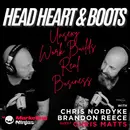


In this episode of Head, Heart, and Boots, Brandon and I sit down with Chris Matts, founder of Marketing Ninjas, to talk about what actually drives growth in restoration and why most marketing misses the mark.
Chris shares his path into entrepreneurship, how he found the restoration industry, and why he chose to focus on helping companies generate more opportunities through outbound and relationship-driven strategies.
We dig into the difference between branding and direct response, why business development reps are still one of the most important roles in a restoration company, and how marketing should support, not replace, relationship building.
This conversation is a practical look at how work really flows in this industry and what it takes to stand out in a crowded market.
Hope you enjoy
Chris
If you're interested in Marketing Ninjas - check out more at this LINK
Why You Should Listen:
[00:06:12] How Chris Matts found the restoration industry and why he saw it as a massive, underserved opportunity
[00:14:27] Why most restoration marketing fails and the common mistake of relying too heavily on ads instead of relationships
[00:21:05] The real role of business development reps and why they are still the most consistent driver of revenue
[00:30:18] The difference between branding and direct response and how to use both effectively in your market
[00:42:11] How top restoration companies actually generate work by owning referral relationships, not just waiting on inbound leads
Did you know...
Only 30% of businesses listed for sale actually find a buyer? Even more striking, just 10% of those sell for the price their owners anticipated or higher, meaning only 3% of all business owners achieve their desired sale price. By focusing on understanding and enhancing your enterprise value, you can significantly boost your chances of joining that successful 3%.
Business Health & Value Assessment
Start Assessment Know Your Enterprise Value. See Your Potential Gaps.
Complete this assessment in less than 15 minutes and receive a free assessment for your business that includes:
- A Lite Valuation Of Your Business
- Your Value Multiplier Per Your Industry
- Health Assessment Per Our PYB Methodology
- Business Value & Growth Roadmap Tailored For You
- Value Acceleration Strategies
Spotlight on Floodlight: Your Secret Weapon for Sales & Scaling
This isn’t a paid plug. It’s real talk from the front lines. If you’ve ever thought, “How do I get a VP-level sales leader or even a sales team without hiring full-time?” Floodlight has the answer.
Fractional Sales Leadership
- They act as your outsourced VP of Sales, taking full responsibility for training, managing, and growing your sales team. No six-figure hire needed.
- Clients often close 20 to 50 percent more deals within six months, thanks to data-driven coaching, CRM setup, scripts, and performance reviews.
More at floodlightgrp.com/sales
Commercial Sales MasterCourse
- A self-paced, video-driven B2B sales course designed specifically for restoration teams. Perfect for building commercial revenue and getting free from TPA handcuffs.
- Covers mindset, prospecting, pipeline building, LinkedIn lead generation, and includes a $250 discount with code SALESBOOST.
Details at floodlightgrp.com/courses
Tailored Consulting & Coaching
- Floodlight’s Propel Your Business methodology offers a full-circle roadmap: financials, sales, marketing, leadership, recruiting, productivity. All built for contractors.
- These aren’t “life coaches.” They’re former restoration owners who’ve lived the chaos and know how to scale out of it.
Explore more at floodlightgrp.com
Live Training, Tools & Strategic Partnerships
- Floodlight also delivers live onsite and virtual training, keynote speaking, and leadership tracks covering operations, project management, and strategic growth.
- Bonus: They’ve vetted tools like Xcelerate, Liftify, and Sureti. Floodlight clients get access to exclusive discounts on tech that actually moves the needle.
See all partnerships at floodlightgrp.com/partners
Why it matters for you as a listener
- You don’t need to figure this stuff out alone.
- If you’re serious about sales growth, operational clarity, exit readiness, or leadership development, Floodlight is already helping folks like you scale smarter.
- And you get it from industry insiders. People who’ve sat in your chair, survived the fires, and built systems that actually work.
0:00 Well, dude, show number two for the day. Yeah. I actually always really love these shows when we get to record two in a row. Yeah, me too. Because I always feel like you got to kick the dust off the tires a little bit. That's right. A little warm up. Plus, this one was fun, dude. Yeah, it was really good. I like this guy. So, folks, many of you have been seeing this guy recently. along with his wife and people from his team for months and months. Really the last year, marketing ninjas just kind of splashed onto the scene in restoration. And their ads are killing. Their ads are awesome. And that's where it began for me. I started to see Chris. And what I later learned was his wife. So we're talking today with Chris Matz.
0:41 of Marketing Ninjas, but I was seeing he and his wife in these ads directed towards restorers. And I was first struck by just how clever they were, how well done they were. And I mean, with all the video work that you and I've done, I just see, you know, you see it, you just know. And I was like, wow, this guy's a pro. pro. And so I reached out to him. We started having some conversation and we saw each other at the experience and they made a big splash there with a huge double size, you know, trade show set up there and they were making all kinds of contacts and they're really, they're making some waves. And in this conversation, you see why. Yeah. He's very, very, I mean, super smart He's a serial entrepreneur. He grinded out of the dirt, this career that he's built.
1:24 He didn't have any silver spoon in his mouth. He's just very smart and creative. No formal education. Yeah. Like full-blown. And came to the industry by necessity. Had a mold issue that he ended up dealing with several years ago and got clued into the industry and thought, okay, this is where I'm going to plant my feet. And so anyway, Marketing Ninjas, Chris Matz, there's some marketing gold in here. We get into some sales stuff. Legit. And if you've been curious, like what are these marketing ninjas guys? Well, we get right into it. Yeah. So this is your chance to meet the guy himself and hear about what they do. Yeah, let's go. Here we go. Wow. How many of you have listened to the Head, Heart & Boots podcast? I can't tell you that react how much that means to us. Welcome back to the Head, Heart & Boots podcast.
2:07 I'm Chris. And I'm Brennan. Join us as we wrestle with what it takes to transform ourselves and the businesses we lead. This new camera angle makes my arms look smaller than yours. I'm noticing that and I really appreciate it. I thought you did that on purpose. No, I don't. I didn't. And I am not happy with it. Well, welcome to the show, Mr. Chris Matz. This has been a long time coming. I was just actually in preparation for the podcast today, thinking about how in the world did I first connect with you? And it actually relates to, I imagine we're going to get to marketing ninjas, but I started seeing your videos. pop up on Instagram and I think Facebook. And I was like, I think what struck me is you were part of this recent, just in the last year or so, wave of people and vendors and things advertising to the restoration space on Instagram and TikTok and stuff like that.
3:01 And I think you were really the first that broke the ice there that I saw. And I was like, holy cow, these videos are awesome. I've got to find out about this guy. Mainly because we were also in our own strategic planning and stuff thinking about what types of creative advertising, you know, things we could do at Floodlight and so forth. I saw your stuff and I'm like, oh man, that was epic. this is really cool. And I remember sharing it with Brandon. He's like, yeah, sweet content. And then we met subsequently at the Experience in September, met in person. And you guys had your huge booth. And I think you were really making a big play in the space. So I'm excited to have you here. But I also, people that are watching this on the video, you either have just the most incredible genetics or you're a relatively young man.
3:42 young entrepreneur here. And I think it's especially important for us to dig into your journey. Like, how did you get here? And... Why this space? Yeah. Why restoration? But take us all the way back, man. Like, your origin story, the mom and dad contribution, like what was like the family culture growing up? Do you grow up in an entrepreneurial culture? What is it? Give us this story. Okay. Yeah, I didn't know how deep we're going to go. We're going to go deep back to the roots. That's right. I really appreciate you guys having me on here. Thank you. I'm a big fan of the show. Love what you guys are doing as well. It's cool to be here with other innovators, people pushing the space forward. So that's awesome. Back to the roots.
4:23 So I did not... Grew up in an entrepreneurial household whatsoever, mostly raised by a single mother. She pretty much cleaned houses and waited tables. I don't even think she had a high school diploma. My father was a pizza delivery driver for his whole life. and didn't grow up with any money. So for me, I just grew up without money and grew up very poor. And there was something in me from a young age that just felt like life is probably better when you have a little bit of resources. But there was a lot of adversity. There's a lot of adversity in my childhood, all kinds of different things.
5:04 I don't know how deep you want to go with that. I'm I'm happy to talk about it as much as we want to, but I was diagnosed with leukemia at the age of seven. Oh, wow. There's a lot of different things that happened, but my early onset of life was shaped by a lot of adversity. I feel like because of that, I had to develop a certain way of thinking of what? fight and figure things out and solve problems and scrap and claw for a chance to live in this world and all that stuff. So very self-made. I got into the space of internet marketing back in 2012, 2013. The whole journey of my entrepreneurial kind of upbringing of you know, diving into different things was like, I'd be the kid taking a backpack full of gum and candy to school, selling to the kids at recess and, you know, taking a wagon down to the local festival.
6:00 I'm from Traverse City, Michigan. And originally we have a cherry festival every year, bring the wagon down there, sell it to all the tourists, you know, that's what I was doing. And then when I got into high school, somebody introduced me to multi-level marketing. The common thing I hear from entrepreneurs too is like, everybody's got that somewhere along the way. A little bit of an MLM story or something. Quickstar, quickstar. Yeah, Mary Kay or whatever, yeah. So when I got exposed to that, that was interesting. It was like, oh, there's a business model here and there's a product and like you can tie into and all that stuff. But this was, you know, 2012, 2013, like Instagram was just kind of...
6:41 becoming a thing. People are actually using it. And in that company, it was like, hey, you buy the product, you get this big package of all these things, and then you invite all your family members and friends, and you try to get them to buy the package too. And we're all going to get each other to buy the packages. It's like a pyramid scheme, right? Well, nobody wanted to buy my packages except for my cousin, because I think he probably just felt bad for me. But that pushed me to say, man, I'm a 17-year-old kid. I just blew my whole savings on this package decided for this company. I'm not just going to be down and out like that. What's the solution? Well, I got to learn to sell cold. So...
7:21 At that time, I was 16, 17 years old. I went out and I figured out how to use these little bots. Back in the day before, there was all these crazy limits with how many actions you can do per day on Instagram. I figured out these little bots that would go out and interact with people's accounts and then drive traffic to mine. And then they would take them to a little landing page with a video sales letter and an opt-in form. And the opt-in would just send to my email. There was no CRM connection or anything like that. And I'd just get these cold leads of people all around the country. And I'd just hammer the phones. And I would sell them these $500 packages. So... That was my exposure to the internet marketing sales world, all this stuff.
8:05 And from there, it's, you know, ended up building an agency. I sold that one and I've kind of got a little bit of a tie into how I transitioned out of that last company and then my transition into this one too, which we can talk about. Yeah, no, this is way too fast. This is way too fast. So wait, go ahead. Sorry, I'm just... No, no, it's good, bro. We want the details. Yeah. So the MLM thing, how far did you take that? What did that become for you? Did that turn into a real business, making you real money? I would say for a 17-year-old kid, it felt like real money. At that time, the only job experience I had really had was like... going and working at a pizza place during the school year and then like painting houses during the summer, you know, so it was paying me more than what I was doing, you know, during the school year making pizzas.
8:53 It was decent. I built a decent organization in it, but you know, the compensation plans, like they don't always reflect large amounts of money when you have one leg that's doing better than the other or whatever it might look like. Hmm. It felt good, but I wasn't one of those big shots driving around at a Rolls Royce or whatever they get, you know? Yeah. Even hearing you use the term, you know, one leg is doing well. Like I'm literally. I'm remembering the living room presentations I've sat through. I'm going back to the, yep, I did that too. It's so funny. Yeah. So I'm so curious about this whole bot going out and collecting information to drive traffic.
9:35 Like, you're right. Like, that was definitely at the front edge of that kind of, how did you even stumble on that? Yeah, like, what was the trigger? Yeah, so I would get into these Facebook groups with all these other struggling MLM guys. And they would just share stuff that they were trying. And I ended up getting this guy. It was like an MLM to join this. It was like a whole other MLM. You got these tools and all this stuff. So you had to load this thing with... credits using PayPal. It was super sketchy and it ended up just kind of working like, okay, it actually did what you paid for it to do.
10:15 It went out and it performed the action so it would follow people and unfollow and interact and comment and all this stuff, which they have stuff like that still today. But back then it was like the wild, wild west. There were no limits on the accounts. You could perform thousands of actions within minutes and you weren't getting banned. Whereas nowadays, it's like a couple hundred per day and your account gets shut down. Yeah, for sure. Wow, that is so wild. So early on in the phase. Yeah, that is early. I mean, now people, it's commonplace to hear people talk about bots, but not 2012, 2013. So talk about this transition from going from that MLM gig to starting your own agency.
11:00 Yeah, I think that a big part of that was me being exposed to Gary Vaynerchuk. So at one of those MLN conventions, they would do like the Vegas convention or whatever. So I ended up going to one of those conventions and Gary Vaynerchuk spoke there as a keynote speaker. And I... I'm like 17 years old. I'm like, man, this guy has this marketing company doing hundreds of millions of dollars a year. He had, I think, just was about to publish, like jab, jab, jab, right hook, if anybody's... Oh, yeah. And so I was like, man, this makes sense. It was before all the companies were starting to use...
11:44 social media to promote their brands is really what his whole thesis was with all of that. And I was like, man, this makes sense. I was resonating with that a lot. So it started out just like freelancing, helping family members, friends, people I could convince to let me try to do some of their marketing and help them out with... Just experimenting. I was using the power editor of Facebook dark posts back when it was a totally different UI and thing to run Facebook ads and stuff. So that had then evolved into me going, well... If you want to scale a company, you have to do it other than just being the only one who can do things.
12:28 So you have to hire people. You have to hire people with certain skills. And that's how the agency kind of concept came about, bringing in other people to fulfill on things and all of that stuff. That's epic. So I'm curious, in the early stages then, were you leaning into the social media front or was it more of your standard SEO? What were you doing? What was your focus? Primarily, media buying has been the main focus I'm not somebody who has personally a ton of background in SEO. Enough to be dangerous, enough to dabble, of course. I understand it, but it's not something that you get me in there.
13:08 I can personally fulfill and execute on every little detail and go toe-to-toe with a lot of people. Versus from a media buying standpoint, I still feel like I can get pretty dangerous with stuff. Yeah, media buying, when I say that, because that is kind of an industry term, What I'm referring to is like paying for ads inside of these platforms. So running ads on Facebook, Instagram, LinkedIn, you know, even Google ads and things like that. Okay, so you really are like, because I don't want to get it twisted. You're not a generic digital marketer. You are a marketing. It's a focus on the actual act of marketing, making sure that a team can get exposed on these platforms through the actual paid advertising pipeline or system.
13:52 Is that right? Just making sure I'm tracking with you. Yeah, up until this kind of restoration space, that's been my primary focus is like anything and everything marketing. You know, I've always just been hungry and been a sponge because one part of my journey that I didn't touch on much yet is like personal development, how much that played a role. And I got exposed to personal development speakers and people through the MLM world or whatever it might be. that then showed me just the power of learning. So I didn't even graduate college or anything like that. I just pay for lots of books and courses. When I graduated high school, I went and just worked for an industrial painting company.
14:36 They would go fly around the country, work on these big projects, put me up in a hotel. And all day long, I would just listen to books books. You buy a book for $10 to $20 and while everybody else is griping and talking about their old ladies or whatever it might be, you're getting an education on business and sales and marketing and interpersonal relationships and all this stuff, which, yeah, I feel like I've been a sponge to a lot. That is epic, dude. I love that because I'm just thinking about long days on big commercial projects. And you're basically getting an MBA on a day-to-day basis and everybody else is just stuck in the grind.
15:18 I love the perspective. Yeah, eight to 10 hours a day, you can crush one book. Yeah. Yeah, literally. Yeah, that's awesome. How the heck do you retain though at that level? Like were you taking in and keeping a lot of it or is this like a game of statistics where it wasn't as much from each but there was just so much volume it worked out? Yeah. Reflecting back on it, there are definitely some that were more relatable at the time. And I listened to How to Win Friends and Influence People so many times because a lot of my coworkers in the blue collar space, they're very challenging people, just the way that they operated and thought. And so I was like, man, I want to master these people.
16:00 Yeah. Yeah. There was definitely books that you just listened to and I wouldn't retain as much, but that was really applicable. So it's soaked in more. So it's stuck. Yeah. That's good. What led to you ultimately selling that first agency? Quite a few different variables. I would say that was my first true company. I've done so many different little odds and ends, entrepreneurial projects or little businesses or whatever it might be. But that was like my first true company that I built. And I think if anybody is honest and they build a company, they will walk away going, man, I could have done it so much better. I could have done it so much differently knowing what I now know.
16:43 And the thing with building an agency is that at that point, I had a decision to make of like, the way that I structured it, it was more of a boutique agency. You know, we dealt with all kinds of random types of businesses, small local businesses. large businesses, everything in between. And they were all in different fragmented niches, right? We were boutiques who were providing like a custom service. And there were problems with that for scaling, right? I was my own bottleneck a lot because I'm the marketing guru. I'm the guy who knows it all. And so I come up with all these strategies and then I have to put the team in to fulfill and I'm the strategy guy.
17:25 Whereas I really fell in love with this concept of building a company that could actually run without me one day. And I didn't feel like I'd get that with that company. It wasn't the right vehicle for it. And the best way to build an agency like this... that has that potential is to, to niche down, you know, focus on one, one industry, have one specific core offering and you do it for every single business that you get, right. There might be some small interval changes, but you know, nothing major. So, yeah, That was probably the big one. There's all kinds of different little things, especially around the time of my life then.
18:08 What was the exposure to the industry? I mean, obviously you niche down, but how did that happen? How did you get here? Man, it's perfect timing. You always look back in life and you're always kind of at these weird crossroads of like, I don't know what I'm going to do next or I don't have the answer. I can't see through the next part of this chapter in my life or journey or whatever, you know, I think we've all had that experience and been there. And I was kind of having some of that there of like, I know I'm going to start another business. I'm an entrepreneur. I just like, I didn't have it figured out yet. So I'm a man of prayer. I know faith is a big part of my life. So praying a lot. And at the same time that all this was happening, I was having a lot of health issues and I'm a little bit paranoid because of the cancer at an early age of like, I overly test and go to the doctor and all this stuff.
19:02 So I've done all these tests and stuff. And my doctor's like, Chris, you just have anxiety. I'm like, yep, tell me something new. I know I've got anxiety. But then I went to this natural doctor, integrative medicine doctor. And he started doing some different types of tests on me. And he's like, hey, let's just give this world, let's do a mycotoxin test on you. So I did a mycotoxin test and it came back that I had mold toxicity. Oh, yeah. I had some mold exposure. So I'm like, oh, weird. And he's like, okay, you got to go get your house tested and all this stuff. You know, get on glutathione and these binders and this whole regimen and stuff. So I'm doing that and I get these guys out who test and...
19:47 you know, waiting back for the results. But I'm always like, well, what's the next step? If this does, you know, if we, if I do have mold, like what do I do? And he's like, well, I'll get you connected with a mold remediation company. I'm like a mold remediation company. And okay. So that's how I started learning about the industry because I was curious at that point because I was dealing with stuff, you know? Thank God it didn't come back that I had mold in my house. I live on a farm. I think maybe it was something with the hay I'm in contact with or like under the tarps when we're lifting up tarps and I'm breathing it in. I don't know. Like, yeah, we haven't totally figured it out, but there's some theories around it. But that's how I got exposed to this industry And at a first glance, I was like, oh, that's interesting.
20:30 And then one night as I was kind of just sitting there brainstorming and thinking like, yeah, what would be a good niche? I've got this kind of checklist of like, what would make a good, you know, industry to pursue long term, like, you know, AI proof in the sense that AI is not going to come in and totally replace it in the next 10 years. And, you know, somewhat economically resilient. It doesn't just do well when the economy is doing well. And there's enough TAM, total addressable market to scale into. Okay, there's 60,000 potential restoration companies in the US. Boom, boom, boom, just checks all these boxes.
21:10 And I was like, interesting. Well, Let's see if we can provide value. So instead of me going out and selling something to the industry and just, hey, I'm a marketing company. Let me just sell you what I did in my last agency, which honestly would have been cool because my background, as you guys can tell, like Facebook ads, you see me on Facebook, Instagram ads, all that stuff. It's because we did that for a lot of companies for a long time. We'd spend like a million dollars in a month on ads. Wow, yeah. I would have loved to just come in this industry and just do that stuff. But I found out, well, nobody's going to sit around in their, you know, couch and be like, ah, I'm going to scroll social media to try to, you know, find a company to come in and clean up this water or whatever it might be.
21:58 But I ended up just interviewing people. I'm in the Chattanooga kind of area. I'm just South of there and in Georgia. And I called up folks and I said, Hey, I'd love to take you to lunch and learn about the industry and see if I can provide value. And that's how I discovered that you guys have business development reps and people that are full-time dropping off donuts and knocking doors and doing that whole thing. And I said, man, that is where the marketing dollars are flowing into this industry. Well, let me just plant myself there if the marketing dollars are already flowing there instead of trying to convince people to go spend it somewhere else. So... Yeah.
22:38 Super interesting, man. I feel a little bit of a, I can hear some hermosi in some of the things that you're saying. I'm definitely getting like hints of some of these influencers where I'm like, oh yeah, he's, he's dialed in on the scaling terminology. Like what do we do to systemize and reproduce? And, uh, Anyways, I love it. It's continuous. Yeah, no, I'm just curious to kind of hear you break down this Marketing Ninjas business that you set up. And what direction did you go as you started meeting with these restorers? What were you hearing from them? So as you actually met with restorers, in their own words, what were you hearing were the kind of the pain points or the choke points? Super curious, yeah. I was hearing, you know, when I would tell them, like, yeah, this is what I'm...
23:22 why I'm trying to learn this information, I'm trying to, you know, don't you start a marketing company? The first response was don't. Don't start a marketing company. We don't need another one. I'm like, yeah, okay. There's an opportunity here to serve because people aren't happy, you know? So that was the first thing that let me know that there was an opportunity here. But yeah, folks were describing, I think, the customer journey, which is to me the most important part of if you're going to have a marketing strategy that actually works. You have to fit into the customer journey. You can't create something that's just outside of the customer journey or else it's not going to land. Right. So the customer journey for most folks is not, you know, hey, Susie walks in, sees, you know, an inch of water and, you know, there's all this water damage and she's just going, man, you know, I can finally call that mitigation company to come in and clean this up.
24:18 You know, that's not her experience. She doesn't even know what a mitigation company is. Never heard of it before. Why? Because she's never needed it. And so that was the piece that made the most sense to me of like the customer journey is that they're very unaware. So when you're dealing with a very unaware audience in marketing, you can't do the traditional like targeted advertising and all of this stuff. You have to figure out how to fit into that flow. And so it's, who do they call? Who does Susie call? Well, Susie calls a plumber if it's her home and she's thinking, there's a leak and I need to turn this off, right?
25:01 Or maybe she calls the realtor who sold her that house. Or maybe she calls some other trusted home service professional. Maybe her uncle is a contractor in the area. right? Or that's the customer journey. There's some type of intermediary, some type of, you know, trusted person that gets the call first, that then controls the flow of that lead, right? It's not going to happen every time. You know, we know that people do go online now and search for things. So I'm not going to sit on here and say, Google ads doesn't work and SEO doesn't work or, you know, doing anything online doesn't work. It does, but the vast majority of people are not knowing what to search for when they're searching.
25:47 And you guys have, this is your jam. Like, this is what you guys do. You know it so well. So, like, you know, my experience in this industry so far is that the companies who are not reliant fully on TPAs and have scaled to eight figures, you know, they typically have full-time reps in the field going out, building these relationships. It is just what businesses, it's what restorers do to scale these types of companies. It's, it's, it's what works in this industry, you know? And so it just makes a lot of sense to me. So we fit into that whole thing. Yeah. Yeah, I'm curious as, so how?
26:28 Like, let's, if you're willing, let's get into some nuts and bolts here because I think the principles probably that makes, that drives your decision making or how you're attacking this. I think this is one of those topics, honestly, Chris, where I think awareness is so powerful and at the same time, you probably know this better than anybody is. Awareness often just makes you understand what you don't know so that you can be more intentional about partnering, making a different decision as you move forward. But I am really curious on the nuts and bolts. How are you inserting, if you will, that brand in the middle of that decision-making process that's native to the client in the first place? Business development reps are the backbone of this industry.
27:11 We're not here to replace them. What we do is here to just supplement them, to help them. I'd be really curious to know what your guys' opinions are on some of these things too, but I've heard things like, Business development reps as a role in this industry is one of the highest churned positions. And it's really difficult more than ever nowadays, especially to find somebody who's already trained in this industry to then go out and build up a book of business for you. So what this means is that in the market right now, we have a ton of restoration companies who need quality reps, but there's a shortage of quality reps right now.
27:51 in this industry, especially that come from this industry. So then you're having to hire reps from other industries and bring them over. You're having to hire, you know, maybe it's somebody with a security systems or background or cybersecurity or, or pest control, or I don't know, there's all kinds of different, you know, places people are sourcing from that I'm hearing from right now. When you bring them into restoration, you, I think that there's an expectation gap maybe from what other sales rules might look like, especially with the sales cycle. You know, you get a rep, let's say they're selling pest control. Well, their commissions are collected pretty quickly.
28:33 Yeah. one week, two weeks, three weeks, maybe a month at the most, like in your sales pipeline, you're fleshing it out every 30 days. Where here, like it's a long game. You're going in, building these relationships, especially if you're doing commercial, right? Like it's multi-touches and multiple decision makers just to land the account and all of this stuff. So it makes sense why reps get burnt out quick here. And it makes sense why people just, they might have the wrong expectations coming in because they might not know what to expect. You know, they might think, man, I'm going to collect a fat commission because the job value is so high, but it might take a while to get them there. Right.
29:14 So how we fit in the nuts and bolts of it is we're here to support that whole thing because that whole process is hard. So what we're doing is we're, you know, in your sales process, you're going to have prospecting, you're going to have outreach, you know, you're going to have your appointments and you're activating these partners, then you have your nurturing, right? Right. You probably get way more granular and complex than that. But those are four simple steps, right? Yeah. So like we try to front load those first two, where especially if you have a newer BD, I'll kind of break it down in the different types of clients we have. But like if you have somebody who's coming in as a new business development rep, you're trying to jumpstart that book of business to build momentum so that they stay with you and they stick and they don't just fizzle out and leave.
30:00 Yeah. Right? Because it's hard. Like you go and you pay this guy, you know, four or $5,000 a month and then he ends up churning and he didn't produce yet. You know, and people get disheartened from it. Yeah. Whereas we can go out, we can start setting appointments for him. You know, we can start going out and drumming up the interest, finding people and taking one last thing off his plate to help him jumpstart his book of business. Right? Yeah. So a lot of our clients have that situation. They come to us there. We also have folks where they have a seasoned vet. They've got a business development rep. They've got their book of business. They're doing really well. But what we found is they've stopped prospecting. They've stopped their outreach. They've got their people. They're driving their routes. They're not trying to drum up new stuff because they don't have time for it or whatever it might be.
30:45 And so... We try to help them stir that up again by going and getting some appointments and reaching out to some of these people that maybe they haven't connected with before. So that's primarily what we're doing for folks. Okay. I'm curious about that in terms of what does that look like? How does that manifest itself in terms of actions out in the field, out in the market space? What are people experiencing when they partner with Marketing Ninjas? And here's this quick context to the question. I'm thinking about your guys' social media use and the ads that you throw. And they're fantastic. If anybody hasn't seen a Marketing Ninja ad, you probably just need to watch one again and you're going to be like, oh, that's who those guys are.
31:28 are because they're really rad and they absolutely stop you from the scroll of death and catch your attention. Are you leveraging similar playbooks for your clients then? I guess just help me understand the difference. What are you actually physically doing to support restorers? Your ads are killer and I just don't know what part of that plays. But those are all restorer faces. Yeah, that's just to get our attention, right? Right. Yeah, those ads are to get your attention, to bring people in, and just to see if a partnership makes sense and if we'd be a good fit working with each other. What we're doing on a day-to-day is not that. We could do that in some degrees for certain companies, but most...
32:11 either disqualify for something like that because it doesn't make sense based on where the revenue is. A branding play doesn't make sense for companies who are looking for short-term cash and have cash flow constraints, right? A branding play would make sense for somebody who, you know, they're at a point in their company to build a moat so that they can be more competitive and dominate, right? So we could do things like that. We just haven't found very many companies where it would make sense because a lot of people come to us and they're like, we're operating on a shorter time horizon here. We need ROI faster, right? Which you know also just in restoration, like it's unpredictable. I don't know how many jobs you can get from any lever any given time of the month because I don't control the weather and I don't control, you know, faulty infrastructure, et cetera.
32:58 So what we're doing is we're cold calling, we're emailing, we're doing the good old boring, old fashioned stuff of, reaching out to people, listening to the dialer tone all day, get the person on the phone that says, Hey, we're really busy right now. Can you please call us back next week? Or whatever, you know, the grunt work, so to speak. It's the stuff that if we're all being honest, nobody wants to really do it. Yeah. We all need to. Okay. It's the lifeblood of it all. Are you a business that's under five million in sales and you're just now getting ready to try and scale your company up and hit some of those targets you've always wanted to hit but now you've gotta build a sales team?
33:42 Or maybe you just hired your first sales rep but you don't really know how to manage them. Like how do you manage, lead, train, develop a sales rep? Floodlight has a solution for you now. So we can actually assign your sales rep a turnkey VP of sales that will help them create a sales blueprint, their own personal sales plan for your market, They'll have weekly one-on-ones with that sales rep to coach, mentor them, hold them accountable to the plan. And they'll also have a monthly owner's meeting where they'll meet with you or your general manager and review the progress of that sales rep. Their plan to actual results, what kind of performance improvement they're working on with them. Also let them know, hey, you might, they're doing really well. Maybe we should think of hiring a second sales rep. They're going to have that one-to-one advice for you as an owner or senior leader on the team as well.
34:26 How great would that be to have a bolt-on sales manager for your one sales rep and it's only $2,500 a month? If you're interested in talking more about that, reach out. Let's grab some time and let's talk shop. Our floodlight clients this last year in 2024 generated over 250 million in revenue. Supported by, advised by, an industry expert who's owned and operated a business just like you. So take action. Don't kick the can down the road. Start with our business health and value assessment. And let's unlock the next chapter of your success story. Okay, so you literally are appointment setters. You guys are going out, getting through the first couple contacts, getting somebody to slow down and pay attention, and then you're ultimately setting the stage for one of our hitters to go out and get some face time and leverage their people power then to secure trust in that relationship and see if we can convert them into a client.
35:21 Yes, exactly. Love it. Okay. Wow. So you went from being a creative agency where you're like John Hamm coming up with all these really incredible marketing strategies. You didn't catch that reference. Is that too? Are you too young for that? Mad men? Oh, Mad Men. Yeah. Yeah. Anyway, so you're that guy. So you're that guy coming up with all these clever things. You sell the boutique agency. And now, effectively, you're running a high-caliber call center team, right? You have outbound callers. You have a whole team of them that's kind of behind the scenes doing this work and scheduling meetings for restorers and BD reps. Exactly. Exactly. I'm curious, I know it's a little bit off topic here, but you differentiate between this sort of grassroots, high conversion, quick, you know, a quick boost to revenue and sales growth versus branding and being two different functions.
36:14 I think most of us kind of know what you mean, but set the frame for us a little bit because there are some large company owners and leaders that do listen to this show. Brandon, you know, operates a fairly large restoration company. For those that are wanting to add a layer of brand development, what kind of spend? To do things like you guys are doing, what kind of spend should they anticipate to hire a company like yours to do that? And what's involved with putting together those kinds of ads and that kind of stuff? Yeah, that's a great question. And I like to get detailed. So tell me to shut up if I need to. But I... Could you write while you talk so that I can't? Just kidding. Yeah.
36:54 So I always go back to who is it for? Because here's what I've also found in this industry is that there are a lot of people who want something that I don't think is very real. And I mean it with all due respect because I'm also that person. But what I mean by that is folks in this industry, like I almost like just getting into this industry and dealing with a lot of folks. I'm like, man, y'all are y'all are gamblers. Like you don't really know when the next job's coming. It's not predictable. It's not like going to marketing for a restaurant where I know people are getting hungry every single day, multiple times a day. And it's predictable.
37:35 Yeah. There's weather events that we might be able to add some of that into, but I don't know. Weather patterns have been changing a lot and some things aren't as reliable as they used to be. So it's an unpredictable industry. And why that has anything to do with this is when you're looking at all of your different channels for marketing, they're going to do different things. I'm a big fan of, to simplify things, there's two different camps. The direct response, like you mentioned, the branding, right? Right. The direct response is like, we put an ad out or we put some type of marketing message out through a channel to an audience. They respond, it turns into a conversion, right?
38:16 Branding, we put out a marketing message to a channel. The goal of that with that audience is not to convert immediately. It is to indoctrinate and get them to think what we want them to think about us. So we're controlling the narrative so that we can then pull the lever to convert them down the road. And those are the two different camps, right? And so when you're in this industry, both of those are challenging. Because I can't just put direct response marketing out there and convert people who may not have a problem because they might not have a problem right now. Right? It's like if there's a weight loss supplement or something, there's enough of a market for that at any given time that boom, you just put it out there and you can get conversions versus...
38:58 let's say in this industry, the branding at the same time, people, the way humans are wired, they don't care about things that they don't need to care about now. That's just how we are, right? So when you go to a branding kind of component of this, it's It's how do I get them to care about me that solves a problem that they don't have right now and may not have for a long time or ever and get that to stick well and have the expectation that I'm going to ROI on that. And if I don't be okay with it. This branding play is not for a lot of companies because they're expecting an ROI quickly.
39:41 I do the same thing. I spend tons of money on marketing. And I'm always looking at dollar for dollar what I'm putting in. I'm also a big fan of like, you just got to go and like the most successful, the richest people in the world, just like... burn money. They just light it on fire. Elon Musk literally blows up rockets in the desert for fun. You know, I mean, billions of dollars. Like, I'll go and I'll just drop a bunch of money on marketing and that one didn't work out so well. It kind of hurt. Okay. What can I learn from that one? You know, And you kind of have to do that until you hit certain things that do work well. But with the branding side of it, what's involved with that, everything that a company would need to know.
40:22 I'd say expectations. I hit enough on that. You've got to have good expectations about it. You're playing a different game. This is the difference between a local, small brand and somebody that's like a Coca-Cola, for example. You don't see very much direct response advertising from Coca-Cola. They're not like, hey, go buy a can of Coke today, right? They're trying to make you feel a certain way. They're trying to indoctrinate people into thinking what they want you to think about their brand so that you do just buy it over time, right? And you're indoctrinating generations. They're into such a long-term sales cycle where they're indoctrinating generations through specific advertising to shape the way that that whole generation thinks about them, not expecting to collect an ROI for decades.
41:09 That's the play that those large companies are in. Most people can't, they cannot afford to play that game. Right? And so anyways, expectations around it would be spend enough money to make it work. If it is going to work, don't blow your whole budget on it. Don't go betting on red there. Don't bet the farm on it. So I would say you could quickly go in and I would say even use an AI tool to figure out some of the calculations on this. But you could figure out, okay, what's your population of everybody in your territory? Then you can go and ask the AI, what's the average CPM cost to reach 1,000 people on Meta?
41:50 And it can give you that cost, then multiply that by the number of people in the territory that will come up with how much it would cost you to reach every single person in your territory. And then if you can figure out, you'll be like, oh, wow, it's only $2,000 a month in advertising spend. Okay, well, can you afford to do that actually every single month and not see an ROI on it and be okay? Yeah. It's fine for you. Right? Yeah. Then go play that game. The creative side of it, so that can tell you what your spend budget might look like there. The creative side of it, remember what the goal is from the ad. The goal from the ad is not like, don't film a direct response ad that's like, hey, come and hire us and buy our product and service.
42:35 Don't make that be the main point of that ad. really try to figure out this one thing, which is how do I get people to remember me, right? That's why I use a lot of humor in my ads. That's why I use a lot of props. That's why I do a lot of the things that I do. I even use actors. My wife's been in my ads. I have UGC people in ads. Like we do a lot of these different things because we're just trying to get you to remember us. attention in your brain is very expensive nowadays because you're getting bombarded so much by so many different people all the time that it's hard to compete with that and to get people to remember you. So those old car dealership ads where the guy's being goofy and weird and stuff, that stuff kind of does work, man.
43:18 Yeah. Because it makes you remember them, you know? Yeah, that's huge. I think this is so interesting. I took a ton of notes just in that last section, but controlling the narrative is, That is an interesting way to think about this. And honestly, I don't think I have. I've used term perception management. I've taught with our teams and discussed that openly about there's doing the work and then there's this other piece, this other skill set that we need to have and that's managing people's perception. What's going on? What are they reading from how we're acting, how we're responding, what we're saying? This controlling the narrative so that we can leverage a CTA at a later date is really interesting to me.
43:59 And I think it's probably one of the best ways that I've heard marketing be summarized, like the brand building element be summarized. And it also makes it easier to understand why you're deploying patients. Because I think kind of like what you said is our unrealistic expectation comes from acting as if brand building is the same as selling. And so you want a CTA. You inevitably, even the way you're thinking about what you're doing is, well, how does this lead to the CTA? How do I turn this conversation to this ad so that a CTA doesn't seem weird or out of the ordinary? But if I just slow down and think about FP and I'm like, okay, no, wait a minute.
44:40 So branding is really about controlling the way people think about you or... you're finding a way to be retained in their memory banks. I think it gives you more creative freedom, right? Because I think mentally I get a little stuck and I'm thinking about FP, I'm thinking about even floodlight where I'm almost getting decision or vision friction. Like this thing has to be reasonably turned into a call to action versus no, just do something that's memorable, right? Just do something that controls... Anyway, sorry, I'm kind of going off. But that is sticking for me, man. That is actually a real interesting mental shift that would change the level or what type of expectation you have with that spend, with that commitment.
45:23 That's super interesting, actually. Well, and I appreciate what you offered too about just doing a little bit of that market research. And because one of the questions I was going to ask you is, do you find there's a certain scale at which it makes more sense for a company to start to create a branding strategy on top of their... demand gen or conversion, right? Just like the call to action advertising and marketing that they're doing. But from what you said, there's probably some people in some markets where the cost for them to brand themselves is reasonably low. Whereas if you go to try to do a broad market branding strategy and say Dallas-Fort Worth... you're probably going to be in it for a lot of money, right?
46:06 So maybe it doesn't matter so much what size you are per se, but what audience, what territory you're trying to reach is what I'm hearing you say. Yeah, those different variables are going to play into it. And if we're all going to be very, very, very honest about marketing is... I like to be honest about marketing because I feel like there's so many people who will throw things out there like, I will guarantee you, I will guarantee you, I will get you 30 jobs in the next 45 days or whatever. You can't. If we're going to be honest, there's no way. I can't control the weather. I can't control any of that stuff. So if we're going to be honest about marketing, there are so many variables that come into play where every time you launch a campaign in a new territory that you've never launched a campaign in before and you have a new offer with new audience dynamics at certain times of the year, all those different variables are going to shift the reality of the outcome.
47:06 And so I understand this. So I'm very comfortable going, hey, every time I deploy marketing dollars, there's always a risk. There's always a risk. I'm going to... And so I'm just telling people like, just be comfortable with your risk. If you're a business, you're a risky person. Just be comfortable with it. Don't go betting the farm on some marketing guru, some marketing program, some type of marketing thing. Like be smart with your money. You have resources and you have... team members that you have to protect with it and everything. So if you've got some budget to go and how much does it cost me to buy some Facebook ads and a really creative, humorous video and target people in my market, the projections from ChatGPT might be above, below, or at whatever it gave you based on after you run it and look at what the reality of it looks like.
47:54 So there's that dynamic of it. And the narrative control thing that you're talking about, Brandon, Because at the end of the day, we all have a narrative about everything. And if you go up to people in your market and you survey them, hey, what do you think about my company? They're going to say, I think this, they have an opinion. Or let's say, I think this, this is their opinion. It's a positive opinion. I think this, it's a negative opinion. Or I have no opinion about it because I'd never heard of it before. Yeah, zero exposure. That's still a narrative. Yeah. Right. Yeah. So I would rather just control the narrative. If I have customers, I want to control that narrative.
48:36 I'd rather them not control their own narrative about me. Okay, so I'm super curious about something. So for the sake of clarity here, Marketing Ninjas is a direct contacting partner. So you're not doing this creative marketing element, but you've been deploying it aggressively to grow your business. You're targeting the same audience that listens to our show and that Floodlight Consulting Group works with What have you been learning? So as you're deploying and attempting to control this narrative that us restorers see the marketing ninjas portraying, what are you learning about us as you continue to grow in our industry? Boots in the ground stuff of like in the field dealing with referral partners and that side of it or... Oh, mindset of restorers, mindset of owners, all of it.
49:26 Yeah, yeah. I would say that going back to something I said earlier, the folks that are growing their business, I would say more predictably and are less worried about the gimmicky, like what's the next marketing thing, are all doing it through relationships. So I've just noticed that. I think that a lot of people that are sub- probably $3 million a year in this industry. Those are the guys who end up, we get on a call, we talk to them about business development. Some of them are like, I've heard that. I don't like plumbers though. I'm going to go try this new program out there. That's AI promising money running from the sky in the next 45 days, whatever thing like, like, cool, go try that.
50:12 Like, not going to knock it, whatever, but here's the facts, reality, da-da-da. They go try it. It doesn't work. They come back. And we don't see that as much over that three, even $5 million mark where the companies who are there, they're like, no, we just know this is how you grow a company. Like, we have business development reps. We understand it. So... I thought that was kind of interesting in this space. I also think that the expectations of owners and BDRs coming in, which is something that I talked a little bit about, like I've dealt with owners who are new to having a BDR. I've also dealt with, BDRs who are just new to the industry, who come on and work with us using our service.
50:54 And I think both parties need to have good expectations because if you're an owner and you have a BDR, you can put a lot of downward pressure on that BDR to produce something that might be an unrealistic expectation based on how things actually should look. which then creates a toxic culture in your company and things like that. So I've seen some stuff like that. I've seen kind of a little bit of a stubbornness with certain frameworks of how they view and perspectives, how they view certain types of referral partners like plumbers, let's just say. Every plumber is the same. They're all want this dollar amount, depending on the territory, and they all want it this way and this.
51:35 And I think that that actually that mindset has hurt a lot of people because it's an assumptive based selling. When you go into a sale, and you assume that you know what the person wants before you've ever done discovery. and ask them what their pain points are, ask them what their desires are, and then crafted your pitch and your offer based on that, you then close less deals, right? And then you get this mindset of all plumbers are greedy, whatever it might be. Yeah. Man, go talk to them. That's a human. That's just a human, man. Just go see what they want. Go see what their pain points are. Are they working with somebody already? Well, it's not a totally closed off relationship.
52:16 See what that person is doing that is serving them so well. And maybe you don't win that partner, but you learn something that somebody else is doing that you're not doing that then you could take and gleam off of and go into another relationship with. Or... maybe there's a pain there that you can then come in and fill. Love it. So I see a lot of assumptive selling in this industry and not a lot of discovery. I think that's really important. I also see an activation issue. I see folks, and what I mean by activation is, Just because you get somebody to say, sure, I'm interested in being a referral partner. Sure, I'll send you jobs. That does not mean anything. You have to properly activate people to get them to do what you want them to do.
52:59 And there's some assumptions that prevent people from having full activation. So a lot of times I see... I think we have to take a step out of our own experience and think through the person that we're prospecting and selling to. So a plumbing office, you go in there and they've got... five guys walking in there every single week handing them pens, donuts, coffee, and flyers. And you're also handing them pens, donuts, coffee, and flyers. And you're just mixed in. You're another face in the crowd there. They don't know who you are from Adam. And you actually need to be memorable. You need to be unforgettable. You need to be unique. You need to be different so that they remember you because the literal experience that's happening there is there's a stack of cards that end up on the desk And the dispatcher goes and they're like, okay, this one's got some water damage and our other partner's already out on another job right now.
53:49 Let's go get one of the mitigation coming to stop by last week. Which one did you like? I don't know. Grab one of those cards off the desk, right? That's not a good strategy versus like, no, this person's really memorable. They're unique. They're different. I know them, you know, as somebody who's, who's different. And so, Oh yeah, let's try out that guy. I've got a client that goes into the office. He brings a monkey with him. Who should we refer the job to? Oh, the guy with the monkey. It sounds weird, I know, but he's unforgettable. You can't forget that guy. So I see some of that. We can't be doing the same thing as everybody else. I also see with the activation with that, there's this assumption that plumbers know, and I'm talking about plumbers a lot, but there's an assumption that plumbers know what to look for.
54:32 They don't. Oh, yes. You got to educate them. They don't have to look forward. They might not even know how to send you a job. You might think it's obvious, but do you want them calling your call center and going through that, giving them a weird, bad experience when they're trying to send you a job versus having a direct line? I know there's a lot of thought that I think is missed in all of this stuff that people are not putting in. And us coming in to just set appointments for you, I could set you an appointment with a plumber but you could botch the rest of it. You know what I mean? Yeah, yeah. So I got videos I've created now showing people stuff and PDF guides and all these things trying to help them. But I think in this industry, we also, we're in a weird dynamic right now.
55:16 I've heard claims are down and people are struggling and private equity companies are moving in and taking up market sharing. We're in a really competitive environment. There's a low barrier to entry here. You can have a van and some fans and you're a mitigation company. I'm in a low barrier to entry industry as an agency too. And there's a lot of this I've dealt with myself. And when it gets competitive, you've got to get creative. When it gets challenging, don't run the other direction. Go, oh, this is time to play. I'm excited now because all of the entrepreneurs who came out to just do the partial half-assed stuff, those guys are going to get smoked out and I'm going to get to take up all the market share.
55:59 And I think that... That's a very good reminder. That's the mindset I want. I want all my clients to have because the mindset of like, do you guys have a solution where like, we don't really have to do any work and then money just rains from the sky? I'm like, man, if I had that solution, I would just start a franchise. You know, like, this is real work. You know, like, just business is hard. And I love, I love a hard business. If it's hard for me, it's hard for my competitors. If it's hard for my competitors, human nature is most people give up when it gets hard. So I pray for it to be hard because if it's really hard, I'm going to win more. So I think that there's a mindset sometimes missing too, but that can depend on where they're at in the life cycle stage of their business, how many years in experience, all that stuff.
56:45 I don't know. I rambled a bunch of different things off here, but these are just things that I've noticed as I've been in the industry. Yeah. Yeah, that's so good. Actually, I want to go back to a previous comment you made because I thought it was so good. And I don't know if you're speaking my language or I'm speaking yours or whatever, but you were just talking about the, as you came into the industry, realizing that people don't give a rip until they have to. And with that being sort of a dominant condition amongst all the people we sell to, whether that's referral partners like insurance agents or plumbers, or chief engineers, property managers, portfolio managers, etc. That's part of our task is we have to somehow bring them into the headspace of like, we teach this on the commercial sales side, right?
57:29 That... Part of our tasking when we go out and introduce ourselves is to help create a mental connection to a past painful interaction with a contractor or a recent damage event that occurred on site to get their mind in that frame of, oh yeah, I've had some negative past experiences here. to create an opportunity for us to engage in a conversation about how potentially we differentiate, right? We help create a different outcome because of X, Y, and Z. Talk to me about that dynamic a little bit and maybe how you guys have addressed that. Because I would imagine when you're reaching out to, say, insurance agents or plumbers, and you're trying to schedule opportunities for your client BDs, I would imagine you've had to script some of that in to try to create opportunities.
58:15 attention in the moment because they hear, oh, restoration or something like that. And they're like, ah, they just, they flip that switch of, oh, we have another rep walking through the door carrying candy. How do you get them engaged in a meaningful interaction on these? If you don't mind sharing, you don't have to give us the scripts, right? But Yeah. And I can give you some kind of generalities and some specifics, but I will tell you that all of our reps, we have training, we even got AI role playing bots for them to warm up before all their calls every day and all kinds of stuff like that. However, we don't want them to be robots. We're like, hey, have fun. If you're cold calling all day, it's hard.
58:55 I want you to smile because people can feel it. have a smile on your face because you don't want to bring that into this next conversation. So yeah, every category is different. Plumbers, I would say a lot of them are familiar. We're not the only ones. We have gotten it from time to time where it was like, oh yeah, I actually don't have an existing relationship like this. But a lot of times they're like, yeah, I either already have an active relationship like this or I did before. So yeah. For those ones, I don't feel like we're not leaning into pain as much with them on that side of it, out of the gate. We're trying to just figure out what their current situation is to then find our way to get a foot in the door to then get a meeting so that the client has an at-bat there.
59:44 We're not sitting there doing the negotiation on the referral fees over the phone and all this stuff because we don't want to kill the deal before it even starts, right? Yeah. So I'd say plumbers, we don't need to do that as much with, I would say the commercial side, what you're describing for that is really, really, really key because plumbers, they come across water damage if they're doing service calls, especially they're doing emergency work very frequently, very regularly. With commercial, it's going to happen depending on what segment of commercial we're talking about. But it's not going to happen at the same frequency or rate as a plumber. And so maybe it happened six months ago, eight months ago, nine months ago, maybe a year, maybe two years ago since the last event happened.
1:00:26 So as human beings, we forget about things. And so anchoring them into that pain like that, I think very critical. Getting them to remember why this is important because, oh yeah, I forgot. Yeah, that was a nightmare of a 2 a.m. call that came in and just threw the whole schedule of everything wide open and displaced tenants and da-da-da-da-da-da. Man, yeah, I don't ever want that to happen again. Yeah, we should definitely probably have an emergency response plan in place and all this stuff. So we lean into some of that a little bit on the calls, but it varies depending on the... person we're dealing with and what they might have. I say we're dynamic.
1:01:06 We're not static. It's not just same, same, same, same conversation every time because we're dealing with different humans. I'm curious just kind of as we... I want to be careful at time, your time, but as we kind of circle the wagons a little bit here, I'm curious about two things. One, I'm curious about the mindset of restorers regarding cold calling. The reason I ask that, because it seems like this would be really obvious, but I personally have struggled as a business owner about how I feel about the cold calling practice. It's easy for me to say out loud, well, you got a cold call because that's how you lead gen.
1:01:46 But then to actually do it, to carry it out myself as an example, like, do I feel good about a cold call? Does it feel smarmy? Does it feel all these things that I at times can create kind of a story in my head, right? No, no different than me seeing an adjuster on a job site, five jobs in a row, and I've never asked the person if they would ever be interested in providing a referral. Like, would you do business with me intentionally? We've seen five claims together. We do great work, as you can tell. But I just never ask because I have this weird, you know, whatever stigma in my mind. Yeah. What have you seen from restorers about this whole concept of appointment setting and cold calling? Yeah, I think that we all have fears and there's always some level of truth to some fears or else probably would be an irrational fear that doesn't make any sense whatsoever, right?
1:02:37 There's probably a little bit of truth to it. I think that cold calling can be weird. I think that I've gotten weird cold calls. I think I've probably gotten some weird cold calls. We're like, hey, that felt weird. I don't. And then we might think that every cold call is like that. I've also gotten some cold calls. I don't know about you guys, but I've gotten some cold calls where I was like, dude, that guy was a killer. Like I want to hire him. How do I hire him? Yeah, for sure. You know what I mean? So cold calls don't have to be weird if you have good people doing them. What we try to do, I try to get them into like a frame of mind and take them outside of themselves to then have fun. And I'm talking about my reps so that they don't take the negative feedback when people say screw off or whatever it might be.
1:03:22 So personally, just kind of approach it as like, Really what you're doing is you're a good old boy or a good old gal working for a local home service company. And you're calling up people in this local area to build a relationship because you're a local company and you believe in lifting up other local companies and building connections. Because that's how America was built. And that's what you believe in. And I kind of get them into that frame of mind so that they are not acting as weird. You know what I mean? Like kind of crazy telemarketer person. Yeah. That's just doing dials like a robot or something like that. So it comes a little bit more human. Yeah, that's interesting. We've been talking a lot in our little circles around the idea of chasing.
1:04:07 Just that term of listening to some form of emergency response system and then showing up on site and chasing that opportunity. And to me, this mental state is very similar. Back in the day, I was very anti-Chase. And I had real stigma about it. It made me feel yucky. I didn't feel like it was protective of the brand. And one of the things that I've just noticed over the years is, if I'm really convicted that my business is the best business, and that I know and I'm convinced that they will provide the best level of service, how can I not get into the fight? If I don't get in the ring...
1:04:47 I've already told that client, I must not believe in my company enough because I'm not willing to put me or my team in harm's way to secure this business. And so mentally, I've done 180 degree turn on Chase and it's something that we prioritize. But again, it's like, I think that this is one of those scenarios where it's about how you're thinking about it and what kind of story you're telling yourself in terms of why you're going to do this thing. And if you're only going to do the cold calling to try to drum up money... and that's the only spirit of, then it makes sense. But if you're trying to get exposed to, like you said, good old boys, I'm just trying to make connections with other business owners in my community and together we're going to win. Like they're going to get more business, I'm going to get more business.
1:05:30 That's a reasonable thing as a fellow entrepreneur to reach out and try to establish with another business owner in my market. It's mindset. All of that is, is just you telling me to think about it differently. It's not like anything actually changed. You know what I mean? I think that's just something, right? What is it? The whole saying that the majority of your battle is only six inches wide because it's between your ears, right? It's the headspace. It's not the actual, you know, the battle itself. It's just interesting to me. Yeah. Yeah, for sure. Yeah. Man, this has been really fun, dude. It's been fun to get to know you a little bit better. Cool. Cool. learn a little bit more about your background, but also too, just you've dropped some marketing gold. Yeah.
1:06:10 I think for the owners and leaders that are listening today. So yeah, this has been great. How do people get in touch with you? If they're interested in exploring the whole marketing ninjas offering, what's the best way to get in touch? marketing ninjas.io and you'll go there and you can click buttons around and allow yourself to book a call and see for territories available. We've got a great team. We're not a high pressure sales team. We're just want to learn about your business, see if you're a good fit. And if it makes sense, we'll show you what it looks like to work together. Right on. I love it, dude. And keep an eye out for their ads on Facebook. They're great. They literally are some of the best.
1:06:51 I'm going to be like pulling some ideas from you, my friend. I'm going to be reaching out to you, side conversation, because I want to learn more about what you guys are doing on that front. Because I literally think they're some of the best in the industry right now. So thanks for coming on the show, brother. Appreciate you. Thank you. Appreciate you guys. All right, man. We'll see you next time. All right, everybody. Hey, thanks for joining us for another episode of Head, Heart, and Boots. And if you're enjoying the show, but you love this episode, please hit follow, formerly known as subscribe, write us a review, or share this episode with a friend. Share it on LinkedIn, share it via text, whatever. It all helps. Thanks for listening.