Ep 207 - "Your Company Feels Like Nothing - That's the Problem"
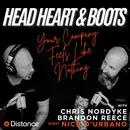


In this episode of Head, Heart and Boots, Brandon and I sit down with Nick D’Urbano again- this time not to talk AI, but to dig into branding. And honestly, this one hit different. Nick’s built and scaled multiple 8- and 9-figure brands, and what stood out is how clearly he sees something most of us miss: brand isn’t your logo, your colors, or your website- it’s how people feel when they interact with your business.
We spent most of the conversation unpacking that idea. What does it actually mean to build a brand? It starts way deeper than marketing. It’s your principles, your standards, how your team behaves, how you treat customers, and whether all of that is consistent. If you ask 10 people what your company stands for and get 10 different answers, you don’t have a brand.
Nick also challenged the way most restoration companies think about this. In an industry where people are going through some of the hardest moments of their lives, there’s a massive opportunity to build a brand around how you show up for them, not just the job you do. That idea of being “human-centered” stuck with me.
We wrapped this by connecting it back to execution- how communication, consistency, and even AI tools like Distance play a role in reinforcing your brand at scale. Because at the end of the day, your brand is being built whether you’re intentional about it or not.
Hope you enjoy
Chris
Why You Should Listen:
[00:02:10] Why most people misunderstand branding and how it goes far beyond logos, colors, or marketing
[00:08:34] How to define real company principles that actually guide decisions instead of just sounding good on a wall
[00:16:12] Why consistency across your team and customer experience is what truly builds a strong brand
[00:27:45] The opportunity restoration companies have to create a human-centered experience in high-stress situations
[00:38:20] How communication, systems, and even AI tools can reinforce your brand as you scale
Did you know...
Only 30% of businesses listed for sale actually find a buyer? Even more striking, just 10% of those sell for the price their owners anticipated or higher, meaning only 3% of all business owners achieve their desired sale price. By focusing on understanding and enhancing your enterprise value, you can significantly boost your chances of joining that successful 3%.
Business Health & Value Assessment
Start Assessment Know Your Enterprise Value. See Your Potential Gaps.
Complete this assessment in less than 15 minutes and receive a free assessment for your business that includes:
- A Lite Valuation Of Your Business
- Your Value Multiplier Per Your Industry
- Health Assessment Per Our PYB Methodology
- Business Value & Growth Roadmap Tailored For You
- Value Acceleration Strategies
Spotlight on Floodlight: Your Secret Weapon for Sales & Scaling
This isn’t a paid plug. It’s real talk from the front lines. If you’ve ever thought, “How do I get a VP-level sales leader or even a sales team without hiring full-time?” Floodlight has the answer.
Fractional Sales Leadership
- They act as your outsourced VP of Sales, taking full responsibility for training, managing, and growing your sales team. No six-figure hire needed.
- Clients often close 20 to 50 percent more deals within six months, thanks to data-driven coaching, CRM setup, scripts, and performance reviews.
More at floodlightgrp.com/sales
Commercial Sales MasterCourse
- A self-paced, video-driven B2B sales course designed specifically for restoration teams. Perfect for building commercial revenue and getting free from TPA handcuffs.
- Covers mindset, prospecting, pipeline building, LinkedIn lead generation, and includes a $250 discount with code SALESBOOST.
Details at floodlightgrp.com/courses
Tailored Consulting & Coaching
- Floodlight’s Propel Your Business methodology offers a full-circle roadmap: financials, sales, marketing, leadership, recruiting, productivity. All built for contractors.
- These aren’t “life coaches.” They’re former restoration owners who’ve lived the chaos and know how to scale out of it.
Explore more at floodlightgrp.com
Live Training, Tools & Strategic Partnerships
- Floodlight also delivers live onsite and virtual training, keynote speaking, and leadership tracks covering operations, project management, and strategic growth.
- Bonus: They’ve vetted tools like Xcelerate, Liftify, and Sureti. Floodlight clients get access to exclusive discounts on tech that actually moves the needle.
See all partnerships at floodlightgrp.com/partners
Why it matters for you as a listener
- You don’t need to figure this stuff out alone.
- If you’re serious about sales growth, operational clarity, exit readiness, or leadership development, Floodlight is already helping folks like you scale smarter.
- And you get it from industry insiders. People who’ve sat in your chair, survived the fires, and built systems that actually work.
0:00 Hey, dude. I got it. I know what you did there. I could actually see it on your face. Like, it was very similar to the starting block at a dirt bike race. Yeah, I still got the reaction. Like, you were... We were just talking about getting older and... You were primed and stuff like that, you know? No, I still got it. Hey, dude, thanks for inviting me to cuss and discuss yesterday. I had a really great damn time. Has nothing to do with the show, but... Yeah. Dudes getting together, being real dudes, and sharing meaningful life. It was good, man. Yeah. Seven three-quarter naked guys huddled up inside a sauna sweating together. No, I mean, no. That made that sound really bad. But yeah, no, it was a good time. But that's what happened. Yeah.
0:40 It was real. That was all that happened. It didn't go beyond that. No, I mean, we were just commenting before we opened up. It was great to be around such successful business leaders and community members. All of them in their own lane are leading and really participating in community, whether it be directly to their own entrepreneurial companies or the way that they're leading other organizations. But holy cow, a bunch of just power hitters. And yet, dude, just across the board, the humility was amazing. The willingness to want to get deep, kind of get into the heart and the boots, you know, the head and the heart elements of life. It was just, man, it was super rewarding. So I appreciate the invite, yeah. Yeah, we've been doing that.
1:21 I was talking with one of the guys last week. It's like going on three years. Yeah, it's been a while. And I remember one of my friends, Ali, I mentioned this last night when we were in the sauna, but he came and visited. So he wasn't there, he was traveling. But he mentioned when he first came to Cuss and Discuss, he's like, man, guys, I've lived here 10 years and I've never been invited to something like this. Mm-hmm. Where there's dudes that are just like, it's just okay to be yourself. You don't have to posture. You just, everybody shows up and just is able to be themselves. You know, I think, I think a lot of times as men, when we get together, we feel like there always has to be a purpose. So men tend to meet and hang out, whether it's like a men's group at church or it's an accountability group of some kind, or it's a, it's a mastermind.
2:06 Like as men, I think we just don't prioritize enough. It's like friendships. Yeah, it's just friendship. Just hanging out, being with your boys. It's just friendship and you just let it be whatever it is from week to week. And sometimes we get into troubleshooting and helping each other with things. And then sometimes it's just like we're just hanging out enjoying each other's company. Well, that's part of happened last night. I mean, there were several questions that got thrown out like, hey, give me your perspective on XYZ because your background or the way your company does stuff. It was great, dude. Yeah, there was some shop talk. It was fun. Where are we going today, man? Yeah, we're doing an intro, aren't we? Yeah. Yeah, so Nick Durbano, straight from Montreal, Canada. Nick is prolific. He's just an incredible dude. I mean, one, he's a very, very successful entrepreneur.
2:48 He and his co-founder, Ethan Song, I mean, just incredibly experienced, powerful, successful guys, multiple exits in their wake. They've played in the e-commerce venture capital world. They're venture-backed right now with distance.so providing AI, agentic AI solutions for restoration companies, other home service companies. But we didn't end up talking a whole bunch about AI. No, no. We talked about branding. Yeah. And, you know, he is just incredibly smart with how he thinks about branding. He's very principled and he's able to get into the weeds as well. But, you know, it just didn't come up during the thing. But he actually, when he was in his 20s, he ended up meeting the founder of Victoria's Secret.
3:31 And he ended up getting hired by Victoria's Secret when they were bought by a private equity company to go basically build out Victoria's Secret in the Middle East. Oh, that's right. Yes, that's right. And he ended up going from, taking them from basically one flagship franchise store in the Middle East, I want to say like 250. Unbelievable. Over the course of like three years or something. And he was at the helm doing that. So this is just a guy that is very talented, very smart. And in his work with all these various companies and verticals he's been in, he just has a really keen awareness of how to build brand.
4:11 So that's where we spent most of the time. And so for those of you that are really looking to scale your restoration companies, you're like, what's the future hold? How should I be thinking about my business? Brand, I think, is something that's been heavy on Brandon and I's mind, both with him and FP and with what we're doing with Floodlight. And so we get into some of the how. How do you start thinking about that, etc.? It's really just kind of unpacking the concept itself, because I just think a lot of times we misunderstand it. And he does highlight why you should listen to him in terms of branding as a background. And again, he's crushed in so many different environments. So yeah, it ends up being a really rad talk. Well, and last thing, dude, we haven't done this for a while. What? But we might as well since we've taken like 40 minutes for the intro.
4:54 For those of you brand new to the show, like what is this about? Like who are Brandon and I? Well, listen, we own Floodlight Consulting Group and Floodlight Sales Partners. We help restoration companies sell more. This is the common thread with everybody right now. And part of it's a function is just where the industry's at, is that all of us in the industry have a sales problem. We've spent decades as an industry being over, becoming over-reliant on our relationship to insurance carriers. We've become in the last 10 years over-reliant on Google PPC to make the phone ring. We've become over-reliant on our reputation as the key driver of our growth or our own personal charisma. Everybody knows me and likes me as the owner.
5:35 And what we help companies do is make the transition to really taking control of your sales engine, whether that be your closing rate on work that's already coming through the door, not allowing yourself to bleed out half of the leads that you're... paying to get through the door, or it's building an effective direct sales team that can go out and find business and build relationships that can feed you over and over and over again. So that's what our team does, both on the operations and the sales management side. We help companies grow and scale. And so if that's a need and you're looking to accelerate your results and accelerate change in your business, reach out and let's talk shop. Love it. All right. Here we go.
6:15 Let's go. Wow. How many of you have listened to the Head Harden Boots podcast? I can't tell you that reaction, how much that means to us. Welcome back to the Head, Heart & Boots podcast. I'm Chris. And I'm Brennan. Join us as we wrestle with what it takes to transform ourselves and the businesses we lead. This new camera angle makes my arms look smaller than yours. I'm noticing that and I really appreciate it. I thought you did that on purpose. No, I don't. I didn't. And I am not happy with it. Nick, you crazy son of a gun. Welcome back, my friend. Thank you. Thank you. It's an honor to be welcome. Honored to be a second time guest on the program.
6:57 Heck yeah, man. You know what, dude? I know before we hit record, we were chatting about RIA. We've got several folks that we've grown pretty fond of that we like just meeting in person, seeing in person. And we were all just kind of BSing about when we were at the One Tom event at the end of last year. I think that's the last time we were in the same place, right? At the same time. Yeah, yeah, yeah. The dinner was super fun and we had the opportunity to hang out with you during the dinner. And we got into a really interesting conversation because you have a background in branding and you started talking about this concept of branding. And I'm not even talking marketing, but branding. Yeah. Yeah.
7:37 You were blowing us away with some of the examples. You even pointed us to a company that you referenced as a great blue-collar working example of this high emphasis on branding. So anyways, I think we go there, man. I think everybody already knows you're the AI guy and what distance is doing to open up doors for us adopting AI. I think we're going to poke that bear a little bit. But man, I want to tap into your branding brain because it was a great conversation at dinner and I think that everybody would really enjoy it. Is that cool? Yeah, yeah. Let's do it. Awesome. Okay. I'll get us going here and then I'll stop and take a breath so Chris can ask you a question too. So just start at the baseline, man.
8:19 Give us your impression or interpretation of what a brand is and what building brand is. Perfect. So before I do that, Brandon, just for the audience, I think it's important to understand because people are like, well, why is this guy talking about brand stuff? Who is he? He's like an AI guy, he's building a software company. But what's interesting is my business partner and I, for the past 20 years, we're older than we look. If you zoom in, you'll see the gray hairs. For the past 20 years before Distance, we built and scaled just a ton of e-commerce businesses. The big chunk of our career was built on software and direct-to-consumer brands. And the impetus for us to start Distance was really, hey, Yeah.
9:22 It's not random that we're talking about brands. We've built eight, nine-figure brands and scaled those out quite efficiently and effectively over the better part of the past couple of decades. When I think about brand, ultimately, I think of emotion. I think of how does this organization make me feel? What emotions is it eliciting from me? When you think of Nike, when you think of an organization like Disney, one makes you smile, one makes you pumped up. I've cried at Gatorade commercials and Nike commercials, the really emotional ones. They pull at the heartstrings and they speak to a shared sense of purpose and they rally people around a belief that's bigger than the thing.
10:05 It's bigger than shoes. It's bigger than a movie. It's really about togetherness. It's really about happiness. It's really about performance or being the best version of you. And those are things that you can get behind. And ultimately, the conversation that we had, when we started thinking about brands, it's like, okay, well, how does that apply to home? services, when you think of a restoration company or you think about a plumbing company, oftentimes they're wildly generic. Even the ones that have quote unquote nice logos or nice websites, that does not mean they have a nice brand. That does not mean that they stand for something that if you ask 10 employees and you ask 10 companies, what's this organization about?
10:47 If they don't answer in unison with the same type of words and adjectives, you don't have a brand. Right. Like nobody knows what you're standing for. If you ask 10 people, how does Disney make you feel? What's Disney about, you know, whether you're an employee, whether you've watched some of the movies, it doesn't matter who you are, you're going to be able to kind of, if you're not saying the exact words, you're saying tangential words. And that's because they built an ecosystem around that, which is incredibly valuable. Yeah, that hits the mark in terms of this emotion. I'm thinking about that right now with FP. We have some, I don't even know, we're working on some things behind the scenes there. And one of the things that we've been re-discussing or re-evaluating is that, what is it that we want our branding or when our team shows up?
11:32 Chris has used the term, how we make them feel in the process a lot. And I think that it's these weird ways where in our guts, we know what you just said is true, but we don't always understand tactically how to connect the dots and how to intentionally put that into life, right? And so anyways, I was thinking about some of our branding and the way that we think about our company. And right now we're using terminology like Americana, American hero. And so then that's going to influence colors. That's going to influence the different elements to the brand. But what I'm hearing you say then is that that has to influence the way the organization also feels about itself. It has to align with this thing that you're presenting or branding that you're putting out in the world.
12:16 Am I tracking with you correctly there? Yeah. It's got to permeate the vocabulary that your clients use, that you use. Like there's a reason you go to Starbucks and the drink order is like this whole, like, you know, you're kind of digested a new lexicon when you walk into that organization, like you're entering their universe, right? Like they've created an ecosystem for how you feel, how you speak, how you talk, how you engage. And that's really, really important, right? So when you think about, you know, I think, and there's this, misnomer here. When people think about brand, they often think about logo, they think about color, they think about those things. But what I would challenge folks on is think about how you make people feel, think about how you communicate with customers. And ultimately, it comes down to these small moments often, right?
13:01 Like there's big obvious things, right? But then there are these small moments in the customer journey, even internally, like with your employees, et cetera, where you can embed the DNA of the brand? Like, you know, I'll give you two really good examples, okay? At Nike, is it surprising to you that they have, like, soccer fields and basketball courts, and, like, people are on, like, you know, intramural teams during the day, and there's competitions, and, like, people are playing sports, and, like, you're like, okay, after this meeting, I got a soccer game. There's a reason for that. Yes, they're selling shoes, but the people there are living and breathing the DNA of that business. So it totally makes sense that they are injecting that kind of behavior during the day.
13:45 That is an internal modality of branding. But then on the customer-facing side, the same thing is true. Another really great example, why do some retail outlets have coffee shops? Right. baked into their store. They're trying to make you feel something. Coffee has no business. There's no reason to put a coffee shop within a storefront. But you have organizations like Emile Andorre in New York. You go there, it's an experience. You go in, you have the coffee, you walk around, you sit down, and they're creating an atmosphere. They're trying to bring you into their world, and that world has emotion and feelings and so on and so forth. So when you think about brand, I think it really has to kind of permeate the organization from the internal way that you speak, how you treat employees, how you engage customers, what that whole process is like.
14:37 And obviously this is a very high level, but there are very tactical ways to do this. We can talk about that in more detail, but these are surface level examples at the retail level. But they exist as well in home services. And I think the example that I used, well, I'll let you guys continue because I could talk about this for days. Well, no, I want you to talk about it for a day. Well, at least the next 40 minutes. So, have there been any examples in the blue-collar world of companies really embracing brand building? Yeah, so there's a great one. It's called Pink's Window Cleaning. So these guys are based out of California. They're on the West Coast, and it's a window cleaning business. Show me a window cleaning business that has a brand. I don't think many people can say that. This organization has such a brand that they are selling merchandise.
15:21 The uniforms and the logos of the stuff that they wear on site, they are selling that stuff. I don't know if it's a six-figure or seven-figure business, but they are selling merch. and they are generating revenue from it. And that merch was even worn in movies, like actors are wearing it. It's wild, okay? So how do they do that? Well, first of all, when you hire this organization, if you Google them, Pink's Window Cleaning, you'll see their logo. It's like an old school, 1950s guy smiling with his hand up. It's got this kind of 1950s style to it. All of their trucks are wrapped in that same thing. So that's okay. That's surface level, right? That's the branding stuff, part one. Part two is it's a uniform, right? Everyone that shows up to the job site is dressed the same exact way, like blue slack, Vans, they're wearing the pink shirt with the pink hat.
16:09 That's kind of, okay, so now that's part two. Part three is who are they hiring? It's all these young guys with mustaches. Everyone's showing up to the job site. They're like early to mid-20s. They got mustaches on. It looks like you just hired a bunch of guys from like the 1950s that are like, you know, transplanted today. So they are just like ewing the brand at every touch point. It's like this is different. You know, like all of a sudden three kids walk up. Yeah. and you're like, okay, wow, this is totally not what I expected from a window washing company. You go on their website, there's high quality HD video of these guys with some music playing and it just feels different. It feels interesting. It feels exciting.
16:49 So that's a good example of an organization really kind of like narrowing the brand and investing in the customer journey, the customer experience. And It works really well. But there are other examples of that. I think it's in Edmonton in Canada. There's a cleaning company called Men with Kilts. And it's like these guys that come wash your eyes and they're wearing kilts. And there's this Irish theme and so on and so forth. That's a little kitschy, but fundamentally it's differentiated. It makes you laugh. It's lighthearted. They're kind of pulling at different heartstrings. There's another company, I think it's in the plumbing space, and I forget where, I think it was called Paisanos or something, and it's a bunch of Italian guys, and they give cannolis after the job is done. You know what I'm saying?
17:30 So they're kind of building this environment where you're just like, I love my plumber. My planner comes, fixes my thing, and he gives me a cannoli. It's like Super Mario Brothers, right? They're kind of playing on that trope. But that works, right? That makes you laugh, that makes you interesting, and people talk about that, and they get organic referrals as a result, and so on and so forth. So I'm curious about something from your lived experience. I've granted a lot of stuff that you've done over the years is retail, but now that you're seeing some of these blue-collar businesses really being successful in this, kind of my impression is that it's easy to kind of shoo this off as a Yeah, it's silly.
18:10 Yeah, it's a thing. We don't have time for that. Like, it would be difficult for me, just as an example, to really lean in by default to build all of that up, to have people wearing a uniform that really stands out other than just being professional and clean. it's kind of a difficult pill to swallow that people will actually be taking your business seriously. And so have you experienced, seen some of that pushback because people are just almost taking themselves too seriously and they're not very open to this idea that by being creative, by coming off a little bit extreme, that it's that differentiation that really makes you sticky and makes this branding element stand out amongst the noise.
18:51 Does that attract you? Yes. I totally get what you're saying, but I'll actually counterposition it a little bit because it doesn't necessarily even need to be lighthearted or have to do with a uniform. I'll give you an example, and this is in the banking sector, one of my first jobs ever. I was 17 years old and I was working at TD Bank, Toronto Dominion Bank, it's in the US, but they also, obviously they're Canadian. And I was one of those guys in the desks that would deal with mortgages and things like that. I was studying finance, I'm a finance guy, before the e-commerce stuff, like I said, I'm older than I look, I did finance stuff. And so I'm in university and I'm working for this company and that organization was obsessed with customer service.
19:33 Obsessed. And so you're like, okay, well, a bank. They're not really known as an organization to be customer-centric. They have shitty hours, excuse my French. It's not known to be a place. So how did this organization focus on customer service? They didn't dress funny. They didn't do any of the things that I'm talking about. But they did very specific things that made a big difference. One of those things was they changed their hours. They were available longer. They were open on Saturdays. That's an organization that cares about their customers. We're going to be more flexible to you. We understand our competitors are not open on Saturdays, but we are. We're here for you because you probably need your banks open on Saturday. So that's one example. The other example is they would be obsessed in the training and the retraining around customer service, around how you greeted people, around how you greeted people, around how around how long people wait in line.
20:17 If there's a line forming in the queue to get to the teller, and I'm sitting at my desk banging out a mortgage, and I don't have a client in front of me, you better believe I need to get up and go and open up another till and do that job and help move the queue along. Everyone rolled up their sleeves and helped. And so that's an example. That's very tactical. Another example was they allocated capital on a monthly basis to create surprise and delight experiences for their customer. So we had an instance where a mother had kind of double parked her car, she was stressed out, she runs into the bank, there's a bit of a line, she gets the thing, she pays it, and there's a ticket on her door when she gets back. And she's super upset. super frustrated. Like there wasn't any parking. She had to park illegally. It took five minutes.
20:58 Like you could see she's stressed. She's like carrying a toddler. And we see this, like the bank manager sees this, right? What do they do? What would a normal bank manager do? Nothing. What are you going to do? You see the person outside, they're leaving. She runs out to her, runs out, knocks on the window. She goes, ma'am, I can see you're upset. Is that a ticket? Come in the bank. Comes in the bank, the bank paid for the ticket. Oh man, it's a lot. There's no reason for the bank to do that. That's like $100, whatever the number was. But what do you think, the DNA of customer service was embedded into every single individual in the company so much so that people are actively looking for those opportunities to go above and beyond. That is building a brand centered on the customer. That's a banking example.
21:40 These can be non-kitchy things. These can be things that are centered around a value that you are building around, and that is equally valuable. It doesn't need to be because we're wearing a uniform or because the colors are fun and chippy and everyone's got a mustache or anything like that. It could be totally centered and narrowed into a different space. In the restoration example, sorry, just to get out. I wish you could get me out this more. I've had like three espressos. If I just keel over, you'll know why. But So in the restoration space, and I think this is something that we talked about on the boat in Florida, but you guys are doing such an important job, right?
22:23 Like touching people in their most difficult hour. There's a lot of emotion that comes from that and how you make people feel when they're being displaced from their home and they're super stressed out and probably the most expensive activity asset that they own is under threat or is being destroyed and valuables that they own that are potentially lost forever. And there's all this very hard stuff to deal with. It's not their best hour. How do you as an organization make those folks feel? I'm just riffing here, but there are simple things that organizations can do. If your brand is centered around something that has to do with taking care of your community or making people feel, whatever it is, what does it take to execute a handwritten note and buy a bouquet of flowers at the end of a job and put that on the counter and welcome home?
23:13 How do I go above and beyond to try to create an experience that feels a little bit special? Yeah. how do I engage customers between when the job starts and the job ends so it's not just what everybody does? You get in touch every week. How do I create moments in this that make it feel a little bit more human? Let's say if your brand is around human-centered, I'm just riffing here, I'm making things up. But my point is, when you start to dissect the experiences where you touch the customer, there's all kinds of really interesting things that you can start doing creatively to draw value. It's kind of interesting because I wouldn't have defaulted that to branding. I'm thinking that those are two different worlds.
23:54 You've got this physical way that you present your brand, hire, uniform, things like that. And then you have these customer service focuses or the service delivery focus And what I'm hearing you kind of open up is this idea that, again, all of this brand is based on how we make people feel. And so ultimately, your branding is an equation of several different variables that you could be focused on deploying in a consistent way that then create this kind of collective experience or feeling that someone has when they do business in or around your company. And that in and of itself collectively is the branding. Am I tracking with you correctly there?
24:35 Absolutely. Absolutely. And I think a lot of folks don't realize this. Your brand gets created whether you're intentional about it or not. It's created by default because your team is going out there and they're building your brand with every interaction, like internally. Everything that this entity does is creating a persona, it's creating a brand. So you can either take control of it and direct it somewhere. or you could just let it atrophy and become some random blob of a thing, which is what most companies are, quite frankly. They don't really stand for anything. Maybe they have values and they have pieces of this which are not actually imposed. But the best organizations, and it starts from the top, the best organizations, the leadership is obsessed with with these principles and these values and things of that nature, and they make sure that their team are executing them and they're repeating themselves like parrots in every meeting, in every instance that they can to reiterate some of this stuff.
25:33 And it's incredibly apparent when that happens. Yeah. One of the stories that comes to mind is the story of Jeff Bezos and how early days, as they were expanding, of course, Amazon has this brand build. I mean, it's so far reaching now at this point. And so all encompassing in terms of the scope of what they do. But really, it's their insane alignment around the customer, right? Like aligning everything in the company to customer experience and giving the customer what they want at the best possible price, right? And of course... some 20 years of losing money before they became this behemoth that they are now. But it makes me think of the story of Bezos himself working, using as a desk, an old office door, right?
26:19 And I think that just spoke volumes to the rest of his employees, that the CEO and founder of the company, instead of buying and spending money on something that creates zero value for the customer... It's just such a great icon in the business within their brand of, here's the owner working on a makeshift desk so as to further devote himself towards, yeah, I don't care what my desk looks like. It's not about us looking good or being comfortable. It's all about the customer. It's things like that. The other word that has come up when Brandon and I have talked about this in the past as we've been operating is, it's a certain kind of integrity. Yeah. Like it feels like that's kind of what we're talking about when it comes to brand is integrity is what's real about you.
27:01 It's like it does involve when nobody's looking. But the reality today is everybody's looking all the time. And so it's like making sure that every single thing we do in the business is aligned with what we say about ourselves. And is it really true? Or is it marketing? Or is it us posing or presenting? I don't know if that stirs up any other examples or stories you have. Well, it just makes me think of a writer, Brenda Ulan. She writes a very famous book for folks who like writing. I think it's called On Writing, where she writes about writing. And when you're writing a book or building a movie or whatever, there's a lot of parallels between writing.
27:42 world building from a cinematography standpoint or a literary standpoint and brand building, right? Like it's the same concept. I'm building an ecosystem. I'm building a universe. Now, do I believe it? Is it true? Is it authentic? Like when you watch a bad movie, you're like, I don't believe that they chose the right actor to do that thing. I don't believe that they are a spy or whatever. And you lose the plot. You get disinterested and it kind of just all kind of And I think that same parallel applies within organizations. Have you hired the right people? Are they executing the script properly? Is the scenery correct? All of these different component pieces, are they working together in unison to create authenticity to make people understand and really truly believe that yes, this is what this organization, this is what this movie's about, this is what this stands for, this is how I'm feeling, this is how it's coming across in a very kind of organic way.
28:35 I'm thinking internally right now of some of the conversations I've had over the years and then really honestly like some of the places and the businesses I've been responsible for where we've lived some of this out to a certain extent and where then there was a disconnect between what we were trying to promote and be versus what probably the team or the internal stakeholders were experiencing. And because of that disconnect or because of that lack of integrity between the two, you end up getting some other version of an outcome. And in cases like that, the outcome often becomes fairly hostile because there's this cynicism almost behind the scenes where we keep talking and acting like we're getting closer to a certain culture or orientation as an organization.
29:19 And our staff or our team members aren't necessarily experiencing that. kind of in ultra transparency here, I'm thinking about that in general, even with change management. I know it's kind of a slight deviation here, but just this idea of, does the messaging match with the level of effort, investment, resource deployment to ensure that this thing that you're presenting is true? So going back to Chris's integrity concept. So as I'm thinking about that, I'm going back to my comment earlier about these things being very separate, That you've got this branding imagery visualization and then you have these other things like service promise, service delivery, customer service. And it's like, no, those couldn't be separated in any meaningful way.
30:01 Otherwise, you're sending a mixed signal. Hey, we want to be this. We want to be kitschy and modern and blah, blah, blah. But then we invest together. zero revenue or resources in training uniform or whatever. It's like, yeah, I guess now that I'm thinking about that out loud, like those couldn't be segregated from each other and you'd be actually intentionally building anything of substance or longevity. They're part of the same equation. Absolutely. So geek out with me on something for a minute here. Because you are, I mean, maybe not as much as Ethan, but you certainly are a system process oriented individual. You had mentioned earlier the tactics, like realistic things that businesses could be doing. Obviously, we're all focused on the blue collar environment.
30:42 Walk me through it. If I'm starting an entity or I have an epiphany, I want to begin making these changes in my organization and creating a differentiated brand. What am I doing? Walk me through the steps. Talk me through some of the kind of levels of engagement, minimum investment that I'd have to make as an organization to really begin to stand out this way. Okay, so there's the turnkey solution, which is find a great agency that's focused on branding specifically. And there are a bunch of great organizations that do that. They're hyper expensive, and there's a lot of people that say, is this worth it or not, et cetera. I mean, depending on who you choose, et cetera, it could be worth it. But I think the big thing is it kind of starts with the leadership.
31:23 Like, you know, do you have, at the very basic level, do you have a set of values as an organization, right? Do you have a set of principles? And let's go in, and if you don't have them, you need to build them. If you do have them, you need to audit them. Are these true? Are these real? Are these things that your business is actually doing? Especially when you think of, because there's a difference between values and principles. My values are one thing, those are hard to negate, they're just things that are important and they're kind of universal truths. But I think principles are even more important. And principles should be something that when you state them, there should be a pro and a con to them. There should be some people that say, I don't want to do that thing. because of X and people that say, no, we are and because there's a trade-off when I make that decision.
32:07 I'll give you an example. My principle as the CEO of Facebook is move fast and break things, right? That's very famous. Mark Zuckerberg put that in when he started that business. What does that imply? That implies that I'm going to give a ton of autonomy to my team. That means that they are going to potentially blow things up and that's okay because we're going to move faster than everybody else. And speed is the ultimate thing that we're kind of valuing. Now, if you're a large organization, that might be the opposite thing. Like, I would never move fast and break things, all right? Make sure things never break might be the value of a totally different organization, and that's fine as well. You know what I'm saying? So the principles that you put forth should not just be these superficial things like trust.
32:51 You know, and it's like, okay, well, everybody trusts. that doesn't move the needle. That doesn't actually, that's not a hard thing to, because when you go out and you hire someone, like who's going to say, I'm not trustworthy, right? Or, you know, like who's going to, what's the counter to that? There is no counter to that. And so it's kind of superficial is kind of the point, right? So when you're building these things, I think it's important to find principles that have a yin and a yang. You could take the opposite side of it and it could still be okay. So there's this tension that you almost want to look for when you're building these things. Because that tension is what creates real decision points in your business of what you're going to do, what you're not going to do, who you're going to hire, who you're not going to hire.
33:33 Obviously Mark is not going to go and hire the VP who worked at IBM for 100 years. That guy is probably never going to move fast and is never going to break things. He's going to go hire the 24-year-old kid out of Harvard who is just ready to rock and roll. There's a difference in values there and in principles that are going to make up the brand and the ecosystem appropriately. I would actually start at that very foundational level. Before you think about colors or things, because when you really think about what you want to build, when you start building that infrastructure, the truth of what kind of organization you want to build will probably start to percolate. Like it's probably already hidden there. You're like an archaeologist. You got to kind of dig, dig out the truth.
34:16 The truth is there. It's kind of implanted in the leadership team and the founder, et cetera. And you got to go and unearth it. That's how I would think about it. If I was starting today, go into your subconscious and ask these questions and build it out. I'd be remiss if I said some of the AI tools are great sparring partners for this kind of stuff. You can go in and create some prompts and say, hey, this is an exercise I want to do. If I was starting off today, what I'd probably do is I'd go to one AI solution and say, I want to do this exercise. Give me the best questions to ask to create the best prompt to do this properly. Then it's going to ask you a bunch of questions. It's going to give you a prompt.
34:57 I'll take that prompt, I'll go to a different AI, and I'll say, hey, here's a prompt about A, B, and C that I'm trying to do. Can you critique it and make it better? It's going to make it better. And now I've kind of used two AIs. I've had it actually help me articulate what I need to do. And now I have a prompt that I can use to start going through this exercise that I think is going to generate some value. Versus what a lot of people do is like, help me define my values. It's just like superficial stuff that comes out. But if you kind of go with that extra level with some of these tools, you can actually use them as a coach in a way that's actually quite high fidelity. So that's also a little AI hack for folks to go a little bit deeper in your experience with using these tools where you can get a little bit more value out of them.
35:38 Are you a business that's under five million in sales and you're just now getting ready to try and scale your company up and hit some of those targets you've always wanted to hit but now you've gotta build a sales team? Or maybe you just hired your first sales rep but you don't really know how to manage them. Like how do you manage, lead, train, develop a sales rep? Floodlight has a solution for you now. So we can actually assign your sales rep a turnkey VP of sales that will help them create a sales blueprint, their own personal sales plan for your market, They'll have weekly one-on-ones with that sales rep to coach, mentor them, hold them accountable to the plan. And they'll also have a monthly owners meeting where they'll meet with you or your general manager and review the progress of that sales rep, their plan to actual results, what kind of performance improvement they're working on with them.
36:23 Also let them know, hey, you might, they're doing really well. Maybe we should think of hiring a second sales rep. They're gonna have that one-to-one advice for you as an owner or senior leader on the team as well. How great would that be to have a bolt-on sales manager for your one sales rep and it's only $2,500 a month? If you're interested in talking more about that, reach out. Let's grab some time and let's talk shop. Our floodlight clients this last year in 2024 generated over 250 million in revenue. Supported by, advised by, an industry expert who's owned and operated a business just like you. So take action. Don't kick the can down the road. Start with our business health and value assessment and let's unlock the next chapter of your success story.
37:05 Nick, what I feel like you just said is, in terms of defining what your principles are that are really actually drive the business, is that those principles have a consequence. Like, they're consequential. Like, say, we build trust with our clients or something like that. Well, of course you do, right? Like, there's no sort of opportunity cost that you're accepting withholding that principle, right? Right. There's a cost to it. And would you say that that's one of the biggest things holding owners back from really building powerful brands is that they haven't counted the cost? They haven't found the thing that matters. They're too focused on being clever or having a cool rap on their vehicles. But it's these, I don't know, it's almost like a primal thing.
37:45 They haven't found the primal thing that's really real in their guts and in their team's guts. And so it doesn't hold any... Yeah, like the real thing they connect to. I mean, before I started companies, I worked for companies as well, right? And one exercise that I always love to do in the first 90 days of working for an organization is just go up to different departments, different people, different levels, and say, hey, what's this company about? What are the principles here? Just be curious and ask. It's always been fascinating to me. Nobody answers the same. It's really hard to do this well. And the organizations that execute on this, it's like they're operating at a totally different level because they've done the work. They've done the work of the work, and it is permeating in every all-hands meeting.
38:27 They're reiterating. I mentioned parrots before. They sound like parrots, because they're always saying the same thing. You have to be hard of hearing to not let this information sink in if you work for these organizations, because it is at every single turn they're reiterating these points. It just keeps coming up again and again and again and again and again. And so I think part of it has to do with, yes, like sitting down and actually doing the work of the work. To take this exercise seriously, that's part one. Because a lot of people will do that and then they don't do anything with it. So they're like, I've done the work, I've figured this stuff out, but then there's no follow through. There's no way of educating the team, there's no implication of what we should do as a result.
39:09 But if everyone's on the same page and everyone's looking through the looking glass with the same lens, it actually makes your business easier to manage. decisions because I'm giving them a framework to make that decision. They know, going back to that Facebook example, they know, should I press this button and test this thing? It might blow up the system. You know that you should press the button because you know that blowing up the system is fine because that is what we believe. We believe in, do not waste a week testing this more and going back and forth. No, go. And so that's its own thing. That works in that ecosystem. Ironically enough, Facebook has changed that modality, by the way, as they've gotten bigger. As they've gotten bigger. Don't break it now.
39:49 Yeah, like it's changed, right? So it's not move fast and break things anymore. I think they like adjusted it slightly. Move forward and be profitable. Yeah, yeah, yeah. No, no, no. It's still move fast, but it's like not break things. You know, I forgot what they did, but it's kind of like a funny little patchwork. But anyways, you know, I think part of this is also just your ability to follow through and execute this stuff. So, yeah. You know, the other thing that it kind of reminds me of as you're thinking through this is it doesn't pay to be neutral or appeal to everyone. And it's like, we know this stuff. It's so easy to go to a conference or some kind of branding or marketing, whatever, and hear people tell you, you got to stand out, like be aggressive. It's okay. Like, you know, not everyone's going to agree or align behind what you do or how you feel.
40:34 But man, it's hard to live it out. And I'm just thinking all the little brand iterations we've gone through with Head, Heart, and Boots even, where we started to now with the skull and boots. We finally just reached a certain point where we were like, this is us, though. This is the show. And if this is offensive to somebody or it doesn't align with them, we just have to be comfortable with the fact they're just not going to be a listener. And it's okay. That doesn't... But it's like, build your tribe. Yeah, that's right. You build your tribe, but it's hard. Like it's hard to commit to that and be willing to kind of put it on the table. And so like going back to this kind of core value starting point that you talked about, they've got to be, someone's got to not agree with it. It has to be so clear and so specific in terms of the group, the avatar, whatever, that align behind that and want to raise that flag that you have to be comfortable that there's an opposite side to that table.
41:26 There has to be clear people that wouldn't want to participate in that, that don't align with that. And I think that's where in that we can get passive because it's almost like a lack of confidence maybe in the brand or the company or ourselves that we don't want to be that black and white in terms of who fits and who doesn't fit. Do you run into that as you guys are wrestling with those things? Yeah, absolutely. I think you need to make those concessions. And it's hard work. It's really, really hard. It's really hard to do this well, is kind of my point. If you don't hire a consultant or someone to help guide, you kind of need a Sherpa. You're climbing Everest here. You need someone to kind of guide you along the path. Now, the problem here is that there's a lot of really bad Sherpas.
42:06 So where they themselves are very superficial, and honestly, sometimes even the great ones are not that great. And so caveat emptor, like buyer beware, before you embark on this journey, I think it does behoove you to spend some time meditating under a tree and thinking through this stuff really clearly and unearthing a lot of it yourself. Because there's a lot of really good insights that will come from just spending time thinking. I know that sounds like a luxury for a lot of business owners, but I think it's incredibly important if your goal, of course, is to scale something up in a meaningful way. If your goal is, I want to create a $5 million business, this stuff may not be important. Is it important?
42:48 I think it's always important. What I'm saying is it's not a prerequisite to get to a $5 million revenue runway. But when you want to build an entity in an organization, This stuff is critical. And it doesn't start when you hit 10 million. It starts on day one, or it needs to be ingested and integrated as quickly as possible, because if not, you're never going to get there. Things are going to start splitting at the seams. And so it's truly an important exercise, I think. Well, okay, so to kind of put the wraps on this part of the conversation, if you would kind of play with us for a second here. If you were, because that was one of the questions I was going to ask is, how does a small restorer or somebody who's just getting into the restoration industry, there's zero to a couple million right now, but they're listening to this and they have a vision for something much bigger.
43:34 They know that they have maybe some respected brands that they've watched in their own market or whatever, and they want to do that. I'm curious, Nick, you guys have... quite a roster of restoration clients now. And you're seeing the insides of these businesses and so forth. If you were to go start a restoration company today, how would you approach brand? How would you start that company? What are some of the things that you would prioritize out of the gates, even at a small scale with somebody who's in the startup? As I was talking earlier, I kind of had that little subthought in my brain. And, you know, one place I might start is this kind of concept. I have to unearth it, right? Like these things are like, it's like pottery, right?
44:15 Like what I'm going to do right now is I'm going to put like a big chunk of like, you know, clay on the table. It's not perfectly formed. I'm not exactly sure what it is, but I'll be workshopping it, right? And I think this concept of like a human centered restoration business is really interesting. There's a humanity involved in dealing with people in their darkest hour. How do I show up for folks? What does that mean? What does it mean to be human-centered in restoration? How do I treat people? What language do I use when I'm talking about a client, a customer? People talk about claims. They use insurance terminology to talk about individuals and projects. How do I adjust how I approach these things so that my whole team is focused on the people behind the disaster.
45:01 And I'm supporting them. And that's the mission of the business, right? It's to lift people up. Okay, so now that is, I've now kind of structured some semblance of a direction, and I can start working around that. But it might be something different. It might be like, hey, you know what? We're about speed, right? We are about getting you back up and running as quickly as humanly possible. Our job is to go from zero to one. We're going to remove all these roadblocks along the way and just get you there as fast as humanly possible. That's another great angle. Right now, I'm workshopping in a different direction. It might be customer service, going back to something we can all hang our hats on. And there might be something there in how we go above and beyond. So let me do the TD Bank or the Zappos in the e-commerce space.
45:43 What does that look like? And so I'm just giving three examples here as starting places to start thinking about the principles and values that would accommodate that direction. But what I'd probably do is pick a North Star and say, okay, I'm going this way and I'm going to build in that direction. I'm not going to have the answer, but I'm going to look at organizations that do this thing kind of well, and I'll use that as a baseline to get some inspiration and to do my homework and to kind of move the ball in that direction. And I'd probably spend a little bit of time doing exercises, whether it's consultants, whether it's with different AI tools, to start flushing some stuff out and start structuring my thoughts and start structuring this thing and battle testing it with colleagues and customers and friends.
46:29 How do I start to unearth some of these core concepts? But I'd start with a direction. I'd probably make sure my values and my principles are tied into that Then you can get into the branding, how does it tie into those things? Then you can get into the customer experience and the operations, how does it tie into those things? It all starts at that foundational level and then peters out into every nook and cranny. How does it tie into hiring decisions? Maybe some of the questions that I ask tie back to some of those principles. I've got to look at it through that lens as well, not just capability, but fit. What does fit mean? So, you know, starting from there, that's a pretty broad answer, but, you know.
47:13 Oh, that's good, dude. That gives real direction for people. That's great. Yeah, I think it's awesome. Well, I want to spend some time because, you know, we use distance at Floodlight and we have a number of clients. Yeah, we have a number of clients and FPs using distance. And you guys have been making real moves in the industry over the last year plus. Give us an update, because I know you guys have new features, you have stuff on your product roadmap that is probably coming out later this year as well, but what's happening at Distance? What are the new stuff people should be aware of? Well, let me tie these two strings together, because I think they're somewhat related. I think part of what we started off with with Distance was how do we help organizations be more efficient and effective with their sales. So leads coming in that are being missed, how do we create a better customer experience, catching, intercepting calls.
47:56 So that's kind of obviously a big part of our business. Then we have multi-channel chat. So when you're engaging customers coming in through chat-based channels, that's another piece of it. And I want you guys to rewind to our first conversation because you guys mentioned something. You say, hey, you know what? I think it was you, Chris. You said, it would be really cool if you were able to send messages out to customers, say, hey, how's it going? Well, guess what? We built that exact thing. We built that exact feature. So if you clip that little part of our conversation from many, many moons ago, we've actually executed against that. It was a great idea. It kind of planted a seed in our mind, and we launched an outbound version of our product. So going back to this concept of brand, how do I communicate with customers? Oftentimes, it's really hard for organizations to consistently message customers at the right time on the right cadence, whether it's a lead that engaged me and I didn't write back to them, whether it's someone that I want to just check in how the job was going.
48:46 Maybe it was post-job that I asked for the review. There's all these kind of communication touch points in the sales journey or the pre-sales journey or the post-sales journey or the commercial sales journey. There's all of these messages. How do I become more efficient and effective at authentically communicating with customers in a personalized way, one-on-one, so we don't miss a beat? That's been a really big part of our product roadmap. We launched an outbound messaging product that allows our customers to automatically, or in a campaign-based way, send out custom messages to customers via email. email, via SMS. So it feels like they're getting a one-on-one message from someone. But in fact, it's all automated.
49:26 And there's AI built into that so we can continue the conversation appropriately. And what's really great about this is AI is obviously incredible on the voice side, but it's even better on the chat side. So it does not get higher fidelity than that. And so as a business owner, you have kind of two decisions. Do I throw more bodies at the problem or do I throw technology at the problem? And when you look at all these touch points in your business, I'm sure you're not checking all those boxes. I'm communicating 24-7, 365 with customers. I'm never missing a beat because usually there are people that own these communications and often they miss them and they're not consistent with them. And so what we're suggesting is you should not communicate with your customers.
50:08 That's not what I'm saying. What I'm saying is you should automate things that need to go out at specific times consistently and not rely on human labor. Have your human labor focus on the follow-ups, focus on the real work of the work that needs to happen. But you're not going to sit there and bang out 500 messages one-on-one with a customer. That makes no sense. There's no value in that when technology could do that better. But when they reply, maybe it makes sense for now someone to take the horns. Okay, we've got a reply. Now let me engage them with a human, right? Yeah. So AI could do the work of the work and technology could do the work of the work, bringing people in so your team can focus on the real value, which is the next step. That's super cool. I think the other thing too that we've learned working with you guys is just the amount of client interaction that can happen in parallel.
50:52 Our people can only be on one phone at a time. They can only take things in such an order. They can only engage. And that's been the thing that's kind of blown my mind is how many actions, activities, and engagements are happening simultaneously. Pretty profound, really powerful from that perspective. Because I think some of the things we don't achieve is just, we just run out of time and people in a single day where sometimes leveraging these AI platforms allow us to actually perform at a really elite, consistent level that we would have never been able to achieve without massive overhead investment. 100%. Yeah. goal. Well, one really great example that I love, because every business has a contact form on their website.
51:33 Every business. You go there, it's contact us, contact us, contact us, contact us. Most people get phone calls, right? But everyone has a contact form, and everyone has people responding to the contact form. Like, I've not met a client who said, no, no one contacts me there. No, they often say not a lot of people contact me there, but people contact me there, right? And I get some deals that way, blah, blah, blah. I'm like, okay, what's that flow look like? Okay, well, they click, they submit, they answer all these questions, and it shoots me an email, I got to read the email, then I got to write back, I don't know, no, no, no. By the time I get to that client, if their house burned down, like they've already found a provider, they're halfway through building a new home, you know, by the time you get back to them, right? So, you know, what we can do is say, okay, someone clicks submit, and then kind of like magically, Hey Nick, thanks so much for reaching out.
52:14 Looks like you're looking for blah, blah, blah. My name's Jim. And now all of a sudden I'm communicating with that customer. I'm using technology, I'm using AI to shorten the time to value. What otherwise would have taken a long time and been a very arduous process that didn't result in anything. Now I'm able to very almost magically kind of engage you because you click submit. Like you have intent, you're interested, you want to talk to us. Great, let's start that conversation. Let's warm you up. Let's ask questions. Let's qualify you. Let's figure out what you're looking for. Let's go a little bit deeper. Let's keep you warm before someone calls you, right? Or before you schedule a meeting or whatever the case may be. It might be a mold issue, right? Someone's coming. I think I have mold. I don't know. What would it cost? I don't know. Okay, great. Well, if you get that email and you call back, forget it.
52:55 That takes too long. It takes too long. How do I create a better customer experience? So kind of going back to the brand, almost irrespective of what your brand is, I think fundamentally their core business principles, which is like, get back to customers quickly. Yeah. communicate with customers consistently. So a lot of what we do is the basic blocking and tackling. And I would almost posit that almost before you go out and start to get fancy with the branding exercise and going above and beyond, make sure you're answering messages quickly. Make sure your phone is not ringing too much. Make sure the basic pieces of your business are foundationally operating at a level that you want them to be. Because at TD, if the woman came out and gave the note to pay the ticket, but that was only because she waited an hour and a half in line.
53:40 Like, that's not a good experience. Like, you're kind of, it's a mea culpa, and I'm kind of paying for a ticket because I caused the problem because my line was too long. Like, that's not a good experience. Yeah, exactly, right? So it's kind of like, do the basics really well, and from that, you'll achieve good outcomes. But, you know, that's just a very, you know, tactical example. I freaking love it, dude. As usual, as usual, throwing some fire. You're going to be at RIA. And I think the reality of it is, though, when somebody listens to this, we'll be post-RIA. So not a ton of support there. Where are we sending people, dude? If they haven't started to partner with distance, they haven't been exposed to the AI solutions that you're using to partner with people on, on both the sales and the inbound customer service perspective, what are we doing?
54:22 Where are we sending folks? Yeah, you go to distance.so and I could leave a link for folks in the show notes as well if they're interested in learning more. You can book a quick chat with us. What we do on these chats, honestly, is we do a lot of work around where are you getting leads? I try to We try to add as much value as possible in those calls. How are you generating revenue today? What are some opportunities? Whether you use our tool or you use something else, you decide to go a different route, how can we add some value and show you some interesting strategies that you can utilize that similar-sized businesses are using and seeing results? What is it? Try to give as much value as possible, and then hopefully if you've done that, you've earned people's trust and they're saying, hey, you know what? No, this is something I'm interested in doing with you. Great.
55:03 Yeah. I'll just add to that. One of the things that we've experienced for you guys, or with you guys, in case you are interested in taking a look at distance, is there's a big difference between understanding, knowing something, and then getting true support and implementation. Yeah. That's our experience. We get to talk to your team. You're helping us think through what we're trying to implement. And there's engagement for deployment. And for me on that AI front, that's what I needed.
55:45 I wasn't anticipating that I would be able to do a lot of that on my own. And so we appreciate that. No, I appreciate you saying that. And ultimately, this stuff, it's a new frontier. And you do need to have generic versions of this stuff that exist. And garbage in, garbage out. If you're not putting in the work, it's kind of like hiring someone. It's software doing the job of labor. So if you're not actively making it better and educating it, and you don't just hire someone, give them a script, and they're like, answer the phone, here's the script, I'll never talk to you again, I'm sure you're going to do a great job. That's going to end well. So ultimately, you got to be on top of it. And I appreciate those words though, Brandon. Thank you so much. You got it, brother. Well, as usual, man, we appreciate you hanging out and spending time with us.
56:28 We're protecting you from your own clock. So you got to get the heck out of here right now. Appreciate it, guys. Thanks, brother. That was good. All right. All right, everybody. Hey, thanks for joining us for another episode of Head, Heart, and Boots. And if you're enjoying the show, but you love this episode, please hit follow, formerly known as subscribe, write us a review, or share this episode with a friend. Share it on LinkedIn, share it via text, whatever. It all helps. Thanks for listening.