Ep 204 - "You're the Bottleneck. Now What?"
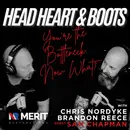


In this episode of Head, Heart, and Boots, Brandon and I sit down with Sam Chapman, owner of Merit Restorations and partner in CaseCo and 1-Tom Plumber, to talk about building businesses, leading people, and the real work behind growth.
Sam shares his journey from a blue collar upbringing to building multiple companies, and how he’s approached scaling through partnerships, culture, and intentional leadership.
We also get into the hard lessons. From avoiding accountability to rebuilding a broken culture, Sam walks through what it took to reset his team and raise the standard across the business.
This is a conversation about ownership, discipline, and doing the internal work required to lead well at home and in business.
Hope you enjoy
Chris
Why You Should Listen:
[00:02:48] Sam’s origin story growing up in a blue collar family and how watching his dad build a business shaped his drive to create something of his own
[00:16:14] How CaseCo evolved from flipping houses into a high end custom home and commercial construction company and the strategic decisions behind that growth
[00:22:32] Why Sam partnered with 1-Tom Plumber and how he’s using it to drive more mitigation opportunities and expand his restoration business
[00:29:42] The moment his restoration company’s culture broke and what it took to rebuild the team, reset standards, and create real accountability
[00:46:43] A raw look at the mental and emotional toll of entrepreneurship and the personal work required to lead well at home and in business
Did you know...
Only 30% of businesses listed for sale actually find a buyer? Even more striking, just 10% of those sell for the price their owners anticipated or higher, meaning only 3% of all business owners achieve their desired sale price. By focusing on understanding and enhancing your enterprise value, you can significantly boost your chances of joining that successful 3%.
Business Health & Value Assessment
Start Assessment Know Your Enterprise Value. See Your Potential Gaps.
Complete this assessment in less than 15 minutes and receive a free assessment for your business that includes:
- A Lite Valuation Of Your Business
- Your Value Multiplier Per Your Industry
- Health Assessment Per Our PYB Methodology
- Business Value & Growth Roadmap Tailored For You
- Value Acceleration Strategies
Spotlight on Floodlight: Your Secret Weapon for Sales & Scaling
This isn’t a paid plug. It’s real talk from the front lines. If you’ve ever thought, “How do I get a VP-level sales leader or even a sales team without hiring full-time?” Floodlight has the answer.
Fractional Sales Leadership
- They act as your outsourced VP of Sales, taking full responsibility for training, managing, and growing your sales team. No six-figure hire needed.
- Clients often close 20 to 50 percent more deals within six months, thanks to data-driven coaching, CRM setup, scripts, and performance reviews.
More at floodlightgrp.com/sales
Commercial Sales MasterCourse
- A self-paced, video-driven B2B sales course designed specifically for restoration teams. Perfect for building commercial revenue and getting free from TPA handcuffs.
- Covers mindset, prospecting, pipeline building, LinkedIn lead generation, and includes a $250 discount with code SALESBOOST.
Details at floodlightgrp.com/courses
Tailored Consulting & Coaching
- Floodlight’s Propel Your Business methodology offers a full-circle roadmap: financials, sales, marketing, leadership, recruiting, productivity. All built for contractors.
- These aren’t “life coaches.” They’re former restoration owners who’ve lived the chaos and know how to scale out of it.
Explore more at floodlightgrp.com
Live Training, Tools & Strategic Partnerships
- Floodlight also delivers live onsite and virtual training, keynote speaking, and leadership tracks covering operations, project management, and strategic growth.
- Bonus: They’ve vetted tools like Xcelerate, Liftify, and Sureti. Floodlight clients get access to exclusive discounts on tech that actually moves the needle.
See all partnerships at floodlightgrp.com/partners
Why it matters for you as a listener
- You don’t need to figure this stuff out alone.
- If you’re serious about sales growth, operational clarity, exit readiness, or leadership development, Floodlight is already helping folks like you scale smarter.
- And you get it from industry insiders. People who’ve sat in your chair, survived the fires, and built systems that actually work.
0:00 Hey, hey, hey. What's up, dude? It's nice to be back in the studio with you, man. It's been a couple minutes. It's been kind of all over the place. Sun's out. Oh, man. So pretty out. Yeah. Life's good right now. Yeah. Yeah. And this interview... This guy's awesome. Well, it's funny because... You know, we talked to so many people and we met Sam. So, all right. We're meeting with Sam Chapman, one of the partners and founders of Caseco, construction, merit restoration in the DMV, kind of Eastern Seaboard market there. And also new one-time plumber, developer, owner, owns multiple locations. And I just, I don't know.
0:41 I came into the podcast. I researched Caseco. I researched the wrong Caseco. And so you guys will all get a kick out of me stumbling over myself. But really, I mean, it turned out to be a fantastic conversation with a really incredible entrepreneur. Oh, for sure. Who's really been building in kind of several different areas of our blue collar space and very, very successfully. And Just also a truly humble guy, really opens up and talks about the journey and a really great owner's story. Absolutely. Yeah, 100%. I mean, I think you're going to see from the interview, one, we're not alone. We're all fighting similar battles. And there is a high integrity... high commitment way to engage in those battles and net really powerful results.
1:23 And he didn't do it by sugarcoating things or hiding behind some kind of pre-coined phrases. It was just very raw and natural and you can just see why people want to follow him. It's a great show. It was really good. Is this the part where we say, okay, let's go? Okay, let's go. Wow. How many of you have listened to the Head, Heart & Boots podcast? I can't tell you that reaction, how much that means to us. Welcome back to the Head, Heart & Boots podcast. I'm Chris. And I'm Brennan. Join us as we wrestle with what it takes to transform ourselves and the businesses we lead. This new camera angle makes my arms look smaller than yours. I'm noticing that and I really appreciate it. I thought you did that on purpose.
2:04 No, I don't. I didn't. And I am not happy with it. All right. Well, my friend, welcome to the show. We have been trying to get you on now for a hot minute. I think we originally were talking about this a little bit at the One Tom conference at the end of last year. So we appreciate you staying in the fight with us and finally getting on. So we're looking forward to the conversation, Sam. Thanks again, man. That is where it happened. Yeah. Yeah, I think so. Yeah, and it was at that show that we gave the talk about the heart of the matter. We talked about this inner thought life of us as leaders, right? Yeah. Yeah, well, awesome. Well, Sam, we talked about this ahead of time, but I'd love it if you would just open up and give us some of your origin story. Where did Sam come from? What were some of the childhood influences that started to point you in this path of entrepreneurship?
2:48 Yeah, no doubt. I'm excited to do that. Not just entrepreneurship, but into this industry, into what I call a blue collar heavy industry. For me, my family is all from Southern West Virginia. So my grandfathers were both coal miners. My dad was a coal miner for about 11 years. And the year I was born in 1985, he made the jump out of the coal mines and decided to start a construction company and relocate the family to Virginia. So I grew up in a self-employed house, Saw my dad first 10 years of my life building his business and the sacrifice and the hours and the grit that came along with that. I think kind of unknowingly, my interest was growing just in that lifestyle and wanting to build something of my own.
3:30 But roots are in West Virginia. Family's all still back there. My extended family's still back there. But we relocated to Virginia. So I grew up in a little town called Percival, Virginia. which is considered Northern Virginia, the DMV in that area. We're about 45 minutes northwest of Washington, D.C. I live out here on a little bit of land. My wife Kathleen and I have been married for 12 years, and we just had our sixth kid. Holy Moses. Yeah. So that's actually, we had to reschedule our second meeting, I believe, because it was for March 12th and that's the day that my son was born. Wow. That's crazy, man. That's awesome. Number six. What's the age range? My oldest is 10, so it's not too wide. Yeah. Oh my goodness. That's your wife, huh?
4:11 Yeah, Kathleen's one of six. So she was really, really clear up front about wanting a lot of kids. And I'm one of four. So we wanted a big family. I'll be honest, if I went back 20 years, I'd probably take the bet that I would not have six kids. But it happened fast. The first four came in three and a half years. And then we had our fifth and then a few year break. And this was the last year. I knew after the fifth that Kathleen just she wasn't quite done. Yeah. But with this one, like we're there, we both have agreed, like this is it. And we're wrapping that up. So it's, it's a lot, a lot of kids, but it's also, it's nice to know that like, this is the family, like this is it. This is our squad. And it's been a, you know, the last 30 days, right? So Boone is about 25 days old now.
4:53 So we're right in the mix right now. Yeah. Oh my goodness. Have you slept yet? No, no, no. Yeah. I mean, I don't know if I've slept in the last 10 years. Oh, yeah, exactly. If it wasn't kids, it was the stress. So between the two, you're probably getting winks in there versus a solid night's sleep. That's wild, man. Well, good for you guys. Yeah. It's funny, just right out of the gate, you're hitting the priority of the importance of family. It's just been this thought cycle that I've been in even more and more. I'm a little bit older than you. I'm definitely right in the middle of midlife. And dude, there's just something so powerful about re-recognizing relationships. the importance of the people, the relationships in your sphere.
5:35 I mean, especially as a business owner, business takes up so much of my mental space. And at times, I honestly, I just feel super guilty when I shift from thinking about the business and thinking about, you know, these other priorities, but man, it's just been super valuable. We, uh, I'll stop talking after this, but we, my son and my wife and I just went out to lunch yesterday for my wife's birthday and my son's 26. So he's kind of well into the advanced years now. And we just like, you know, after lunch, like prayed together before we all parted ways and kind of went different directions. Most fulfilling thing I've done in a hot minute. Like I just walked away from that with a tank that had a lot more fuel in it than a lot of the other things I've tried to do to remain healthy and engaged and all the things.
6:20 So, So just kind of current mental state, just hearing you affirm that and talk about your family, man, like my heart's right there next to you. That is the most important thing because they're the ones that are in the room with you at the end of the days. It ain't going to be your shop, right? So just a powerful reminder, man. I imagine the answer to this is no right now, but has your wife had any involvement in the businesses? Has you guys been building them up? No, she's getting involved. She hasn't. I'll be honest with you. Funny that you say that. I have two partners in the business, and we'll get into that story in a little bit because it's important. But one is my brother and one is my childhood best friend, which in its own right, there's a lot to unpack in that. Yeah. One of the first agreements we set day one really was that wives wouldn't work in the business.
7:02 And to give you some background on that, I love... Working with businesses, a lot of husband and wife businesses, I see it all the time. And I love working with family. I obviously do. I work with my brother. I worked with my dad. I was part of a family business growing up. But our wives don't work in the business. And that was really strategic. It's been really healthy for us. I think early on, it might have been nice to have them in the business to help with some of the upfront lift when maybe we didn't have employees or people to help us with some of those things. But it was a decision that we made early. And it's been a good one for us. That's cool. I respect that. We love them a lot. And we do great in the business, but no. Sometimes the separation's good, right? Oh, man. Yeah. Yeah. They're good, yeah. Take us back, all right.
7:43 So North Virginia, your dad's coal miner, then starts the construction company. Where was your place in that as you started to finish high school? And what was the next move? Yeah. You know, I have one brother. We're very different. You know, I was, I'd put me more on the creator, the big vision side. I was, I was always dreaming. You know, I was, I was the kid sitting in high school, really frustrated, really not focused, just wanting to create, wanting to build something. Always loved people, had a heart for people, all, all types of people, all types of friends. Always had a big network in the sense of just a sphere that I kind of ran around with and built with. But yeah, I hated school. You know, I was a terrible student in high school, got through it.
8:24 And I think like a lot of people these days, if I'm being honest, just felt that pressure of you got to go to college, you got to go get that degree. And that's like the path. And I think I had a lot of pressure just from teachers and other influences to take that path. And so I... I left high school, moved down to Tennessee because my brother was at the University of Tennessee and actually started out in a community college down there. Still pretty reckless, like I would say, with my habits and behaviors and just move away from home at 18 and no real clear vision for my life and what I was trying to build, but knew that I needed to go to school, needed to do this. Really because I think other people wanted me to do it and it wasn't really what I wanted to do for myself. But I think I just wasn't that mature yet to realize that in that moment.
9:04 So tried the school thing, ended up transferring into the University of Tennessee. Did that for a little bit. Ultimately dropped out of school. Got a little bit older and... Realized that college just wasn't for me and I wasn't going to finish. And I just wanted to get to work and start building my career and left the University of Tennessee at about 100 credits. So I'm into that last semester and I bailed out. I was just that unhappy and life brought me back home to Virginia. And that's when my brother and I got together and started to build Case Co. Hmm. What did you see? Because you had already mentioned this a little bit earlier. What were you experiencing? You said that you were watching your dad build this business and you felt like it obviously had some level of influence or pushed you towards that entrepreneurial adventure.
9:46 But what was it? What are two, three things that you were experiencing or witnessing that kept motivating you? Because a lot of times you hear kids talk about their parents building a business and they're very turned off by the experience. Right? No doubt. For me, it was the impact that he made in the community and with people. Right. So like growing up, as his business started to grow, I spent a lot of my time in and around the people in his business and just the other parts of the community that he supported, whether it was like Little League or Parade. or school, like sports uniforms and jerseys, just his ability to help make a positive impact in the community. The business name was everywhere. I saw that impact firsthand. And then I saw people's lives changing, right?
10:28 They would go like guys that, dad did site work, underground utilities and road development, but these were blue color guys that ran equipment drug dump trucks and just move dirt around. But he was so good and patient with just developing and building those guys up and watching that and seeing the impact he had on their lives, guys that stayed with him for 20, 30 years as he built that business up and then the impact he had in the community. I think that's what like, ultimately drove like the interest and I wanted to build something of my own, mainly because I knew that awesome people would come with it at some point in time. And then I knew that I'd be in a position to hopefully give back and just make a positive impact on my community or whatever communities our business was in. That's awesome. So was he, I mean, did he do like what a lot of us do just in terms of the work hours and the extensive commitment to the business and all of that?
11:15 That was something that you were experiencing alongside of these other factors that seemed a little bit more positive at the time, huh? Yeah. I mean, I think looking back, like they weren't all so positive. Like I spent a lot of my weekends like sleeping in the backseat of a Bronco on a construction site. You know, he was he's gotten a lot softer as he's gotten older, but he was pretty tough. He was a tough dude when he was building the business up. So I had front row seat to a lot of just intense conversations that happened. Workforce in general and site development is pretty rough around the edges to begin with. And so there were some negatives, sure, like looking back and just stress the pressure that I knew he was under the hours that he worked. There was a ton of sacrifice. I don't really ever remember my dad being at too many like practices during the week after school activities, things like that.
11:59 He wouldn't make games on Saturdays, but... Like the sacrifice and the time away from family seemed like as I got older, I became very aware of my mom and how much she was doing on her own and what her contribution was to the family. And so there's definitely some core memories there that are not as positive. And maybe in theory, it made it a little easier going into this with setting expectations with my wife and like what we're about to enter into and what I knew was coming. But, you know, I think that there was just never a thought in my mind about like not trying it. You know, I knew I wanted to I wanted to try to build and create something on my own. And the idea of not doing that just never entered my head, frankly. Yeah, it totally makes sense.
12:40 How do you, in your current state, balance all of this? Because you are building. Actually, that's part of our conversation that we had when we were out there at the One Tom event. You're actively engaged on several fronts in terms of developing companies. What are you doing now to balance those components, those things that you did see that weren't technically maybe super positive, but obviously having that innate drive in your blood to go build? How are you guys balancing that right now? Man, it's a good question. You know, there hasn't always been balance. You know, I think if I'm being really honest with you guys, like one of my biggest challenges early on was over committing, not watching what I said yes to, not making my no big enough.
13:21 You know, I wanted to please everyone. I had a lot of friends. My business was growing. My family was growing and ultimately ended up letting a lot of people down and Learned some hard lessons along the way, but I think now to create balance, the first thing is just understanding what's most important. Like right now in my life today, say I'm at 40, like if it doesn't add value to my family and my kids or to God or to my business, like it's a no, probably. And there's been a lot of hard conversations around that because I do care about, you know, there's a lot of friendships and things I would like to do that matter a lot to me that I just I haven't been able to give attention to right now. So I've had to juggle that. But I'm very, very careful about what I commit to, very careful about what I say yes to.
14:02 And then the other one is just a 12 year journey of figuring out how to put more structure around me, really great people around me, people that compliment, you know, maybe the areas I'm not good in that, you know, learning how to reconcile just with control and ego and pride and realizing that, you know, I can build belief and I'm a dreamer, but none of that matters if I don't have some mechanism and structure around me. And just really blessed today to have some incredible people. Like I said, I have two partners, but then also we've been able to fortunately build out the team over the years. And ultimately now that's what helps me get through it. Case Co. I'm curious your decision to go into what appears to be is the check out your website and stuff like that. A lot of cleaning, janitorial.
14:44 I mean, this is a very difficult business space to operate in. Disinfecting. There's a couple of other things I saw. But tell us a little bit about Case Co. And how did you end up going into that type of business? Yeah. That's not, we're not in that type of business. So it might've been a different website. Caseco is a general contracting company. Okay. All right. I must've. Yeah, it is caseco.net. So it's a little tricky. If I recall right from our conversation, I mean, you guys were doing extensive new build and remodel work, right? As part of that. Are you guys doing like full development, like subdivision development or more custom? Yeah, we don't do subdivision development, but Caseco started in 2011. My brother's name is Casey. He started Caseco on his own. Frankly, I was still down in Tennessee and he saw an opportunity coming out of 08, 09 with a lot of foreclosed homes, like a lot of people did.
15:32 And dad was dialing back his business. There wasn't really anything to do within the family business. And dad's like, you know, you got to go figure something out. So Casey started flipping houses. And so 2011 started buying up foreclosed homes and, you know, I joined him shortly after when I left Tennessee and came home and Case Good started out flipping houses, which is really organic. I'm saying how this all came about. Like what happened was unknowingly, you start flipping houses. The neighbor sees it. The friend sees it. Someone calls, hey, can you come do my basement? Can you do a deck for me? Can you do my kitchen remodel? And then that grows and say, can you come do this addition? And the next thing you know, you're building a new house. So by 2013, and that's when our third partner joined Aaron, we all kind of sat down and said, all right, what are we going to, we're not flipping houses anymore.
16:15 Let's brand this company and become a known general contractor in our region. And let's focus on residential and commercial construction. Because our backgrounds combined, we're all in residential, commercial construction, real estate development, what have you. We brought all those together in 2013 and we started our residential division, which is now we call Caseco Homes. And then our commercial division, which is Caseco Commercial. We're a full service GC working throughout Virginia, Maryland, D.C. primarily. And on the home side, it is now it's over the last 10 years, it's evolved into really high end luxury custom homes. Wow. So our homes now are averaging between two and a half to $8 million. Wow. Really incredible houses, awesome projects, you know, just all the cool stuff that you see on Instagram that you want to be a part of, like indoor pools and just crazy landscaping packages.
17:05 And again, even that, like that was a little bit more intentional. You know, around 2016, we sat down and said, look, we have some momentum in this custom home space. And what we don't want to happen is another recession to come along and wipe us out. Because you see a lot of home builders get taken out with economic downturns. But the higher-end luxury home builders usually aren't. That clientele is different. So we said, what can we do to build a recession-proof business? And so on the residential side, we started targeting higher-end custom homes, building relationships with those architects, those designers, those types of people and fortunate to get some opportunities to build some nice homes. And then at that point, you got a little credibility and a little momentum and you keep going.
17:45 And then on the commercial side, it was more focused towards like medical build outs, anything backed by insurance companies. We do a lot of medical, a lot of doctor's offices and worked out well because when COVID happened, some of those things kept going where maybe like things like retail and whatnot slowed down a bit. Yeah, super smart. Yeah, super proactive. I'm working through my embarrassment, Sam. So now it's all coming back to me. Clearwater Beach, we're sitting in the hot tub together. Yeah. Yes. You're talking about these luxury home builds. It's all coming back to me. Oh, yeah, dude. Yeah, that's right. And that takes me to this name on my shirt is Merit Restorations. Okay, yeah. Ultimately leads us to the one-time part of the conversation.
18:25 In 2014-15, through our home building and just being in that industry, ended up with my first fire loss, and we rebuilt a large loss home. I think it was for State Farm, to be exact. And that was the first time that I... I had experience in restoration world. I knew nothing about it. I had never done any mitigation, never done. And I didn't know what Xactimate was. I didn't know what TPAs were, but we ended up rebuilding a large loss fire. And that's when ultimately the thoughts started. Again, remember, everything was all about how do we build a recession-proof business and what lanes do we need to operate in? There were three partners, so we could kind of divide and conquer. And in 2016, Merit Restorations was born. And that's how we started Merit and have been building that since.
19:08 Okay. And we kept those separated from each other. You didn't want that overlap from a brand perspective between the two kind of focuses or lanes, huh? Yeah. You know, when we first applied for like TPAs in 2016, it was through Case Co LLC. And ultimately as we did a little bit more restoration work, I had a few adjusters and a few carriers be like, Hey, I'd love to see restorations in your name and a brand that's people would look us up and see like custom homes. And they'd be like, what do you guys do? You know, it's not making a lot of sense. It was hard for people to find us and, um, A lot of the feedback was around the name and we were still small enough. So we branded the restoration side to Merit Restorations, which just for the audience, like making that transition from Case Co. LLC to Merit with the TPAs once you're already rolling was interesting.
19:55 I'll bet. I'll bet. And you saw a huge positive impact of that? Or was it a little bit more perception management from your perspective? It was really tough. Like it was really tough. I think one of our biggest challenges and a conversation we had every day was like, it's just a scenario where you can be good at a lot of things, but not great at any. How do we brand this and build? We always believed in building the three different silos and homes and commercial and restoration. But how do I go talk to a commercial client and then bring up merit restorations without looking like I'm not really focused 100% on either? It was a huge challenge. And I'd say we definitely lost opportunities at times because of it.
20:36 We had some commercial clients who would Google us, be like, you guys are home builders. You're not getting my commercial job and vice versa. Yeah. Ultimately, we believe that we could build those silos. And then I think having partners, you know, it helped because each of us were kind of able to like be dedicated to one, you know, and really focus in on one. And they would put that commercial work or that residential work or the restoration work with like one of our names and faces. And it helped us. But it was a huge challenge in the beginning. And there were times where we even talked about, like, do we stop doing commercial? Like, do we stop doing homes? Should we even do restoration? Like in the early days of those conversations were frequent because we weren't sure if we were too scattered, you know, not focused enough on one thing. Can we actually stand these up?
21:17 Fortunately, over the last decade, just threw out a few of the right people in our team and just sticking with it. We've been able to do that. And I would say now, for the most part, it really is two brands. The Caseco brand runs together and the Merit brand runs together. Okay. All right. And there's a third entity. I'm looking at a pink plunger next to you. So bring us up to speed on yet the other endeavor that you are building. And one time has been it's been a really awesome journey. I know you guys know Emily. Those days have been cool to connect those dots after the fact. But through a really close friend of ours, we met Emily. And we had been really thinking about ways to just increase the water mitigation leads.
21:58 And how are we going to do this? We've talked about bringing a trade in-house for years. We weren't sure what it was going to be. And I'll be honest, I've told Rocky and the one time team this, like I never thought about doing the franchise route. Like it was just foreign to me. I'd never done it. Didn't know anything about it. But when I met Rocky and I met Leah and I met Alvaro and a few of the other folks at one time, again, it was just, it was all about the people that I really liked the people. And to backtrack a little bit, I met Emily through a really close friend of mine. And Emily's the one that planted that one time seed in my head. And then ultimately, as we got to know each other, it was kind of like, look, Emily, I'll do it if you come help do it. And she got really excited about that, ended up working that out. And I went to Cincinnati a few times and got to know the OneTom team really well.
22:38 And we just made the decision to go the franchise route and partner up with OneTom. Again, I'd say number one reason is because of the people. We like the people involved. We like the people at corporate with OneTom. Just have always been really quality in all our interactions and conversations with them, super transparent. It just made so much sense from an alignment standpoint. And then once Emily was willing to come over on board, we just kind of dove all in. And that's all really coming about right now. So Emily's opening her doors this month. And we'll see Ratnew at our first one-time location this April. So we're excited about that. That's really interesting. Are you a business that's under 5 million in sales and you're just now getting ready to try and scale your company up and hit some of those targets you've always wanted to hit but now you've gotta build a sales team?
23:21 Or maybe you just hired your first sales rep but you don't really know how to manage them. Like how do you manage, lead, train, develop a sales rep? Floodlight has a solution for you now. So we can actually assign your sales rep a turnkey VP of sales that will help them create a sales blueprint, their own personal sales plan for your market, They'll have weekly one-on-ones with that sales rep to coach, mentor them, hold them accountable to the plan. And they'll also have a monthly owner's meeting where they'll meet with you or your general manager and review the progress of that sales rep. Their plan to actual results, what kind of performance improvement they're working on with them. Also let them know, hey, you might, they're doing really well. Maybe we should think of hiring a second sales rep. They're going to have that one-to-one advice for you as an owner or senior leader on the team as well.
24:05 How great would that be to have a bolt-on sales manager for your one sales rep and it's only $2,500 a month? If you're interested in talking more about that, reach out. Let's grab some time and let's talk shop. Our floodlight clients this last year in 2024 generated over 250 million in revenue. Supported by, advised by, an industry expert who's owned and operated a business just like you. So take action. Don't kick the can down the road. Start with our business health and value assessment, and let's unlock the next chapter of your success story. And so again, there seems to be a theme in terms of the strategy that you deploy. If we zoom out to 30,000 feet, it seems like you're very intentional about identifying a key leader to take some sense of, let's say, dominant control or more focused control over that specific service line or division.
24:59 What taught you that? Is that just learned lessons, battle scars? Did you have some folks that were coaching or giving you some feedback in that direction? What fuels that? No, I would say it's probably fueled the most by just being a part of a partnership with two other partners. I got a lot of mixed advice on partnerships back when I was younger and whether or not I should go into business with my brother and with my best friend. A ton of mixed thoughts on that. I don't think no right, wrong, or indifferent. But for me, I just made the decision that, one, I love building cool things with people that I love. And I love seeing other people win in that journey. And for me, it's always been a people-first mentality. And I just love the idea of partnerships. And I can't imagine building all this without partners.
25:40 And it's like, look, I could go do this alone and probably do okay. But I really just believed in the strength of what we could create together. And that was rooted in me like early on. You know, my dad was in a partnership with his brother. And I've always been exposed to partnerships and I've always seen the strength that can come when they work well together. So I was never really scared to open a new office or launch a new location once I found the right partner. I do kind of have like a formula, I guess you could say, for the type of person that I'm looking for, that I want to build with. I look for like-minded people that are rooted in the same values as me, that make decisions the same way as me. And once you find that person, like an Emily or my other two partners, and we have some other branch leaders that...
26:21 run other locations for merit restorations. Once you find that person, it's really easy for me to go, let's open an office wherever. Where do you want to go? Tell me more about that. I think that right there is probably worth double clicking on. Unpack that a little bit, that idea. What's this ideal partner kind of avatar? Yeah. You'd identify the avatar and then you say, your fear is gone. I'm willing to get bullish and do just about anything. What does that look like from your perspective? But for me, it probably starts with my faith, you know? So I look for like-minded people that share those same values. And, you know, are they high character, high integrity people that are going to do what's right, that are driven for the right reasons, that have a heart for people, a heart for community, but also like they got to be entrepreneurial and self-starters and driven and self-motivated and just team players, you know?
27:09 I can't really think of one word to put it into, but it's, you know, it's... When you meet someone who is a high performer and that is a team player and really is rooted in their faith and their values and their family and have their priorities right, those people just stand out, at least to me. Whenever you meet those people, whether it's in the community somewhere. I met a kid yesterday who was 21 who left school. I actually think he finished school as an accountant and then realized he wanted to be an accountant. And then he moved into real estate. Like a 20-minute conversation with this kid. I'm like, he has it. So it might be a lot of intuition and a lot of like... But I think if you're a really good person, you work really hard, you do the right thing. I don't know. There's been a way, at least in my life, where I've been fortunate to be able to just get connected with those people.
27:53 I'm really curious about something. This is certainly a question that comes up often when we're talking to business leaders or consulting clients or team members or whatever. I'm just curious from your perspective, how do you... Because I'm thinking some of the variables in this, okay? Faith-led, at least that's the picture I'm getting. And certainly in our past conversation, that was certainly front and center. Entrepreneurial spirit, for sure. So it sounds like you're willing to take risks. Maybe, obviously, you're willing to take risks with three or four entities fired up at the same time. You're driving, you're winning at all of these businesses from some of the data sets that we talked about in the hot tub a few months ago. There's got to be accountability happening there.
28:33 There's no way that that's just happening out of sheer luck and will. What does that look like for you as a faith-driven leader, entrepreneur, risk taker? How do you balance accountability and some of that freedom inside your business? I would say that's probably been one of the hardest lessons I've had to learn. You know, it's an edge I'm still trying to sharpen, you know, day to day. Like it's, it's really tough when you build a business with people you love, you know, and maybe some of the first people in the business are childhood friends, community members, people you go to church with. And then when they're not meeting the mark or performing or holding the same standards that you tell everyone you're going to hold them to, you know, how do you deal with that? And if I'm being really honest with, Haven't always done that. You know, there was a period in merit restorations where I was a little bit more detached from the day to day and what was happening inside the business.
29:21 And the culture did. The culture eroded. We had five or six people in that business that... for whatever reasons, a lot of resentment grew. It got pretty toxic. There were a lot of back-channeling and like sideboard conversations, undermining. And that was going on. And I knew something wasn't right, but I couldn't really pinpoint it. Like it's really hard to see, especially when you love like the person. And I think if I'm being honest, There were times where I knew I needed to make a decision, but I just like I didn't because now that's I love that guy. He'll get out of it. We'll talk and give another chance. And I see his potential. I know he can be and just avoided a lot of those really hard conversations and really hard decisions. And frankly, last summer, I mean, everything exploded and merit.
30:04 It crumbled to some degree. You know, there were in a few months span, lost six, seven people as you lost one and started to hold that line. You couldn't ignore it and like ended up cleaning house. And if you fast forward a year, our team, our Northern Virginia office for Merit, there's only one one person on that whole team that was here last summer. Wow. And that's an office that like is rolling, you know, like it does really well. It does a lot of large loss, a lot of. smaller claims and a lot of mitigation. It has a new branch manager leading that team. It has all new large-loss project managers, all new core claims project managers, all new mid-techs. It's a new team.
30:44 So the last year in Merit, why I'm wearing this shirt is because today, my time is in Merit Restorations. I lead that business full-time every day. My partners handle Caseco. I lead and run Merit. And I've spent the last... You're kind of rebuilding the culture, setting the standards and rebuilding the team. And it's been hard. So I guess how you get there is, for me, it kind of had to fall apart to learn that lesson, you know, by not making decisions, not being a leader who I knew I needed to be, not making the decisions that I knew I needed to make and avoiding those. It almost cost me money. everything. And so now, like, I'm not going to make that mistake twice. The same line, it's been an absolute blessing because one, the new people that are here are just incredible.
31:26 You know, you're able to level up from a talent standpoint, from a skills and knowledge standpoint. They're excited to be here. They're excited to help build. The culture has completely shifted. Like literally you walk in the door and the energy is like a different room. So it's been amazing. probably the hardest year of my life, getting into the weeds, back into that and rebuilding that, but also one of the probably highlights of the last 10 years of building this. That's epic. I'm so curious for you to double click on that because, I mean, you've had a massive turnaround and it sounds like culture-wise, I imagine there's been some performance things that you've been able to upgrade during that same time. Like what were the key initiatives? Like when you got in there, you saw the carnage, you saw a lot of the toxic behavior and everything that had been going on.
32:07 What would you say when you look back over this last year have been maybe the three biggest initiatives that you really focused on with that business? Man, number one, when I first stepped back into Merit, it was a zero compromise around like, we're going to work together and we're going to be a team. Hmm. If we are willing to work together and operate like a team, I really believe in what we can create and where we can go. There is going to be zero undermining, gossiping, back channeling, siloed conversations. If it's important enough to say after the meeting, say it in the meeting and being very clear about that, making it clear that the people who speak up raise those concerns. I'm going to reward those people. I'm going to promote those people. Yeah. I came out of the gate and just this is this is who we're going to be.
32:49 We're going to build a team that works together. We're not going to accept anything less. And even went to a few people and said, if you're not 100 percent in on that, like I will pay you to leave, you know, because with where we're going, like you got to be all in. You can't be half in or half out. there were a couple people that I literally wrote checks to to go, you know, because they weren't all in on the vision and the new merit. And so the number one was just building the team that was committed to working together. And then two was getting really clear around, you know, scorecards, you know, roles and responsibilities and KPIs. For the first time ever in the history of Merit over the last year, we got scoreboards for all our offices. Every PM and MidTech can see their numbers.
33:30 They can see that we have a, like, there's a competition going amongst the offices and amongst the team members. So, One was we're going to work together. We're going to be a team. And then two was just like positive accountability. You know, we're going to every week we're going to meet, we're going to be clear on our KPIs and our goals, and we're going to put scoreboards out there for everyone to see. And we're going to hold that line. So it's just a... much more positive, much more team oriented atmosphere with the right people that want to be a part of it. You know, and accountability is just back. There was no accountability, essentially, you know, we lost a lot of the accountability over the years. And over the last year, we've brought that back into the business. And it's been incredible to see that in the business, but also in the results for like each person's life, you know, as performance goes up, like it doesn't just help the business, like it helps people, Then these guys, a lot of them are paid on commissions, on sales and what have you.
34:18 So as the performance rises, they rise and they win, which is the best part. Do you have, and obviously not using names, but are there one or two scenarios or people in the business where there was a question mark whether or not they would turn the corner with you and be able to sustain the journey that you're putting that team on. And ultimately, what was going on in your head as you were walking them through that transition, both betting on them to a certain extent? And how were you communicating? How were you bringing them along in that journey so they didn't punt? Man, that's really good. There are absolutely a few of those people. I think it starts with taking ownership of my responsibility in that. That has been one of the hardest parts of some of the people that have left or that were a part of that.
35:04 I think they would potentially still be here and be great if there would have been more accountability, more structure, more clarity around just performance and scoreboards and how they were doing, better training. A lot of it was or girls that I was on the fence about, but that I believed in. And I think just taking responsibility in that and letting them know I was, that I believed in them. And then I was going to step in and help give them the support, the accountability, the structure that frankly, they should have got a long time ago when they joined. And so like, that's on me, you know, ultimately I watched things happen the way they happened for years and did nothing about it. Because, you know, you have a high performing sales guy or this guy that you love and has been with you a long time.
35:48 Like, you know, there maybe it's a little maybe it's a toxic scenario. Maybe you're tiptoeing around them. Maybe they're not truly team players, but it's like, man, I don't lose my top guy. you know, or how am I going to do this without that person? And you avoid those decisions. And I did that. So I had to own that to these people. And then I think just action. Like I had a, I literally moved my office, this office that I'm in the way our building set up at Caseco is upstairs and all the Caseco teams upstairs, my cameras up here. That's why I came up here to do the show, but I literally moved my office last year downstairs, right in the middle of the merit team. It was like, I'm here, you know? And I think the only way to do it is, you got to walk beside them and you got to get back in it. I was out of jobs. I was understanding what was going on. I was in trucks.
36:28 I was with clients. I moved my office right into the mix. And for the last year I've just been walking with them, you know, and, and over a few months you start to just rebuild that trust with them. And I think they start to understand that you have their best interest in mind. And then they also start to see their performance change with some of the systems and structure that's being put in place and the accountability that's put in place. Like, Once people see the results of that, they get motivated. Yeah. Yeah, I think it's so important. One of the inherent challenges with us at FP is, example, my role, I'm remote. So I'm technically based here in Oregon in the team's based in Florida in terms of our operations space.
37:09 And so, you know, we make a consistent commitment. We're out every month on the ground in the market. But my whole point in saying that is, is there that week, sometimes two weeks on the ground, like so much happens in regard to developing the relationship. And I think... It's just very easy after a very short period of time of some perceived distance for us to begin to discount or create these stories about how we feel about each other. Where it's like, well, I've even had this discussion with Wayne where, you know, for when we first brought him to Floodlight, he and I were just hardcore about our agenda and meetings were efficient. We got in, we got out, we were so task oriented.
37:51 The next thing you know, we were kind of like starting to get pissed at each other, like ongoing. Yeah. We were just like this lasting frustration because we had began to discount the relationship. It was turning into a task, into an agenda, into a strategy. And then we went on a bit of a road trip together for an industry event. We're all like, man, we needed that dude because we needed to get reconnected again and make sure that we're still... validating those relational components. And so, man, it's true. Something special happens when you're arm to arm and side by side your team. It's irreplaceable. There's really not another task or strategy that you can deploy that creates the same level of outcome from what I've witnessed. Sam, I wanted to take you in a little bit different direction and just hear how you're thinking about the future.
38:34 You're a guy that, whether or not you would describe it this way, is building an empire along with your partners. I mean, you're building something that's so much bigger than you. And we hear your passion around your people and the joy that you get from creating opportunity for others as well. And I'm just curious how you're thinking because I mean, there's no shortage of voices in our industry that are kind of lamenting how hard things are and how tricky things are with carriers and the industry and all that kind of stuff. And yet with you, man, I hear a guy that's got vision and optimism. What are you thinking for the future? Where is Caseco and your partner companies? Where are you guys headed? That's a great question. We don't charge for therapy, by the way, Sam, just so you know.
39:16 Yeah, no, it's a great question. The vision is a little different for each of the businesses, right? On the custom home side, that'll be a more local business to where we are in Northern Virginia. Our goal is to be the highest quality. best custom home builder in the DC metro area. We're working with some of the best architects in this region. And we want to be known as like the premier luxury custom home builder in Virginia. And the guys are well on their way. Like some of the houses they're building right now are, you could say, they're going to put them on the map, right? They're incredible homes. And on the commercial side, that'll be somewhat local to the DC, Maryland, Virginia area. But on the restoration side, there are big plans for growth.
39:58 And that's the one that I'm I would say I am more passionate about because I'm leaving that business, right? Like I'm an owner in all of them. But right now my focus is on growing Merit Restorations and working with Emily at one time, which is part of the fuel to help grow Merit. But right now Merit has four offices. So we're in Northern Virginia. We're in Lynchburg, Roanoke area, Virginia, which is Central Virginia. And then we're over in the Tidewater, Virginia Beach area. And then we have a Dallas, Texas office. which is a different story, which is the Dallas office is new, really just starting to get ramped up and cranking right now. But my focus, it's going to always, as far as how big we get, there's not necessarily a dollar sign number or like a number of offices number. For me, it's a people first mentality.
40:39 Like if we, like the biggest driver and motivator for me wanting to grow and build merit is to create a place where people can come into and work and like see their lives change. where a kid like me when he's 18 can come into out of high school or out of college and work his way up to where he's making 150 to 200k a year in restoration in a blue collar space. Like that motivates me. Like that's exciting to me. So like. I want to create a business that's big enough where all these people that are working in this business with me and that are helping me build it can realize their own dream, you know, and reach their goals. You know, I think that's the number one driver for the growth for me.
41:21 Like I have some phenomenal guys and girls that are working with me and Merit. And I'm well aware that if we stop growing, there's a chance they could leave. Like there's a chance they could go elsewhere because they're not going to stop growing. Like these are high performing businesses. like young people with big dreams and big goals. And like my goal is to create a place big enough and to dream big enough so that their dreams can live within that with me. And I really do want to see all them win with me in this. And I want the people that help build this up with me to, to win in that with us, whether that's now or whether maybe there's some big event down the road. I don't know. But for me, you know, it is like the win is kind of in the journey, you know, not the big event down the road like this. This journey that we're on over the past year, over the past 10 years in Merritt has been one of the most awesome things.
42:05 And it does. It starts with the people that I'm working with every day. And over the next two or three years, we have big plans to continue to grow this. And, you know, we came into this space through TPAs. And so that's that's been great. It helped us get in the door from someone that didn't know restoration, didn't have any contacts, didn't know anything. I didn't know what carrier guidelines were. I didn't know anything. And so it's been the TPA world has been great. But over the last few years, we've been growing into more large loss opportunities. You know, we have the commercial construction companies. So we have a whole team of people that do commercial. We're not even we're not doing any commercial restoration right now, really. So I plan to keep growing this and I see Merit really becoming, there's not like a super regional restoration company in the mid Atlantic.
42:47 You know, there is one that has made a good run at kind of becoming that I would say from like Delaware down to Atlanta, they did a pretty good job, but my goal was for Merit to be that company. You know, I want people to look at the, East Coast and the Mid-Atlantic region, really from Virginia down to the Southeast. I always tell people anywhere there's an SEC school. And I want them to see Merritt's name and I want to become one of the most trusted, reliable restoration companies in that region. I think there's an opportunity to do that. To date, we've done it through just greenfielding and organic growth. I do have some goals to do some M&A and maybe start bringing some other cool companies that have the right people on board.
43:28 You meet so many cool people in this industry, the more you go to conferences and shows. So if there's an opportunity to figure out that and how we can partner up with some other brands and companies to help expand that footprint, I would love to do that at some point. But we're fully committed to growth. But it all starts with finding the right talent. If we don't have the right people to where we can maintain that same level of service, that same team mindset, work together, positive, keep the culture intact. I don't want to grow to a point where we lose any of that. So that's the vision. I think a lot of it depends on how well I can keep the team working together and keep the culture intact. But have a great group of people to do it with. And I think they're all excited to help do it. And so we're excited. I think the next three to five years, Merit's going to look a lot different.
44:10 hopefully get down, not into FP land, but I know you guys are everywhere, but we're going to move South a little bit, probably not to Florida. I love it. I love it. So is the one Tom strategy, is that a key component to this merit expansion as well as your intention to kind of pair up a one Tom with, as you expand merit as well? Yeah. Yeah, definitely in Virginia. So we have the one-time franchise rights where our office locations are in Virginia. A lot of the other areas are probably, for the most part, might be taken already because one-time has a pretty strong coverage throughout the Southeast. But in Virginia, that was the strategy. And then even Maryland. We have the one-time Rockville, Maryland franchise rights, and then we have most of Virginia covered. we're going to give that a shot up here and see how it goes. And yeah, if the one-time model works really well and complements Merit really well, maybe if there's an opportunity to launch one where we end up having another Merit office, I think that would be awesome.
44:58 So much synergy between the entities. Again, it is tough to be focused enough to make them all great, but there is so much crossover and synergy in terms of it being able to refer business to itself based on its targeted audience that it's serving on a regular basis. Hey, so sake of time, probably draw this one to a close here. But I do have one more question in regard to this growth. And this is personal. You know, you've already honored us with being pretty transparent, I think, in terms of some of the hard questions that we've asked. But what's next on your horizon in terms of what you have identified for yourself that's required in order for you to take on and lead? the vision that you have for these businesses?
45:38 What's that kind of outer edge that you're currently bumping up against that you've identified is going to take some kind of effort on your part to overcome, develop, grow, whatever it is? That's a good question. Right now, I'm in a transition of, and it's like an internal battle of trying to be that, like the hero operator and jumping in to save the day. And the transition that I'm going through right now is to try not to do that and really focusing on building other heroes up. I want my team to become the heroes. And in order for me to do that, I think on a personal level, there's a lot of work that has to be done. I know to take merit where it wants to go over the next few years and to build this team and to lead this team to where I know it can go and to be the guy I need to be at home for my wife and kids.
46:24 I'd say the number one thing I've been neglecting is probably just my mental health, to get personal and get real, my mental health. I think you know, spiritually, mentally, it's heavy, you know, like just doing, being an entrepreneur, people see you have a business and it's all, it's all great and you're growing and it's all good, but it's like, it takes a toll, you know, and there are things start to creep in a little self-doubt. Don't call it depression, but like the, just the, dark thoughts creep in every now and then and trying to stay at a high level mentally and spiritually so that I can be the person I need to be at home first and at work. And for me, that looks like just prioritizing my health, my faith, my sleep and then making sure I'm prioritizing my family and my time with them, because that is probably the most healthy place for me to be where I really get recharged and reset.
47:17 And those weeks where I move too fast, where maybe I don't honor a commitment to my wife and miss dinner, or I don't see my kids before they go to bed, or, you know, I don't wake up early enough to have some alone time or to read or to work out. It takes a toll on everyone around me. You know, I'm not the best version of myself at home. I'm not the best version at work. So, That's the work I'm doing right now. Trying to prioritize that. It's been a heavy year. And when I move too fast, all those things start to slip. So I'm doing a reset right now, like spiritually, mentally, physically, emotionally. You know, I work with an executive coach that's been awesome in helping me with that. And just being more authentic, transparent, and real with people around me. And I think people look at what we do and they think it's all great.
48:00 You got all these employees and trucks and you're an entrepreneur and you're building a business and everything's awesome and you're blowing up or whatever. But there's a side of it that, you know, people don't see. And I think a lot of times for reasons probably around just like ego or... whatever it might be, probably different for everyone. But for me, really trying to learn how to just let people see the real authentic Sam. I think for so long, I shaded that, trying to be someone that I thought people wanted me to be constantly. And I was a little bit of a chameleon. And so trying to learn just to be me. and get rooted back in that. That's like the deep personal work that Sam's doing right now. And it's a journey. And I don't know if it's one that'll ever stop, frankly. I completely resonate with your response.
48:44 And there's no doubt in my mind, the listeners do too. I think part of the reason that we're fueled to get owners like you on the show is just to remind ourselves and everyone else, we put our pants on the same way. We're all locked into these similar battles and the loneliness is strictly a byproduct of us buying some kind of lie that we're alone in it. Like that we're the only ones that are having a struggle in our business. We're the only ones that we have a struggle with our ego and how it affects the way we treat our employees or the people around us. That is kind of the biggest thing that we get stuck in and that detours or takes from us. And so I just appreciate your honesty, man, because I think a lot of people can...
49:25 say that is exactly the place I'm in right now. And it feels good to know you're not alone. Dude, really appreciate you being on the show. What a great conversation, man. Really appreciate it. Yeah. No, thank you guys. This was awesome. I love what you guys are doing. I do listen frequently. I'll be honest. I didn't really know about you guys until the hot tub and conference, but it's been really cool to watch. What you guys do, your speech there at the conference in November resonated deeply with me and just a big supporter. Just got a lot of love for you guys. So I appreciate you letting me get on and take up some of your time and just be part of this journey. Oh, man. Well, we have kind of a thing here that once we elect somebody on the show, if we don't hate them, we end up kind of wanting to be friends.
50:07 So you might have fallen into that category, my friend. Are you going to be in Savannah? up. Yeah. We'll do a meal, man. If we can grab some time from you, let's break some bread and reconnect. Yeah, I'll show you guys a note. I would love to do that. Okay. That's awesome, brother. Well, thanks again, man. Go to work. You got stuff to do. Appreciate your time and your honesty. Thanks again, brother. All right. Thanks, guys. See ya. All right, everybody. Hey, thanks for joining us for another episode of Head, Heart, and Boots. And if you're enjoying the show, but you love this episode, please hit follow, formerly known as subscribe, write us a review, or share this episode with a friend. Share it on LinkedIn, share it via text, whatever.
50:50 It all helps. Thanks for listening.